


When we started building drones, we thought the hardest problems would come from engineering. We have learned that geopolitics can shape those problems too, influencing what we can access, build, and change. For us, it is not enough to build the aircraft in India. We need to build the capabilities that allow us to keep developing it, even when the world around us changes.
But the issue goes deeper than production numbers. The availability of a critical component can depend on decisions that have little to do with engineering. Export controls, sanctions, trade restrictions, and changing national-security priorities can determine whether a technology remains accessible. A component that is available today may not be available when an aircraft needs its next upgrade, replacement, or iteration.

That is where the experience of building aerospace systems changes the way self-reliance needs to be understood. The concern is not simply whether a component can be sourced. It is whether an engineer has the freedom to keep developing the aircraft when that source is no longer available.
For those of us working in aerospace, this is where the real question of self-reliance begins. It is not about eliminating every external dependency. It is about knowing which dependencies matter, understanding their consequences, and building enough capability at home to retain the freedom to act when circumstances change.
The Technology Behind the Drone Matters
It is easy to look at a drone manufactured in India and assume that India controls the technology. But the aircraft tells only part of the story. The more important question is what sits underneath it.
Who controls the flight-control system? Who owns the software and firmware? Where does the navigation technology come from? How dependent is the aircraft on a particular propulsion system, battery, sensor, or communication module? And what happens if access to one of those technologies’ changes?

Export controls, sanctions, trade restrictions and changing national-security priorities determine whether a technology remains accessible. A component that is available today may not be available when an aircraft needs its next upgrade, replacement or iteration
These questions matter because India no longer needs to prove that drones have a place in the economy. We are already seeing wider deployment across agriculture, infrastructure, surveying, logistics, public safety and defence. The challenge now is whether the capability behind that growth is deep enough.
A drone can carry an Indian manufacturer’s name, come out of an Indian facility and still depend heavily on technologies developed elsewhere. We see the difference when a critical technology becomes unavailable. Replacing it is rarely as simple as finding another supplier. The new system has to work with the aircraft, meet its requirements, and go through integration, testing, and qualification.

Beyond Assembly: Building the Critical Layer
That is why, from a manufacturing standpoint, local assembly and technology ownership cannot be treated as the same thing. Building the aircraft is one capability. Having the freedom to modify, sustain, and improve its critical systems is another.
India’s defence policy has increasingly placed greater emphasis on indigenisation across the UAV and counter-UAS ecosystem, extending beyond the airframe to flight control, software, propulsion, batteries, communications and other critical subsystems.
We see the same need across the wider drone industry. India’s ecosystem is expanding rapidly, but the specialised capabilities supporting that growth need to deepen alongside it.
That means building strength across flight control, navigation, avionics, propulsion, batteries and BMS, communications, sensors, embedded electronics, software and advanced materials. If we build platforms faster than we build these capabilities, we risk creating scale without enough technological depth.
From Components to Engineering Capability
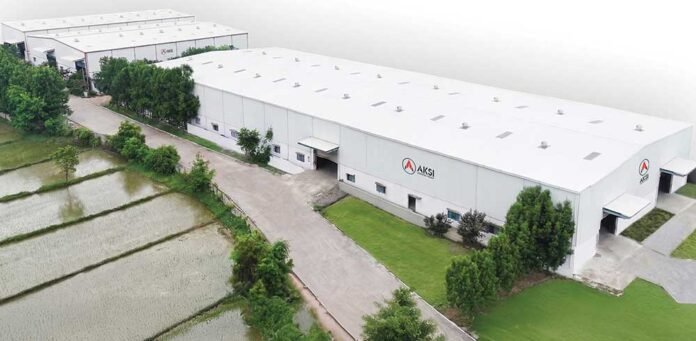
This is where our work at AKSI Aerospace Group connects with the larger question of technological sovereignty. We have deliberately looked beyond the finished aircraft towards the capabilities that enable it. KKA Autopilot addresses flight control, LiHi Smart Batteries builds capability in energy storage and battery management, while our work in propulsion and composite manufacturing adds further depth to the aircraft architecture.
The objective is not simply to replace an imported component with an Indian one. It is to build the engineering capability to understand, modify, and evolve the system.
Aircraft, missions, and requirements change constantly. Payloads change. Endurance requirements change. Operating conditions change. Customers ask for new capabilities. The ability to respond depends on how much of the underlying system we control.
Sovereignty Does Not Mean Isolation
That does not mean India needs to manufacture everything domestically. Technological sovereignty should not become technological isolation. Aerospace will continue to rely on global supply chains, international partnerships and specialised technologies from around the world. The question is which dependencies are too critical to leave entirely outside our control.
KKA Autopilot addresses flight control, while LiHi Smart Batteries focuses on energy storage and battery management
Manufacturing alone, however, is not enough. India also needs the R&D, testing, qualification and certification infrastructure to turn indigenous technologies into dependable systems. Engineers need to be able to prototype, test, understand failures, modify designs and qualify the next iteration.
India is building this foundation, with growing attention to areas such as propulsion, batteries, inertial navigation, flight control, communications, cameras and sensors, alongside domestic testing capabilities for drones and their subsystems. These capabilities may attract less attention than a new aircraft, but they are what allow indigenous systems to mature.
The same applies to exports. When an international customer buys an Indian UAV, the relationship continues well beyond delivery. Spares, maintenance, software support, technical assistance and upgrades all depend on the manufacturer’s ability to support the aircraft over its life. Technology ownership therefore has a commercial value as well as a strategic one.
The Real Test of Self-Reliance
India’s drone ambition should therefore be measured not only by how many aircraft we manufacture or deploy, but by how much of the underlying capability we can develop, test, manufacture and evolve ourselves.
AKSI is one example of this approach, but the requirement extends far beyond one company. India needs a wider network of capability centres across the UAV ecosystem, supported by research institutions, testing facilities, manufacturers, academia and users.
No country can control every geopolitical shift or guarantee that global supply chains will always remain open. What we can control is the depth of capability we build at home.
That is the real test of self-reliance: not whether we can manufacture a drone when every component remains readily available, but whether we can continue to develop, operate, repair, and improve it when they are not.
If we can do that, we will not simply be manufacturing drones in India. We will have built the capability to keep developing, sustaining, and improving them, whatever changes around us. That is the foundation of technological sovereignty.

–The writer is Group Managing Director, AKSI Aerospace Group. The views expressed are personal and do not necessarily reflect the views of Raksha Anirveda





