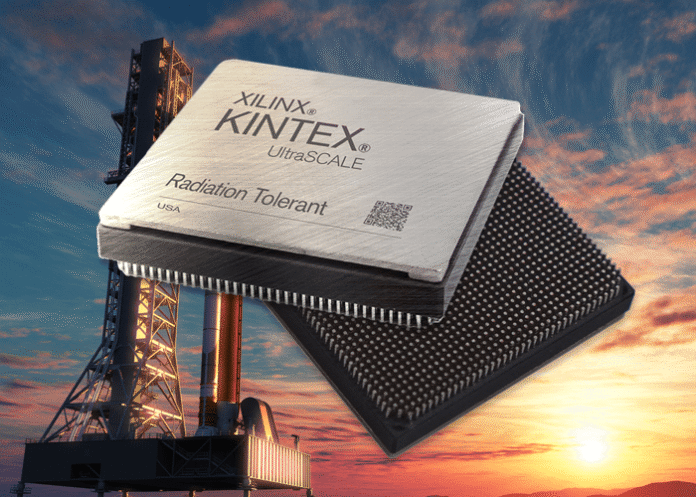
As space missions venture deeper and demand unprecedented data, traditional “housekeeping” computers are no longer enough. Ken O’Neill, Space Systems Architect at AMD, explains to Raksha Anirveda’s Editor, Ajit Thakur, how AMD’s radiation-tolerant adaptive SoCs and FPGAs are revolutionising aerospace technology – bringing high-performance edge compute, real-time AI processing and post-launch re-programmability directly to orbit and planetary surfaces.
 Kenneth O’Neill has nearly 25 years of experience supporting the space industry, including the past three years at AMD. Prior to joining AMD, he worked at another semiconductor company with a focus on space-grade products. In his current role as Space Systems Architect, he is responsible for both product development and external engagement: overseeing AMD’s space-grade product portfolio, working with engineering teams to meet mission-critical requirements and engaging with customers, industry partners and the media to advocate for AMD’s solutions in space applications.

Raksha Anirveda (RA): AMD recently highlighted that high-performance edge compute is now just as critical to space missions as launch systems. How is AMD enabling a shift from standard “housekeeping” computers to heavy-duty, real-time data processing right at the edge – whether that’s in lunar orbit or deep space?
Kenneth O’Neill (KO’N): The amount of data generated in space is increasing dramatically. As space missions become more ambitious, this growing demand requires compute platforms capable of processing increasingly complex workloads reliably in the harsh environment of space.
The space-grade FPGAs and adaptive SoCs by AMD are designed to meet these requirements, serving missions across a range of operational regimes, including Low Earth Orbit (LEO), Geosynchronous Earth Orbit (GEO), cislunar orbits and even deep space missions.
For satellites in Earth orbit, the instruments can either look down at the Earth, or look out into the solar system or gather astronomical data. Everybody wants more data, and more data means more processing. Traditionally, the satellites would relay all the raw data back to the ground, which would put significant load on the downlink infrastructure and cause delays.

Modern space missions generate massive data volumes that bottleneck downlink infrastructure. AMD’s heterogeneous compute architecture – integrating AI engines, vector processors and real-time Arm cores – enables spacecraft to process complex workloads locally, delivering actionable intelligence instead of raw data dumps
For time-sensitive applications such as Earth observation, planetary exploration and future lunar surface operations, data increasingly needs to be processed on the spacecraft, enabling operators to deliver actionable intelligence rather than vast amounts of raw data.
For example, spacecraft can increasingly respond to dynamic situations, while future lunar landers are expected to navigate hazards such as boulders and craters in real-time, without continuous guidance from the Earth. As humans advance the capabilities of their spacecraft, real-time edge processing is getting increasingly critical.

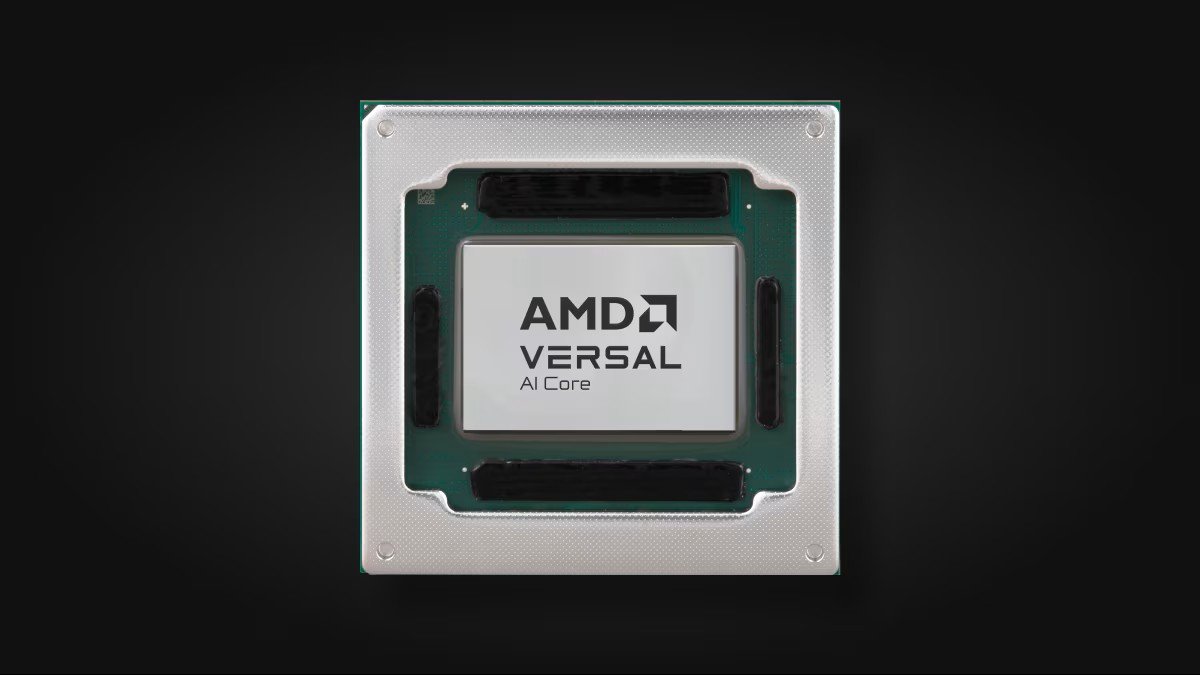
This is where AMD’s heterogenous compute architecture plays a key role. The Versal adaptive SoCs use a diverse, multi-element architecture that integrates several distinct types of hardware, allowing the satellite to assign different parts of a complex data stream to the most efficient processing element. Vector Processors and AI engines are mapped to handle high-speed, vector-based algorithms and heavy signal processing. They can tackle the complex matrix multiplications required for radar arrays. The architecture also integrates application processors and real-time processors. Operating systems such as Linux can be run on the application cores, while the real-time cores can simultaneously handle deterministic flight tasks.
RA: Space agencies have traditionally preferred decades-old, heavily vetted architectures. How does AMD strike a balance between the unyielding reliability seen in your Virtex 5QV deployment on Orion, and the immense power jump required by newer 7nm Adaptive SoCs? How do you convince mission architects to trust sub-10nm silicon in heavy radiation environments?
KO’N: Commercial silicon has radiation properties that are sufficient for many space programmes, but flight suitability still depends on characterisation, qualification, screening, packaging and system-level mitigations to ensure that the hardware performs as expected in the harsh environment of space.
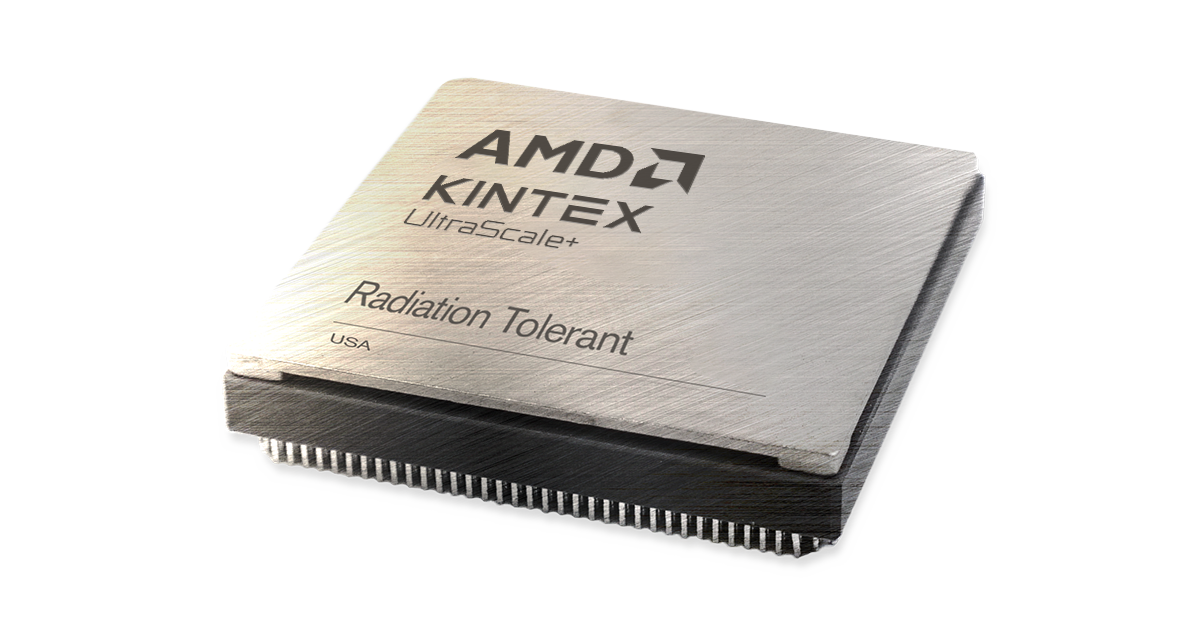
Building on these proven commercial silicon technologies, AMD’s space-grade portfolio – including Virtex-5QV, XQR Kintex UltraScale, and Versal XQR devices – combines the performance benefits of advanced semiconductor technologies with the rigorous qualification required for spaceflight.
Mission architects are looking for both performance and confidence over missions that may last decades. That confidence comes not simply from the silicon itself, but from the rigorous qualification, testing, screening and fault-tolerant design methodologies that ensure reliable operation throughout the mission lifecycle.
Bridging the gap between decades-old architectures and advanced 7nm silicon, AMD utilises rigorous testing, MIL-PRF-38535 screening and Triple Modular Redundancy (TMR). This ensures commercial-grade computing power can reliably survive cosmic radiation and extreme vacuum environments
AMD supports fault-tolerant design methodologies such as Triple Modular Redundancy (TMR), which can be implemented within a single FPGA or across multiple systems. AMD space-grade FPGAs and adaptive SoCs have qualified for the MIL-PRF-38535 standards. This means that the hardware is tested and can perform reliably in high-radiation vacuum, as well as the temperature extremes in space, according to the exacting specifications for space-grade chips as set by the US Department of Defence.
This combination of advanced compute architecture, rigorous qualification and proven reliability enables mission designers to confidently adopt newer process technologies without compromising the reliability required for long-duration space missions.
RA: AMD adaptive SoCs are slated to play a key role in tasks like onboard data filtering, compression, and range-Doppler processing for high-data missions like NISAR. Could you walk us through how AMD silicon is helping optimise bandwidth constraints on this specific mission, ensuring scientists get actionable insights instead of raw, unmanageable data dumps?
KO’N: AMD has a long history of supporting missions with NASA and ISRO. As the NISAR payloads were being developed, AMD worked closely with the teams to demonstrate the capabilities of its space-grade compute portfolio, which aligned with the mission’s processing requirements.
The mission is a complex one, the first collaboration of its kind between NASA’s Jet Propulsion Laboratory (JPL) and ISRO’s Space Applications Centre (SAC). AMD engaged with the team when the mission was being developed, to show them the capabilities of AMD’s latest space-grade technologies at that time.
They were in compliance with their requirements and were adopted for the designs. Synthetic Aperture Radar (SAR) observations are a compute-intensive process, and NISAR is interesting because there are two payloads on board, operating in two different bands or wavelengths. You learn different things from the two radar frequencies, and each band has its own processing requirements.
On complex joint operations like the NASA-ISRO NISAR satellite, AMD’s adaptive computing devices host compute-intensive Synthetic Aperture Radar (SAR) processing tasks onboard. By handling data compression and filtering in orbit, the technology drastically reduces ground-station latency
NISAR takes a highly compute-intensive application and hosts a pair of SAR payloads. AMD adaptive computing devices enable onboard SAR processing tasks such as data compression, decompression, and efficient use of the available downlink bandwidth.
Think about how dramatically the camera in your smartphone has improved over the last ten years. The resolution of the sensors in space is increasing too. Historically, the compute density required for SAR processing was not available onboard, meaning vast amounts of raw radar data had to be transmitted to Earth for processing.
Today’s adaptive computing platforms make it possible to perform much of that processing in orbit, significantly improving the efficiency of limited communications bandwidth.
RA: What unique capabilities do these dedicated AI hardware engines bring to unmanned or deep-space craft? Are we looking at a future where AMD chips allow rovers or probes to map terrain, self-navigate hazards and perform real-time machine learning inference without waiting for a signal from Earth?
KO’N: Dedicated AI hardware engines provide the compute foundation for a new generation of autonomous space systems, enabling spacecraft to process data, make decisions and respond more quickly without relying entirely on communications with Earth.
One example is telemetry anomaly detection using recurrent neural networks (RNNs), specifically long short-term memory (LSTM) models are being used to monitor critical parameters on spacecraft that vary slowly over time, such as voltage, current, temperature, mechanical stress and magnetic field levels.
Previously, such telemetry would be downlinked to Earth and analysed on the ground. Packing in the Machine Learning on the satellite allows operators to detect anomalous patterns in real time, well before critical limits are breached.
This is just one example of how onboard AI can improve spacecraft autonomy. From lunar exploration to the surface of Mars and into the outer solar system AMD space-grade FPGAs and adaptive SoCs have supported some of the most demanding space missions, where onboard processing must reliably operate in extreme environments, with limited feedback from Earth. These deployments highlight the importance of resilient, low-power compute platforms capable of autonomous operations.
All the major spacefaring nations around the world are planning towards establishing a sustained presence on the lunar surface. The distance to Earth creates a critical latency and bandwidth gap. Radiation tolerant, space-grade AMD Versal SoCs close this gap by integrating programmable logic, AI engines and Arm cores to enable on-board high-performance processing in orbit, and directly on the lunar surface. By moving compute closer to the data source, spacecraft and surface systems can analyse sensor data in real time, with reduced latency and again, less dependence on limited bandwidth.
We believe spacecraft will continue to become more autonomous as onboard compute capabilities advance. Rather than relying entirely on communications with Earth, future missions will increasingly process sensor data and make time-critical decisions directly at the edge.
Dedicated hardware AI engines empower deep-space probes and lunar landers to navigate hazards and detect telemetry anomalies using localised Machine Learning (like LSTM networks), eliminating the dangerous communication lag typically required when relying on Earth-based command centres
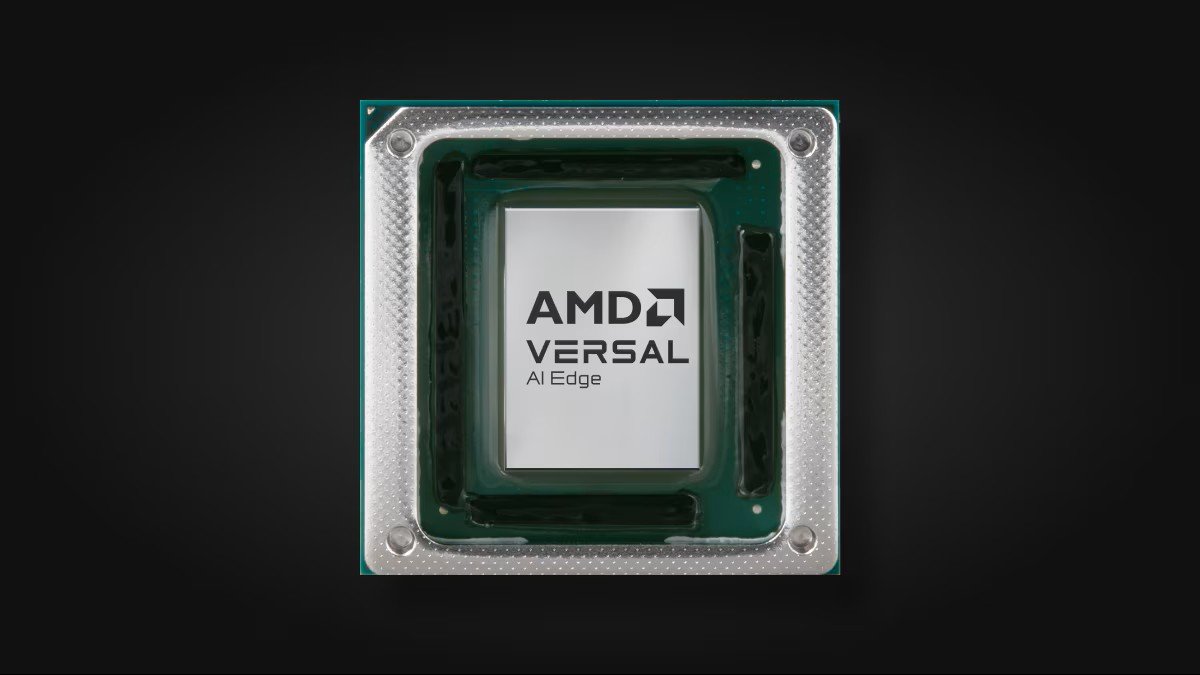
These capabilities are already being adopted in next-generation space platforms. For example, Blue Origin, a leader in space technology, is using AMD Versal AI Edge Gen 2 adaptive SoCs on the vehicle testbed, for its flight computer stack, which will eventually power the Mark 2 lunar lander planned to support future crewed Moon missions.
RA: AMD chips have powered everything from the Mars Perseverance rover to asteroid-sampling missions like OSIRIS-REx. How crucial is the ability to deploy post-launch algorithm updates or new AI models over-the-air mid-mission, and does this change how long-duration, multi-decade space programmes are budgeted and designed?
KO’N: AMD space-grade FPGAs and Versal XQR adaptive SOCs support reprogramming during development and after deployment, including during flight in the harsh environment of space. Satellite operators can change processing algorithms after a satellite has been launched, which increases the flexibility of remote sensing and communication satellites.
Operators can respond to evolving requirements in orbit. Updates may be used to refine onboard algorithms, correct unexpected behaviour and improve the performance of the system. SAR satellites often require software adjustments to support new imaging requirements or optimise data throughput in response to shifting constraints on the ground segment.
This flexibility is becoming increasingly important as modern space missions are designed to operate for many years – or even decades – during which mission requirements, scientific objectives and onboard processing needs may continue to evolve. Rewriting and redeploying code remotely, after the satellite has launched, enables operators to extend mission lives, respond dynamically to the needs of both science and operations teams and increase the return on investment.
These spacecrafts are expensive to develop, launch and operate. Working in space also requires significant investment of time and effort, it is not just the money. Every satellite operator wants to maximise the return on investment.
The XQR series is equipped with AI Engines designed to support onboard processing payload applications. Enhancements in system logic cells, onboard SRAM and multi-gigabit transceiver bandwidth all allow for advanced, vector-based algorithms and high-speed signal processing for real-time analysis, anomaly detection and associated functions.
Spacecraft are massive investments designed to last decades. AMD’s FPGAs and XQR adaptive SoCs support secure, mid-mission algorithm updates over-the-air, allowing operators to remotely rewrite code, adapt to evolving scientific objectives and extend the functional lifespan of the spacecraft
Before any updates are deployed in orbit, AMD provides a comprehensive development environment for design entry, simulation, place-and-route and post-layout timing verification. Any design changes are rigorously tested on ground-spare hardware by the manufacturer of the satellite or the sub-system before being committed to the flight system, helping ensure reliable operation throughout the mission lifecycle.
RA: As India emphasises Aatmanirbharta (self-reliance) in electronics and aerospace manufacturing, how is AMD engaging with local Indian space-tech startups and domestic defence manufacturers? Beyond supplying COTS (Commercial Off-The-Shelf) platforms, is AMD looking at local system integration or design collaborations to accelerate India’s private small-satellite constellation ecosystem?
KO’N: AMD has a long history of supporting global space programmes, including collaborations with organisations such as NASA and ISRO and their contractors. We continue to work closely with customers and partners across the global space ecosystem by providing high-performance, space-grade computing technologies that enable next-generation missions.
As the commercial space industry continues to evolve, AMD remains committed to supporting innovation through its broad portfolio of adaptive computing solutions and by working with ecosystem partners to address emerging mission requirements.