


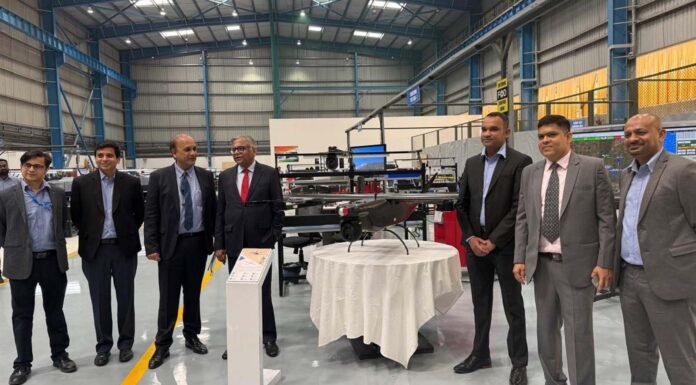
India’s private-sector aerospace manufacturing capabilities are stepping up to handle the deepest levels of aircraft maintenance. Tata Sons Chairman N Chandrasekaran conducted an extensive high-level review of Tata Advanced Systems Limited’s (TASL) upcoming Defence Maintenance, Repair, and Overhaul (MRO) facility near the Kempegowda International Airport in Bengaluru.
This project represents a historic industrial leap, serving as India’s first privately operated defence MRO center. It is specifically optimised to service the Indian Air Force’s fleet of Lockheed Martin C-130J Super Hercules tactical transport aircraft.

The infrastructure footprint of the new maintenance hub reflects its heavy-duty industrial mandate. Developed across a sprawling 16-acre plot of land, the specialised facility will house a massive 15,000-square-meter enclosed hangar complex.
Once it is commissioned by end-December 2026, the hub will be fully certified to conduct complex heavy structural maintenance, deep airframe overhauls, and sophisticated avionics system upgrades. The specialised aerospace complex is also expected to inject substantial technical expertise into the local economy, generating high-skilled employment for more than 250 advanced aviation personnel.
Accompanied by TASL Managing Director Sukaran Singh, Chandrasekaran used the high-profile visit to audit the conglomerate’s rapidly expanding defence electronics and unmanned systems pipelines at the nearby Electronic City hub.
During this segment of the tour, the leadership team was thoroughly briefed on the upgraded capabilities of TASL’s indigenous Loitering Munitions platform. These lethal kamikaze drones have seen their operational striking ranges successfully extended from a baseline of 50 kilometers to hundreds of kilometers, while simultaneously increasing their explosive payload capacities to survive modern electronic warfare environments.

The executive review also shed light on the explosive international growth of Tata’s military land mobility systems. Over the past three years alone, the Land Mobility Division successfully expanded its global export footprint by supplying more than 4,000 multi-axle, high-mobility tactical vehicle platforms to foreign defence partners, including major deliveries directly to the Royal Moroccan Army and the Armenian Armed Forces.
Chandrasekaran commended the visible engineering synergies being extracted across the group, noting the tactical modification of Jaguar Land Rover Defender vehicles for frontline combat duties through the seamless integration of ballistic armour plates, indigenous optronics, and hardened military navigation arrays.

The multi-facility industrial tour concluded at TASL’s cutting-edge Vemagal assembly complex, where the group is currently setting-up the final assembly line for the newly introduced Airbus H125 civilian and military helicopter programme.
Beyond inspecting the rotary-wing facility, the chairman reviewed high-volume manufacturing lines currently producing complex electrical wiring harness systems for the ongoing Airbus C295 military transport aircraft programme.
The visit concluded with a demonstration of heavy artillery systems under development, including the Advanced Towed Artillery Gun System, Mounted Gun Systems, and specialised launcher integration platforms.
This comprehensive pipeline solidifies TASL’s strategic position as India’s premier private defence aggregator, leveraging massive industrial scale and localised innovation to secure national security objectives.






