


Vandenberg Space Force Base (California): The US Air Force’s troubled Sentinel intercontinental ballistic missile programme faces significant risks from software delays and an extended reliance on the aging Minuteman III system.
However, a January 2024 Nunn-McCurdy breach has opened a window to address longstanding issues and potentially improve outcomes, according to a Government Accountability Office (GAO) snapshot released February 18.

The report highlights the challenges in replacing the 50-year-old Minuteman III, a cornerstone of the land-based leg of the US nuclear triad, with the more advanced Sentinel system.
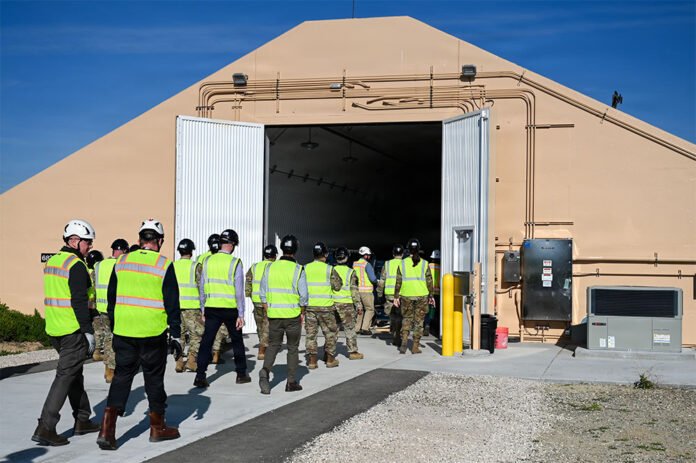
The programme, led by Northrop Grumman, is described as the Air Force’s most complex infrastructure endeavour ever, involving the replacement of more than 600 facilities across five states, including missile silos and command centres.
The Sentinel programme encountered a critical setback in 2024, when it triggered a Nunn-McCurdy unit cost breach, exceeding statutory thresholds for cost growth on major defence acquisitions.
This led the under secretary of defence for Acquisition and Sustainment to rescind Milestone B approval and associated baselines, forcing a restructuring effort as the service works toward a new Milestone B decision.

The programme’s estimated cost is now at least $141 billion, though actual figures remain uncertain. The first Sentinel flight has slipped approximately four years and is now planned for March 2028.
Software development stands out as a major risk area. The report notes that Sentinel is highly software-intensive, and progress has lagged behind expectations.

“These delays have raised concerns from program officials about the prime contractor’s ability to complete the programme’s software in a timely manner,” GAO states.
Despite years in development, the Air Force and contractor have yet to finalise software design, development metrics or a delivery schedule, prompting a replan.
While disruptive, the breach has created opportunities for course correction. GAO emphasises that restructuring allows the Air Force to address fundamental problems, including deficiencies in design tools, performance requirements and launch facility design.
Programme officials are evaluating redesign options for portions of the weapon system to reduce costs and minimise further schedule slips, as well as potential changes to acquisition strategy and system requirements.
“Future programme outcomes will depend on the extent to which the Air Force takes advantage of this opportunity to correct earlier missteps,” the report warns.
Sentinel is expected to deliver a significantly more capable ICBM, with a modular design that enables adaptation to evolving threats and technologies.
However, Sentinel delays may require Minuteman III to remain operational through 2050, 14 years beyond original plans, introducing sustainment and testing challenges for the aging fleet.
Air Force and defence officials told GAO they are actively mitigating risks to prevent any capability gaps during the transition.






