


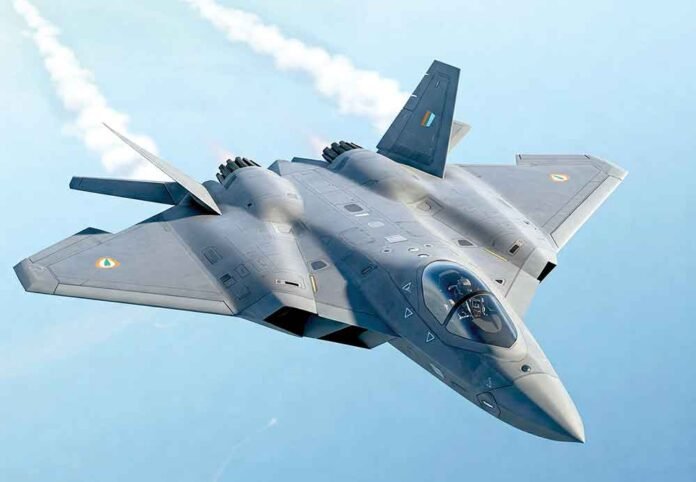
The bids were submitted to the Aeronautical Development Agency (ADA), which is managing the Advanced Medium Combat Aircraft (AMCA) programme. The competition brings the project into a key procurement phase: the government must evaluate the proposals before selecting a development partner for the prototype work.
The three contenders are Tata Advanced Systems Limited (TASL); a consortium led by Larsen & Toubro (L&T) with Bharat Electronics Limited (BEL); and a Bharat Forge-led group that includes Bharat Earth Movers Limited (BEML). The final bid documents and official announcements will determine the participating companies and their respective roles.

The selected bidder is expected to work with ADA, which operates under the Defence Research and Development Organisation (DRDO), to develop and build five AMCA prototypes. The project is government-funded, with the prototype programme estimated at ₹15,000 crore. The work is planned for a new aerospace facility at Puttaparthi in Andhra Pradesh, where aircraft assembly, integration and testing are expected to take place.
The competition marks a significant change in India’s defence-aircraft development model. Rather than assigning the prototype stage to Hindustan Aeronautics Limited (HAL), the government has invited private-sector firms to compete for the role. The selected company or consortium will have to work closely with ADA, which retains responsibility for the aircraft’s design and technical development. The arrangement is intended to widen industrial participation in a strategically important programme.
AMCA is planned as a twin-engine, fifth-generation multirole fighter for the Indian Air Force. Its design is intended to incorporate low-observable features, internal weapons bays and advanced sensors. The first production version is expected to use GE F414 engines, while a later version is envisaged with a more powerful engine developed through an international partnership. The aircraft remains under development; specifications and timelines should be treated as programme goals rather than capabilities already demonstrated in service.
The immediate challenge is turning the design into test aircraft and proving the systems through ground and flight testing. Developing a modern fighter requires coordination across airframe production, engines, avionics, software, weapons integration and flight-test infrastructure. Prototype construction is only one stage; the aircraft will need extensive testing and validation before the government can decide on series production and operational induction.

The bidding process follows the Defence Ministry’s issuance of a request for proposals to the three shortlisted groups in May 2026. The next steps include technical and commercial evaluation, selection of a preferred bidder and contract finalisation. One report said the government expected the first prototype flight in 2028-29, with production targeted for the mid-2030s; those dates depend on selection, development progress and successful testing.
For the private companies, the contract offers a chance to build capabilities in advanced aerospace manufacturing and compete for future defence work. For the government, the challenge will be to maintain programme oversight, manage technical risk and keep the development schedule realistic. The AMCA’s success will ultimately depend not only on who wins the prototype contract, but on whether the partnership can deliver a testable aircraft and mature it through a demanding flight-test programme.







