


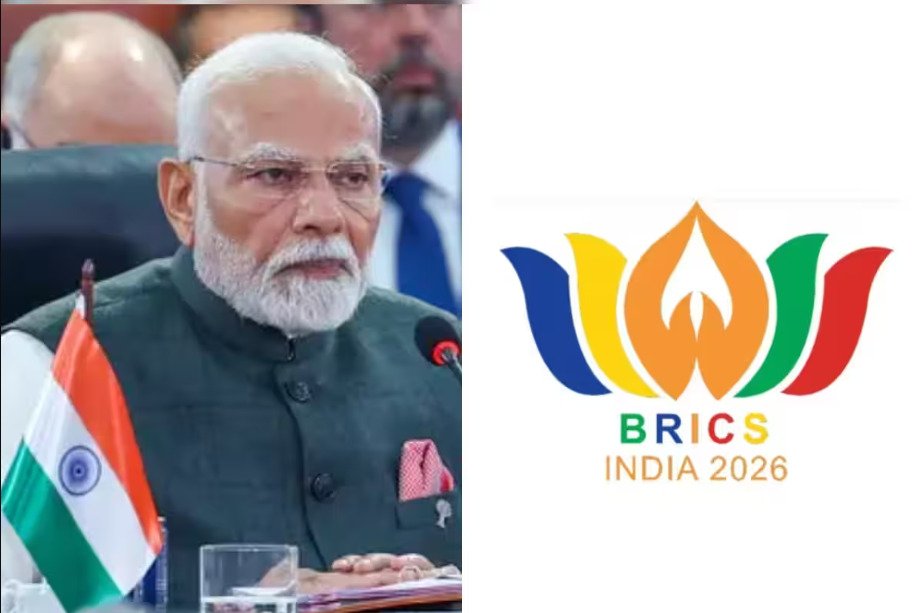
As Prime Minister Narendra Modi welcomes an expanded BRICS to Bharat Mandapam this week, the summit’s real significance for India’s security lies not in anything that will be signed in Delhi, but in a meeting that has not yet happened.
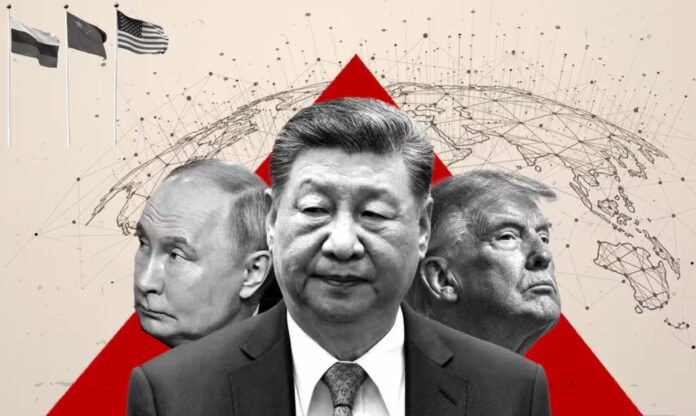
On the margins of the Shanghai Cooperation Organisation summit in Bishkek, the Kremlin let slip that Vladimir Putin and Xi Jinping had discussed a three-way meeting with Donald Trump at the APEC gathering in Shenzhen in November, the first time the leaders of the world’s three largest nuclear powers would sit together.

The White House has not confirmed it, and it may never occur. But for India’s security planners, the possibility alone matters, because of what such a directorate would deal in.
Great-power concerts do not trade in communiqués; they trade in spheres of influence. The Yalta settlement that produced the United Nations Security Council and the post-war world order was, at bottom, an agreement among the strong about who would answer for which parts of the world.
A Trump-Xi-Putin condominium, a “G-3”, would be a bid to revive that logic: three capitals settling the planet’s security and economic architecture over the heads of everyone else.

A potential tripartite summit between Donald Trump, Xi Jinping and Vladimir Putin threatens to revive a Yalta-style division of global spheres of influence. For India, the primary danger is not lost diplomatic prestige, but being reduced to a bargaining chip negotiated over by outside powers
India’s anxiety about being left off the guest list is usually framed as a matter of prestige. It is not. The real danger is that India sits inside, not at, such a table, a large piece of the very geography the three would be tempted to bargain over.
The sharpest edge is the China leg. Washington’s quarrel with Beijing, over trade, technology, Taiwan and the Indo-Pacific, is paradoxically, one of the external constraints that has kept China cautious on its Himalayan frontier.

A president who prizes leader-to-leader deals might be tempted to fold Asian security into a grand bargain with Xi: an extended trade truce, softer language on Taiwan, a quieter American footprint in the region in return for economic concessions.
US-China rivalry currently acts as a critical external restraint that keeps Beijing cautious along India’s northern frontier. Should Washington strike a grand trade and security bargain with China, Beijing could redirect its undivided attention back toward the Himalayan border
Every increment of that bargain loosens the pressure that currently disciplines Chinese conduct toward India. The thaw along the Line of Actual Control (LAC) is real but tactical, the October 2024 disengagement at Depsang and Demchok, the guardrails agreed in the 25th round of border talks between National Security Adviser Ajit Doval and Foreign Minister Wang Yi.
It rests on managed rivalry, not resolution; the boundary remains undelimited, buffer zones have frozen rather than settled the friction points, and Beijing’s all-weather partnership with Pakistan is untouched.
Competitive coexistence with China depends, in part, on a Washington that keeps Beijing occupied. Remove that distraction, and the calculus on the LAC shifts against Delhi.
While Moscow remains a crucial supplier of defence technology and energy, its economic dependence on Beijing prevents it from tempering Chinese ambition. India can no longer count on Russia to balance China, exposing the limits of a historically vital strategic relationship
The Russia leg is subtler but no less consequential, because it erodes an assumption Indian planning has leaned on for decades. Moscow remains a strategic partner of genuine depth: this week’s agenda includes technology transfer for the Su-57 stealth fighter, further S-400 deliveries, new nuclear plants and cooperation on rare earths, capabilities no Western partner will match on comparable terms.
But a Russia now dependent on China as its economic lifeline, and simultaneously courting Washington for relief from its war, is no longer available as a counterweight to Beijing. The old triangle, in which Delhi could rely on Moscow to temper Chinese ambition, is gone; a Russia that needs China will not cross it for India.
Layered on top is the standing threat of American secondary sanctions on buyers of Russian oil. The relationship still offers India real strategic depth, but with a firm ceiling, and with strings that run through both Beijing and Washington.
India’s cautious decision to stall UPI integration with China’s Alipay+ highlights a clear understanding of financial infrastructure as critical sovereignty. Controlling the rails, data and settlement layers prevents hostile powers from acquiring quiet leverage over domestic economic activity
There is a financial dimension to the same problem, and here, for once, India has read it correctly. In quietly stalling the proposed link between UPI and China’s Alipay+ over national-security and data concerns, New Delhi treated financial infrastructure as what it is, critical infrastructure.
Whoever controls the rails, the data and the settlement layer hold quiet leverage over everyone who uses them. That instinct, welcome the connectivity, keep sovereign control of the switch, should govern India’s approach to every avenue of cooperation a directorate-minded BRICS might open.
What, then, is the national-security answer? It is emphatically not more multipolar rhetoric. To celebrate multipolarity while two of its loudest champions negotiate their own accommodations with Washington is not a strategy; it is a slogan that mistakes company for security. Three harder imperatives follow instead.
Slogans celebrating a multipolar world offer zero security against a concert of great powers making decisions above India’s head. The ultimate defence is rapid economic growth, industrial depth and defence indigenisation in semiconductors, critical minerals and advanced fighter jets
The first is comprehensive national power. A country is bargained over when it is weak enough to be a counter rather than a player. India’s surest insurance against a directorate is to become too consequential, economically, industrially, militarily, to be settled over.
That means the unglamorous work of sustained growth, manufacturing depth and defence indigenisation, from the AMCA fighter programme to resilience in critical minerals and semiconductors, so that no single supplier, Russian or otherwise, can hold a veto over Indian capability.
The second is strategic autonomy understood as active hedging, not passive non-alignment. India must deal with Washington, Moscow and Beijing on the merits of each file, refusing both the anti-American bloc reflex that Moscow and Beijing would happily encourage and the comforting illusion that BRICS is a home rather than a platform.
India must treat BRICS as an opportunistic platform rather than a permanent strategic home while rejecting anti-Western bloc politics. Maintaining strict strategic autonomy requires evaluating relations with Washington, Moscow and Beijing strictly on the individual merits of each issue
The third is breadth. India’s best defence against a three-cornered table is a dense web of partnerships beyond it, the Quad, Europe, Japan, Korea, Brazil, the Gulf and the wider community of middle powers who share its stake in preventing any directorate of the strong. Multi-alignment of this kind is not fence-sitting; it is insurance against precisely the world a G-3 would build.
A triangular directorate is not imminent, and it may never form; Russia and China have their own frictions with Washington and with each other, and Trump’s grand bargains have often run aground on his own establishment.
Preventing a G-3 monopoly demands a dense network of global partnerships across Europe, Japan, South Korea, the Gulf and the Quad. Aggressive multi-alignment ensures India surrounds itself with capable allies who share a common interest in thwarting any imperial directorate of the strong
But security is built against capabilities and temptations, not against stated intentions. The prudent assumption is that great powers will, when it suits them, deal over the heads of those who cannot stop them.
India’s task, at this summit and long after the delegations have left Bharat Mandapam, is to make itself a power that no concert of three can afford to leave outside the room.

The writer is an expert on geopolitics, national security, and counter-terrorism; and he regularly contributes his subject thought-leadership and academic commentary with several publications in newspapers, journals, and periodicals. He works with investigative agencies, regulatory bodies, financial institutions and enterprises, providing strategic and regulatory advisory. The views expressed are personal and do not necessarily carry the views of Raksha Anirveda





