


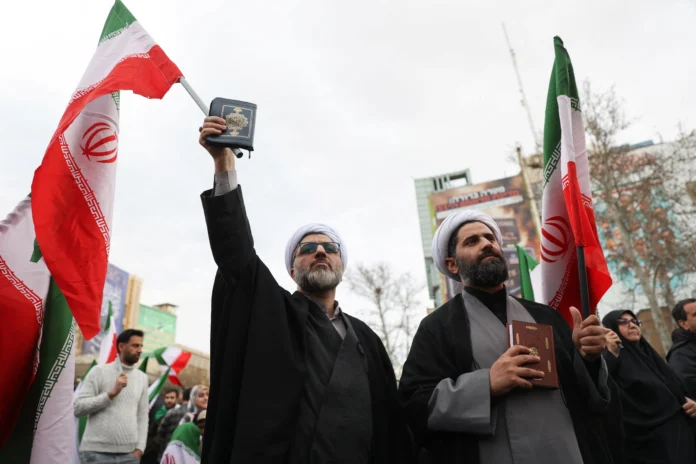
The US-Israel-Iran war has ‘officially’ ended. A 14 point Memorandum of Understanding (MoU) to that effect has been signed between the US and Iran. The global community now is heaving a collective sigh of relief primarily because of opening-up of the Strait of Hormuz, which is considered to be one of the key maritime chokepoints in the world through which a significant section of the world’s crude oil, natural gas, and fertilisers passes; the global community perceives this termination of hostilities as a good opportunity to restart its economic engines.
In this context, it becomes essential to undertake a deep analysis of the implications for the various stakeholders, both direct and indirect in the aftermath of the war, naval blockade, and the release of the blockade.

Iran has Emerged Stronger than Ever
If one looks carefully at the MOU, it is quite clear that Iran has emerged stronger than ever in its post 1979 history. This is evident from the following things:
First, the damage that Iran incurred as a result of the American and Israeli bombing campaign will have to be mitigated in the long run through a $300 billion fund to be set up under the deal; what is all the more interesting is the fact that this funding, according to reports, is expected to be taken care of by America’s Middle Eastern allies.
Despite heavy bombardment, Tehran’s theocratic regime remains intact with power concentrated under the hardline IRGC. Under the peace deal, Iran secures over $100 billion in unfrozen assets and a $300 billion reconstruction fund heavily financed by Washington’s regional allies
Second, the pact provides for the de-freezing of billions of dollars of Iranian assets parked in foreign banks and financial institutions. According to one estimate, the assets exceed $100 billion, which is much needed as far as the reconstruction of war devastated regions of Iran is concerned.
Third, America and Israel were not only not able to topple the Iranian theocratic regime, but it ultimately resulted in the concentration of power in the hands of the hardliners in the country led by the elite IRGC (Islamic Revolutionary Guard Corps) which constitutes the martial backbone of the theocratic regime.

This failure to overthrow the Iranian government is reflective of America’s long history of failures in orchestrating regime change across the world, from Vietnam to Iraq, from Afghanistan and now Iran. This further demonstrates the limits of external military pressure, particularly in a country where multiple layers of power and institutional guardrails are in place to secure the regime.
Fourth, the attack has demonstrated the significance of naval power, despite the Iranian navy sustaining heavy losses in the incessant bombardment campaign of the American and Israeli air forces, Iran still managed to blockade the Strait of Hormuz, thereby plunging the world into one of the gravest economic crises since the Covid-19 pandemic, as well as increasing domestic costs of the war in the United States as well as in Israel.

The conflict underscored the immense strategic leverage of naval warfare. Even while sustaining heavy losses, Iran’s successful blockade of the Strait of Hormuz choked global energy and fertiliser supplies, triggering a severe international economic crisis
A Mixed Outcome for India
The end of the war has brought a sigh of relief for Indian policymakers as well as commoners, primarily because more than 40% of its crude oil, 60% of its natural gas, 90% of LPG (Liquefied Petroleum Gas) and a large chunk of its fertilisers are imported from the region. While there is no doubt that the economic engines of the country can resume work in its full flow, however, what is concerns New Delhi is the loss of diplomatic capital emanating from this crisis.
International politics is, in view of this writer, a game of influence building and influence wielding. It was widely expected that India may play the role of a mediator in the war. However, those hopes were dashed when Pakistan emerged as the dealmaker in the war. Not only was Islamabad instrumental in brokering a peace deal between the stakeholders, but it played a key behind-the-scenes role in stitching the pact that ended the war.
This, therefore, warrants a natural question – why couldn’t New Delhi play a more robust, overt, and active role in the mediation process? Was it a lack of foresight or something else?
This also signals certain implications for India:
First, it cements Pakistan’s credentials as a ‘peacemaker’, which is all the more ironic given the elaborate terror machinery the country has created and operated for the past many years.
Defying its severe domestic economic struggles, Islamabad successfully leveraged behind-the-scenes shuttle diplomacy to broker the 14-point peace pact, effectively punching above its weight and cementing unexpected credentials as an international peacemaker
Second, it highlights the need for India to introspect for playing a more active role in the realm of shuttle diplomacy. In the long run it will provide rich dividends for the country.
Third, notwithstanding the abysmally poor economic condition of Pakistan, its active mediatory role has signalled that Islamabad can punch above its weight, something that the Indian strategic elite clearly missed in the recently concluded war.
Maritime Security is Key
Given the economic shock the world witnessed during the war due to the blockade of the Strait of Hormuz, it has become demonstrably clear to the world that ensuring security of key maritime zones of the world is of utmost importance.
This necessitates the need for likeminded countries of the world to not only strengthen the Freedom of Navigation and Innocent Passage under the UNCLOS, 1982, but to also ensure that no single actor, both state and non-state can have the potential to blockade such an important chokepoint in the near future. This assumes particular importance in the context of China’s increasing assertiveness in the Indian Ocean Region (IOR) and the South China Sea region.
Thus, it is very clear that the war has had wide ranging implications for a host of actors, how the situation pans out in the next few weeks will be all the more interesting to watch.

The writer is a doctoral candidate in Political Science at Mahatma Gandhi Central University. The views expressed are personal and do not necessarily reflect the views of Raksha Anirveda





