


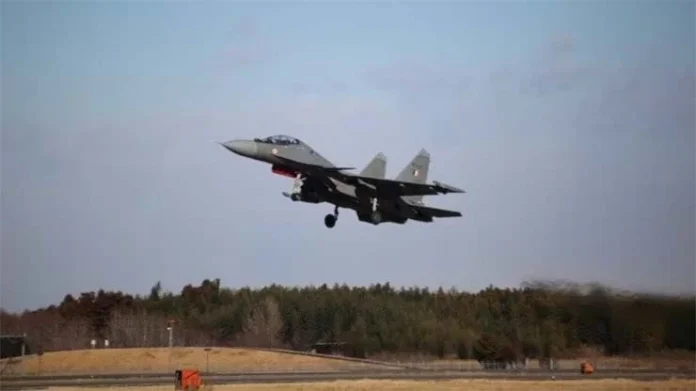
New Delhi: The Hawk-I-2700 GaN-based AESA radar by Data Patterns is a powerful new contender for the Su-30MKI upgrade programme, boasting between 2400–2700 TRMs and detection ranges up to 350 km, making it technically superior to the Virupaksha radar. Its advanced Gallium Nitride modules and unique swash controller unit position it as a transformative system for India’s frontline fighter fleet.
The Hawk-I-2700 radar was unveiled at Aero India 2025 by Data Patterns, a leading Indian defence electronics company. Unlike the Virupaksha AESA radar developed by DRDO, Hawk-I-2700 is not a derivative but a direct competitor, offering distinct capabilities. The radar is designed around an X-band GaN-based AESA architecture, which provides higher power efficiency, better thermal management, and enhanced durability compared to older Gallium Arsenide systems.

A defining feature of Hawk-I-2700 is its large number of Transmit/Receive Modules (TRMs), ranging from 2400 to 2700. This higher TRM count directly translates into improved radar resolution, range, and reliability.
For targets with a radar cross-section (RCS) of 5 m², Hawk-I-2700 can detect them at 350 km. For smaller targets with an RCS of 2 m², detection range is 250 km, and for even smaller 1 m² targets, the radar can track them at 200 km. These figures represent a significant leap in beyond-visual-range (BVR) engagement capability for the Su-30MKI fleet.
Another standout innovation is the Swash Controller Unit, which allows the radar antenna to tilt mechanically on both sides. This feature expands the radar’s field of view, enabling superior situational awareness and multi-target tracking. In modern aerial combat, where electronic warfare and multi-domain operations dominate, such flexibility is crucial.
The Hawk-I-2700 is being positioned as a strong alternative to the Virupaksha AESA radar, which itself is a major upgrade over the legacy Russian N011M Bars PESA radar currently fitted on the Su-30MKI. While Virupaksha features around 2400 TRMs, Hawk-I-2700’s higher count and GaN technology give it a technical edge. The Indian Air Force will need to evaluate both systems carefully, balancing operational requirements, cost, and long-term sustainability.

Beyond India, Data Patterns is also targeting international operators of Su-30 variants, many of whom still rely on older Russian-made PESA radars. The Hawk-I-2700 offers these air forces a chance to modernise their fleets with AESA technology, improving tracking, counter-countermeasures, and multi-tasking capabilities. This could open export opportunities for India’s defence industry, strengthening its position in the global radar market.
The competition between Hawk-I-2700 and Virupaksha reflects India’s growing capability in indigenous radar development. Both systems represent a decisive move away from dependence on Russian technology, aligning with India’s broader push for self-reliance in defence electronics. The eventual choice will shape the future of the Su-30MKI fleet, which remains the backbone of the Indian Air Force.







