


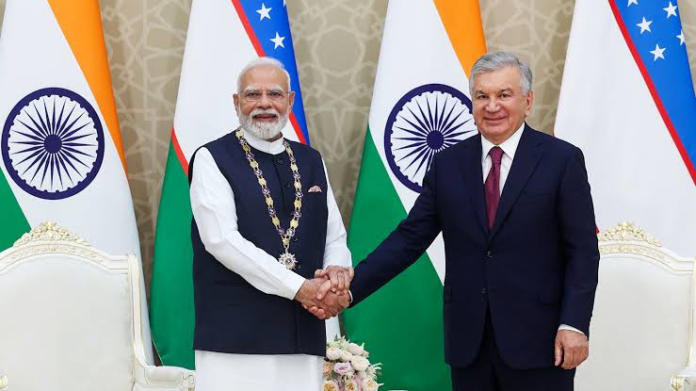
The conclusion of Prime Minister of India Narendra Modi’s recent visit to Uzbekistan and Kyrgyzstan from August 29 – September 1 2026, as also the visit of Russian President Vladimir Putin, along with President of Kazakhstan Kassym-Jomart Tokayev (being a dialogue partner of BRICS), to India to participate in the BRICS Summit held in India on September 12- 13, 2026, provides a new strategic impetus to India’s Eurasian diplomacy.
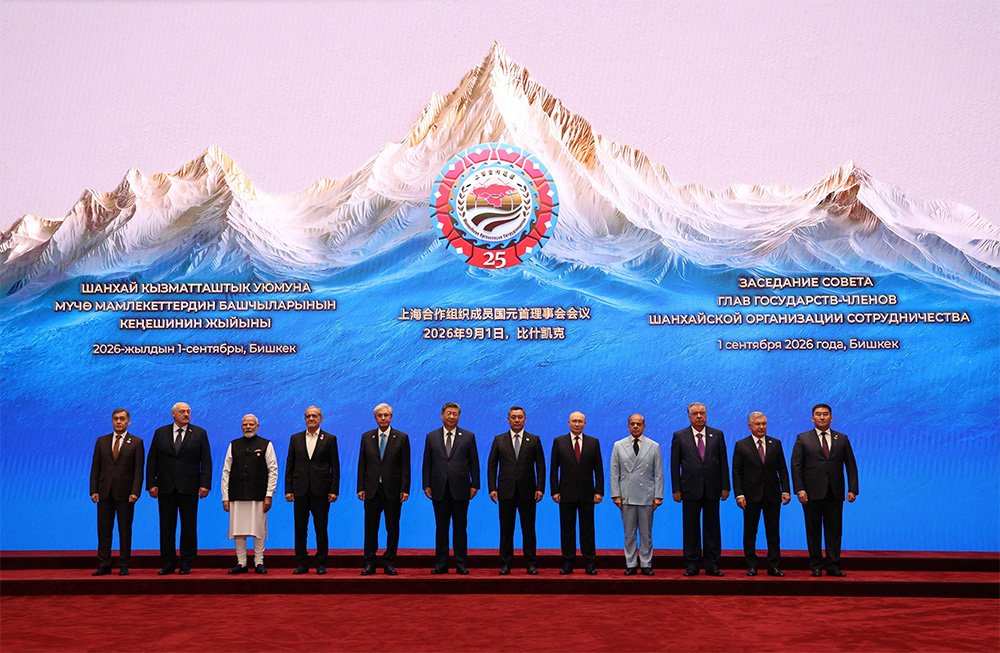
During his visit to Bishkek, Prime Minister Modi also attended the 26th Shanghai Cooperation Organisation (SCO) Summit, which is considered to be one of the major security structures in the Eurasian region. The visit to Tashkent and Bishkek, as well as attending the SCO Summit by Prime Minister Modi, can be considered a milestone in India’s Eurasian engagement.

One may recall here that both Uzbekistan and Kyrgyzstan are considered the “gateway” states as far as looking at their geo-strategic location in the Eurasian landscape is concerned. Both countries are being considered as a “pivot” in the Eurasian landscape, being the key entry points.
President Putin and Kazakh President Tokayev’s visit to India can also be considered a milestone event in diplomatic relations.
Geopolitical Context
The visit of Prime Minister Modi to Tashkent and Bishkek, as well as both the SCO and BRICS Summits, took place when both global and regional geopolitics are in a state of flux.
The incessant and unabated wars in West Asia and in the Eurasian heartland, i.e., between Russia and Ukraine, pose a substantial challenge to both Eurasian and global security. At the same time, the emergence of the Makkah Pact has to a great extent altered the geopolitical equation in Greater Eurasia, which is posing a substantial challenge to the security of this region.

Along with the realignment of strategic equations, the crisis of energy securitisation, so also, militarisation of chokepoints like the Strait of Hormuz and sanctions on Russia and Iran by the West, has aggravated both the geopolitical and geoeconomic crisis of this vast space.
Continuous turbulence and conflict have put the Eurasian space in a state of turmoil for a long period of time. Some of these strategic developments have also affected India, including its energy security and the connectivity push with the Eurasian landmass. For instance, the Iran-US war put India’s Chabahar connectivity project in a fix. Similarly, repeated obstruction by the US administration over India’s access to Russian oil is a cause for concern.

At the same time, the growing militarisation in the Persian Gulf region because of the unabated war between Iran and the US is a cause for concern for India. Similarly, continuous support by Pakistan to terrorism, along with implicit support from China, Turkey and Azerbaijan, is vitiating the security of South and Central Asia.
It is a fact that Pakistan is employing terrorism as a tool to promote its nefarious agenda. Another important aspect that needs to be highlighted is the “weaponisation” of sanctions as well as “supply securitisation” by the West towards Russia and now Iran. Even the US is threatening India over tariff issues.
The SCO Summit, held in Kyrgyzstan’s capital, Bishkek, on September1, 2026, provided an opportunity for India to outline its policy posture towards Eurasia and on several global issues, as discussed above. Hence, Prime Minister Modi’s visit holds significance for the two Central Asian countries.
Strategic Significance of PM Modi’s Visit to Uzbekistan and Kyrgyzstan
The elevation of India-Uzbekistan strategic relations to a “comprehensive” one resulted in the deepening of cooperation between the two countries.
One major aspect of Prime Minister Modi’s visit to Uzbekistan was the signing of an agreement on critical minerals, including uranium. The Joint Statement between the two countries has also strengthened collaboration between the two countries with regard to exploring and harnessing critical minerals.
PM Modi’s strategic visits to Eurasian “gateway” states Uzbekistan and Kyrgyzstan, combined with Russian President Putin and Kazakh President Tokayev attending the New Delhi BRICS Summit, signal a major milestone in India’s regional influence
Over the years, the Uzbek government has placed great importance on critical minerals as a core area for industrial development. The participation of Indian industries in exploring critical minerals, as mentioned in the Joint Statement, will pave the way for the fruition of greater cooperation between both the countries.
Both countries have also set the trade agreement between the two countries at a target of 5 billion dollars. This trade figure, though, appears to be quite modest in comparison to China and Russia’s trade with Uzbekistan, but has great potential to grow.
It may surpass the trade figure of 5 billion dollars if the current momentum between the two countries continues. Similarly, the Comprehensive Agreement has also underlined the need for broadening cooperation in “investment, transport connectivity, digital transformation (IT, AI, space, cybersecurity), energy transition, critical minerals, food security, healthcare, pharmaceuticals and education”.
At the same time, India has also announced assistance of 1 million dollars for the development of the Aral Sea afforestation programme, which reflects India’s sensitivity towards sustainable development of Uzbekistan.
From a broader strategic framework, Prime Minister Modi’s visit to Uzbekistan is assumed to be of high strategic value. This is largely because of the geopolitical fluidity in this part of the world. One major factor driving Uzbekistan to engage with India is to checkmate China’s growing clout. By engaging more fruitfully with India, Uzbekistan wants to balance China.
At the same time, for India, Uzbekistan occupies a key position in Central Asia and can serve as an entry point into the Eurasian landmass. An important aspect that needs to be examined is that India, by strengthening linkages with Uzbekistan, can reach out to Afghanistan and other Central Asian countries.
It may be noted that Uzbekistan shares a border with Afghanistan, and around 10 per cent of the Afghan population are of Uzbek origin. India’s linkages with Kyrgyzstan can be seen in this context also. The location of Kyrgyzstan is providing weight to its strategic significance.
One of the most important aspects of its strategic location is that it borders China. As has been observed in the aftermath of the 9/11 incident, Kyrgyzstan was a centre of geopolitical rivalry between the Russia-led CSTO and the US-led NATO base.
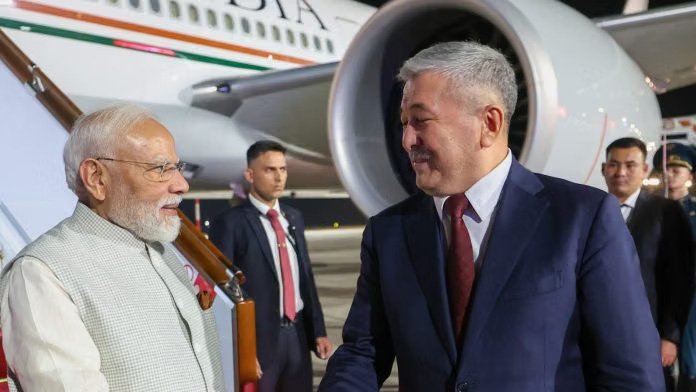
The visit of Prime Minister Modi to Kyrgyzstan provided a new form of opportunity for India to engage with Kyrgyzstan. One may add here that both countries have military engagement and have conducted joint military exercises. The 14th edition of joint military exercises was conducted in March 2025, titled Khanjar 11.
Navigating Geopolitical Turbulence, these summits arrive during a period of intense global flux – marked by the Russia-Ukraine conflict, the militarisation of the Strait of Hormuz and Western sanctions – which directly challenges India’s energy security and connectivity goals
In the past, India has also provided a lot of economic assistance to Kyrgyzstan. The most important aspect of Prime Minister Modi’s visit to Bishkek was to attend the SCO Summit.
India’s Engagement With SCO
The SCO Summit at Bishkek that took place on September 1, 2026 provided India an opportunity to engage bilaterally as well as in the forum meeting of the multilateral body.
The SCO Summit has also provided India an opportunity to interact with heads of state of Russia, Kyrgyzstan, Iran, Armenia etc. Thus, bilateral engagements provided India an opportunity to discuss a host of bilateral issues, including augmenting connectivity and strengthening energy and trade engagement, along with strengthening counter-terrorism measures.
Prime Minister Modi’s interaction with Russian President Vladimir Putin was useful in the context of energy security. The West is applying a double standard in its approach to the purchase of Russian oil and is “weaponising” energy, which is generating an artificial scarcity of oil. In this context, India and Russia bilateral engagement can be considered to be crucial.
Similarly, after the Iran-US war, India is facing a major problem of accessing energy. In this context, the blockade of the Strait of Hormuz by the US, as well as the punitive measures it is imposing on Iran, is posing a substantial challenge to India’s access to Iranian ports, including Chabahar. It is a known fact that Chabahar Port is one of the key projects in terms of accessing Central Asia through Afghanistan in a rail-road connectivity framework.
Similarly, bringing peace and stability is being considered of paramount importance in the context of the present West Asian geopolitical impasse.
In this context, the interaction between Prime Minister Modi and Iranian President Masoud Pezeshkian assumes importance. Along with Iran, Armenia is occupying an important position in the strategic calculus of Indian foreign policy. Over the years, Armenia is emerging as a major market for Indian defence products.
India and Uzbekistan have elevated their relationship to a comprehensive strategic partnership, anchored by a critical minerals agreement for uranium, a $5 billion bilateral trade target and Indian backing for the Aral Sea afforestation programme
As studies suggest, India’s total defence trade volume with Armenia stands at around 2 billion dollars. India supplies advanced defence missiles like Akash and Pinaka, which boost Yerevan’s defence capability substantially.
Similarly, because of its strategic location, Armenia provides India an opportunity to access the Black Sea through Georgia. As is a known fact, the Black Sea is being considered a major artery of global maritime trade because of its strategic location.
In this regard, India can use Iran to make an entry into Armenia through a land corridor. This will allow India to manoeuvre the geopolitics of the Greater Caspian Region (including Black Sea region) in a more effective manner.
Prime Minister Modi, during his interaction with Armenian President Nikol Pashinyan, underlined the need for “broadening” ties between both the countries.
Similarly, Prime Minister Modi’s interactions with Tajikistan President Imom Ali Rahmon and Uzbekistan’s President Shavkat Mirziyoyev provided an opportunity to expand India’s ties with these Eurasian countries.
Some of the key questions which Prime Minister Modi discussed revolved around trade and economic cooperation, connectivity, technological cooperation, etc.
At the 26th SCO Summit in Bishkek, PM Modi strongly advocated for combating global terrorism, indirectly calling out state sponsors like Pakistan, Turkey and Azerbaijan, and suggesting the SCO must weed out such influences to remain effective
At the SCO Summit, Prime Minister Modi, in his speech, highlighted the importance of “Security, Cooperation, Opportunity” towards first step in promoting cooperation and development in Eurasia. At the Summit, Prime Minister Modi stated, “We must send a strong message to countries that use terrorism as an instrument of policy and provide safe haven and support to terrorists that terrorism can never be a strategic asset for anyone.”
Though he has not named Pakistan in his speech, it was, however, clearly hinting towards this rogue country, which, along with Azerbaijan and Turkey, is promoting and patronising global terrorism.
In this context, one may add here that China is providing tacit support to these three countries. This, in turn, has accentuated the proliferation of terrorism not only in the broader Eurasian region but also at the global level. Hence, the Prime Minister, through his speech, rightly exposed Pakistan, Turkey and Azerbaijan as responsible for the proliferation of global terrorism.
Incidentally, while Pakistan is a member of SCO, both Turkey and Azerbaijan are Dialogue Partners of SCO. Thus, to make SCO an effective Counter-Terrorism body, there is a need to expel Pakistan, Turkey and Azerbaijan from SCO.
Thus, Beijing should relook at its relations with Islamabad, Ankara and Baku. This, in turn, will strengthen SCO’s approach to counter-terrorism.
Addressing disruptions to vital routes like the Chabahar port, India emphasised the need for regional connectivity projects that respect territorial sovereignty – a stark contrast to China’s expansionist OBOR initiative
The second aspect that needs to be highlighted here is that Prime Minister Modi highlighted the need for augmenting connectivity. As he stated, “India supports all efforts that connect markets, facilitate trade, and open up new avenues for development.
However, it is equally essential that such efforts respect the sovereignty and territorial integrity of all countries. This can be looked at in the context of China’s imperialist OBOR project, which it is pursuing, thus posing a strong challenge to the national sovereignty of many countries.
Similarly, the recent Iran-US war is demonstrating how the Strait of Hormuz is confronting major challenges. This, in turn, is disrupting the flow of oil to the international market.
Prime Minister Modi further highlighted how the disruption of connectivity has posed a substantial challenge to the Global South countries in terms of accessing food, energy and carrying out trade, etc. In this context, Prime Minister Modi’s speech highlights how there is a need for cooperation among the Global South countries.
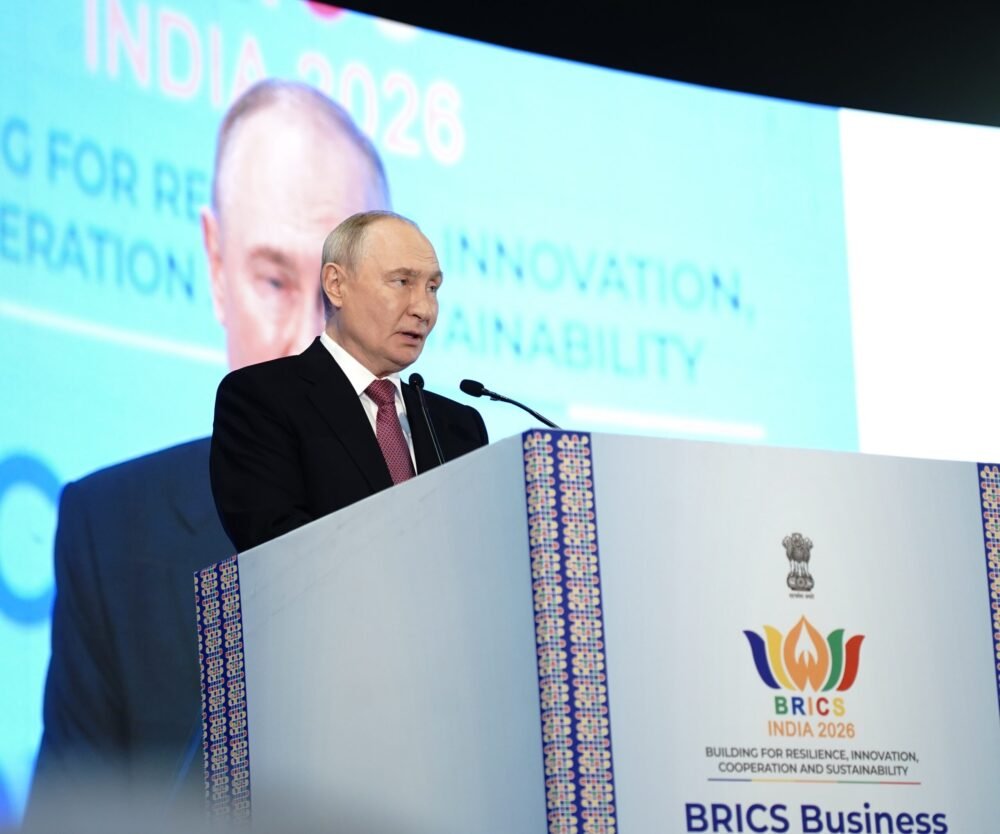
President Putin’s Visit to India and the BRICS Summit
Overall, the SCO forum provided an opportunity to further synergise India’s Eurasian diplomacy and to enhance New Delhi’s greater role in Eurasian geopolitical space. One may add here that President Putin visited India to attend the BRICS Summit at New Delhi on September12-13, 2026.
This provided a further opportunity for both countries to augment relations to a new level. This includes the fields of energy, trade, connectivity and defence cooperation between both the countries. In this regard, Prime Minister Modi and President Putin held substantial discussions on the lingering West Asian conflict and its impact on the Black Sea region.
Joint production of weapons was one of the key aspects of bilateral relations between the two countries. In this context, Russia has also offered joint production of the SU-57, the fifth-generation fighter aircraft, along with the Sukhoi 400, which can be considered a game changer in the context of India-Russia relations.
President Putin’s visit to India laid the groundwork to elevate their strategic partnership. Key highlights include proposing a new $150 billion trade target by 2030, advancing the Chennai-Vladivostok Maritime Corridor and exploring joint production of advanced weapons like the SU-57
Both leaders have also discussed at length elevating the existing “Special and Privileged Strategic Partnership between the two countries”. This can be considered a boost in the context of growing complexity in global geopolitics.
Similarly, growing cooperation between India and Russia in the North Sea Route will further enhance trade and cooperation between the two countries as well as in the Arctic region.
In this context, there is a need for both India and Russia to cooperate effectively in both the Black Sea and Mediterranean regions, which will balance the geopolitical realignment arising in the aftermath of the Russia-Ukraine war, as well as in present West Asian geopolitics.
During the interaction with Russian President Putin, Indian Prime Minister Modi underlined the need for “dialogue” and “diplomacy” as the only means for resolving the war.
In their interaction, both the leaders emphasised the need for a new roadmap in terms of trade and economic cooperation between the two countries. Along with INSTC, both countries are emphasising the need to augment the Chennai-Vladivostok Maritime Corridor, which can give a big boost to India-Russia trade relations, as this Sea corridor will reduce the distance between the two countries.
Similarly, instead of a trade target of 100 billion US dollars, both countries should set a new target of 150 billion US Dollars, by 2030, looking at the current speed of bilateral trade relations between the two countries.
Armenia is rapidly emerging as a vital partner for India, both as a $2 billion market for defence systems (like Akash and Pinaka) and as a land bridge connecting Iran to the Black Sea region
Some of these moves will definitely give new vistas to India-Russia civilisational relations in the 21st century. It is a fact that Russia’s strategic location, as well as its vast geographical space, makes it the pivot of Eurasian geopolitical space.
Rejuvenating India- Kazakh Diplomacy
The visit of Kazakh President Tokayev to India, as discussed above, to participate in the BRICS Summit has also provided a new opportunity to bridge the friendship between both countries. As it is a known fact, that like Russia, Kazakhstan is also occupying a pivotal position in the Eurasian landmass. In this context, by strengthening bilateral cooperation with Kazakhstan, India can get a preponderant position in Eurasia.
Because of Kazakhstan’s pivotal position, India can augment its geopolitical as well as geoeconomic connectivity in this part of the world. For instance, Kazakhstan can act as a crucial link for India’s connectivity corridor with the Eurasian region along with Europe due to its geo-strategic positioning.
India can be a crucial market for Kazakhstan’s rich hydrocarbon reserves, along with critical minerals like Uranium. One may add here that the original agreement which India and Kazakhstan signed, was way back in 2009, when former President Nursultan Nazarbayev visited India.
As per a report of the World Nuclear Association in 2025, Kazakhstan produced around 40 per cent of global Uranium. It may be added that in the first quarter of 2026, both countries signed an agreement worth 4 billion US Dollars aimed at boosting civilian nuclear cooperation. This agreement certainly contributed to India’s quest for Civilian Nuclear Energy Cooperation. Along with this, both countries are keen to diversify bilateral trade relations into various other sectors, including participation of Indian industries in the domestic market of Kazakhstan.
Kazakh President Tokayev’s BRICS visit rejuvenated bilateral ties, highlighted by a landmark $4 billion civilian nuclear cooperation agreement for uranium supply and new collaborations in AI and critical technologies
So also, Kazakhstan is keen on securing India’s support in AI, semiconductors, and other critical technologies. At the sidelines of the BRICS Summit, the Kazakh President held intense discussions with Prime Minister Modi and appreciated India’s leadership in BRICS countries.
Overall, both at the bilateral and at the multilateral front, India is strengthening its geopolitical outreach.
One important aspect of India’s Eurasian outreach is that New Delhi is strengthening its bilateral relations with all the post-Soviet Eurasian countries, like Armenia, Georgia and Central Asian countries.
This move by India will certainly strengthen its geopolitical outreach in the Eurasian space.
This will also put India and Eurasian countries’ relations on a new, stronger footing.
One may add here that over the years; India has given equal importance to both geopolitical and geoeconomic bonding with Eurasian countries. These moves make India a pre-eminent player in Eurasian geopolitics.

The author teaches at the School of International Studies, JNU, New Delhi. The views expressed are personal and do not necessarily carry the views of Raksha Anirveda





