


“3-D lattice Luneburg lenses had been fitted on the ‘Lakshay’ pilotless target aircraft (PTA) and launched into Pakistan; it was made to loiter near the Pakistani border but on the Bharatiya side during ‘Op Sindoor’. This had been done in cohesion with the positioning of the loitering ammunition in the vicinity of the high priority Pakistani Air Defence systems like HQ-9B missile systems. The Paki and Chinese radar Operators fell an easy prey to these decoy targets, which the Loitering Ammo and other Bharatiya weapon systems had effectively taken down. However, the Pakis and Chinese Radar operators had realised their mistakes and had analysed that a fighter would have speeds well above that of the subsonic Lakshay PTA and the advanced fighters would manoeuvre with much more dexterity than the Lakshay PTA. Gaurav Lokhande and his team had also realised the same and had found an easy solution for it. Thus, on the intervening night of June 16th and 17th, a formation of SU-30s had taken off with special payloads.”
Extract from ‘Rise of the Ancient: Phoenix Resurrection’ by Grp Capt Arun Kashyap

Nature is the most brutal playground for survival, wherein the animals daily enact the game of ‘Life’ (Predator) & ‘Death’ (Prey) which is nothing but the play of Stealth & Sensors. A tiger exploits its yellow-orange coat with dark stripes which merge with the forest background during the crepuscular period of the day to stealthily ambush its prey, large ungulate preys whose sensors (eyes) are designed to pick-up mainly motion with insignificant depth perception, remove the stealth cover provided by tall grasses or the thick-forest and thus, the tiger as a feared predator is compromised.
The Lessons from the Nature
A barn owl has its eyes evolved for lowlight when its preys mainly rodents scurry around for food on the surface, their sensors (ears & skin) supersensitive to vibration and noise are beaten by the rather silent almost soundless flight of the barn owl but as the daybreaks barn owl’s eyes adapted for low-light environment ‘go-blind’ or are over-saturated like the modern LLTVs (Low Light TVs used in many weapon-systems for extremely lowlight operations).
A pit-viper’s ‘nose-pits’ are sensitive enough to detect a prey with even thermal variation of 0.003°C which serve it well in darkness but during the bright daylight when thermal signatures may be confusing, it turns to its other sensor (eyes) which function very effectively in the visual spectrum. Thus, the basic lesson from the nature is very clear ‘Stealth is always the game of Spectrum and Environmental Conditions’. This fact has been amply established and demonstrated during the ongoing conflict between Iran and Israel-America combine.
The Game of Stealth and Spectrum
The American-Israeli combine, the leading powerhouses of weapon advancement failed to read the obvious signs, spread over decades of forthcoming shift of weapon employment and battlefield scenarios in the fields of Aerial Warfare especially with respect to Stealth.

Stealth is never absolute; it is entirely dictated by the environment and the spectrum. Just as a tiger’s stripes fail without the cover of tall grass, or a pit-viper must switch from thermal pits to visual sight in daylight, military stealth only works if the enemy is looking through the specific spectrum you designed your platform to hide from
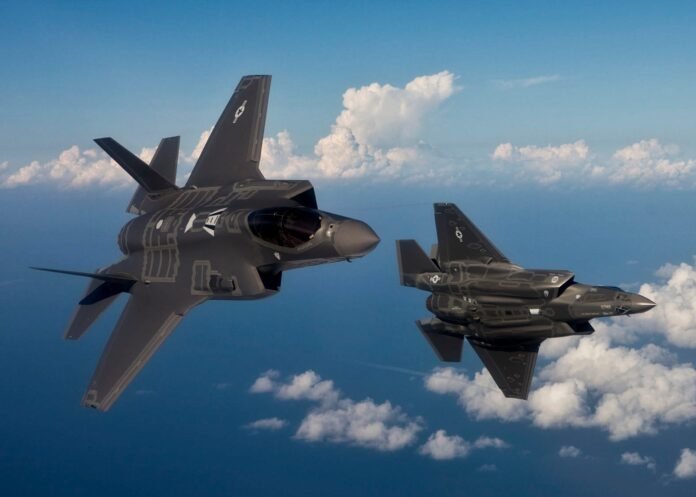
The American-Israeli combine put in huge efforts to develop very expensive, maintenance intensive ‘Stealth’ weapon platforms viz F-35I to be ‘invisible’ to the enemy radars due to their insignificant Radar and Thermal signatures. The requirement of masking RCS (Radar Cross Section) and heat signature obviously impinged on said platform’s other performance abilities like max velocity and agility (viz F-35).
What the US-Israel missed out while rolling out these exorbitant costing aerial platforms is the fact that if the adversary just shifted the detection spectrum of its radar, the stealth benefit of the ‘advanced’ platforms would be lost making them vulnerable.

This first became apparent in the one-off incident during the ‘Kosovo Conflict’ when an antiquated SA -3 ‘Goa’/ S-125 Neva brought down an F-117 Nighthawk Stealth fighter touted as ‘undetectable’ to the enemy Radar. The Yugoslav AD was able to easily ‘paint’/track the ‘undetectable’ F-117 on their antiquated communication band radars (P-19 frequency band of 800 MHz & P-18 with frequency band of around 150 MHz).
The unsuspecting F-117, was continuously tracked on P-18/19 radars till it entered the confirmed kill zone of SA-3, wherein it was engaged in ‘manual’ mode. The F-117 at max velocity of one Mach stood no chance against 2.5 Mach SA-3 missile.
Subsequently, to overcome the drawback of the valve-based P-series radars of poor azimuthal, range accuracy besides their inability to be merged into an electronic data system, the Russians developed digital P-18/19 Radars which could now be merged seamlessly with an electronic data system to be used for MST (Multi Sensor Tracking).
MST implies that while the target is being engaged by a given radar, it transmits the ‘synthetic/digital’ position of that target to another weapon platform for engagement in real time, this development was not given its due consideration by the Western weapon designers.
The ‘West’ also missed to consider the rather innocuous, not very successful, vintage Russian system the ‘9K35’ Strela-10 (NATO designation SA-13 Gopher) which utilised both passive IR & optical-photo contrast to engage the targets. The aircraft tracked based purely on the photo contrast it formed against the visible spectrum environment and never realised that; as its RWR (Radar Warning Receiver) was never triggered.
The West’s multi-billion-dollar investment in “invisible” aircraft like the F-35 built a false sense of security. History – dating back to a vintage SA-3 bringing down an F-117 in Kosovo – proves that shifting detection to low-frequency L-band radars and utilising digital Multi-Sensor Tracking (MST) easily exposes high-frequency stealth designs
In essence, the stealth aircraft are designed to be ‘undetectable’ implying the aircraft paints hardly any RCS (Radar cross-section) for higher frequency Radars {X-band (8-12 GHz) to Ka band (26-40GHz)} but are clearly painted by much longer wavelength L-band Radars (1-2 GHz); with use of pulse compression, extended kalman filters and monopulse techniques the drawback of angular accuracy besides the range accuracy can be mitigated- thus making the ‘invisible’ Stealth aircraft ‘visible’.
LADAR/LIDAR/IR/Optical Contrast/Low Frequency Radars are a hundred time cheaper &and effective counter to a 100 billion dollar ‘stealth’ platform like F-35. The Russian S-500 system, by using hyperspectral tracking is already claiming the ability to track the most advanced American platforms at distances of 400km plus.
‘Reaping’ the Reaper
The famous General Atomics MQ-9 Reaper was touted as the ultimate MALE UCAV with both ISR (Intelligence, Surveillance and Recce) and attack abilities carrying two each of ‘Pave-way’ & ‘Hellfire’ missiles, if aerial threat was anticipated it could be equipped with AIM-9 Sidewinders missiles.
The ‘star’ of MALE (Medium altitude long endurance) on the Israeli side was the Hermes-900 ‘Kochav’ (Star in Hebrew). However, both these star performers more than met their match in the Iranian innovation of SA-67 missile often referred to by Iranians as Missile 358 or Saqr-1 (hawk-1).
Iran to its credit came up with the ingenious concept of loitering SAM (Surface to Air Missile) to overcome the constant threat and surveillance by enemy’s UAVs. The concept was simple, to launch a weapon in the air which would loiter in the likely area of operation of a MALE drone, cruising at mid altitude like a shark awaiting its prey.
Iran’s innovative SA-67 (Missile 358) has turned the hunter into the prey. By pairing cheap, off-the-shelf model aircraft turbojets with passive imaging infrared seekers, this loitering SAM waits silently in the air to shred high-value assets like MQ-9 Reapers and F-35s at a fraction of their cost
Iranians looked for a cheap off-the-shelf component to design this loitering ‘SAM’. The initial effort was to modify the famous Russian R-27 Air to Air missile but soon the Iranians realised that reverse engineering the missile warhead and seeker was difficult so they retained its body structure including the unique fin layout but powered it by ‘off the shelf’ Turbo jet Engine from Titan AMT of Netherland meant for UAVs and high-performance model aircrafts.
Titan AMT runs on normal petrol or kerosene, and does not require a separate lubrication system as five per cent lubrication oil mixed with fuel takes care of that. A booster assisted launch is achieved from the launching rails, the booster falls as the missile reaches its cruising altitude. There the Turbo jet takes over initially at idling RPM which gives it a 90-minute loiter time frame, its passive imaging infrared seeker (ImIR) scanning the skies for any target, as soon as the target is detected, the turbine RPM shoots up exponentially propelling the missile to 1000 kmph, and the laser proximity HE fragmentation fuse explodes close to the heat source of the target (engine) destroying it.
During cruise the AMT turbine engine hardly gives out any heat signature, keeping it almost undetected to its intended prey. Houthis and Iranians have been using this missile to ‘hunt’ UAVs for years now.
It is also credited with recent total loss of the F-35 overflying Iran. Interestingly, many attribute the nomenclature of Missile 358 to the tail number of E11A (BACN-Battlefield Airborne Communication Node) of the Americans shot/crashed over Afghanistan.
Every sensor has an Achilles’ heel. Much like the morning sun blinding a barn owl’s low-light eyes, modern battlefield sensors are slave to the weather. LIDAR is blinded by mist and clouds, while thermal seekers lose their edge in high-heat conditions – proving that timing and weather dictate stealth survival
This is noteworthy because only total of eight E-11A have been built by USA till date. The SA-67 missile costs less than $50,000 to the Iranians, while all the targets which it engages with impunity cost minimum 60 times more. This is a paradigm shift in the threat environment and employability of MALE/HALE besides stealth in general. It needs to be emphasised here that SA-67 has been in service at least for a decade by now, yet the world had not taken a serious note of it.
The Lesson & the Way Ahead
Surprise is essence of warfare and shall remain so, thus the need of stealth shall also continue to exist, as now onwards ‘stealth’ may have to be designed for the sensors, as the nature has done for the barn-owl and the tiger.
Initial ISR missions would have to establish the spectrum of the enemy ‘sensors’ (Radars- IR, Near-IR, LIDAR, EMW spectrum frequency L to Ka band) and the prevailing weather conditions. A LIDAR would be adversely affected by clouding, besides any other transparency reducing phenomenon like Mist.
To survive the next conflict, military planners must mimic evolutionary adaptation. Instead of relying on single, expensive platforms, tomorrow’s air combat will rely on cheap, 3D-printed decoys fitted with Luneburg lenses. By mimicking the radar signatures of mother ships, these decoys exploit and overwhelm enemy sensor systems
An IR sensor may lose its effectiveness during clouding or high thermal (‘hot’ afternoons) conditions. The SA-67 would not have been that effective in the Iran-American (Israeli) conflict, if the attack time selected by Americans would have been when there was going to be clouding and rains (November to January) making its ImIR seeker ineffective.
Other way to ensure surprise may be through ‘decoys’ designed to match the ‘sensors’ spectrum. Each spectrum generates a typical RCS for a given aircraft. Multiple cheap small-sized 3D printed decoys which have the ‘mother’ aircraft or weapon platform RCS can be created by fitting them with Luneburg lens (symmetric gradient Index lens which phenomenally increase the RCS of an object).
If these decoys are provided with ability to manoeuvre or mimic ‘mother’ platform or weapon systems attack profile, their effectiveness should rise manifold. In the end, like the Darwin’s theory of adaptivity-Warfare is also continuously evolving and those who adapt the fastest will survive the next war/conflict.

The writer is an Indian Air Force veteran and published author who has been a Navigation and Missile Instructor alongside being a weapon system evaluator. At present, he is a performance instructor for the Boeing 737. The views expressed are personal and do not necessarily carry the views of Raksha Anirveda





