


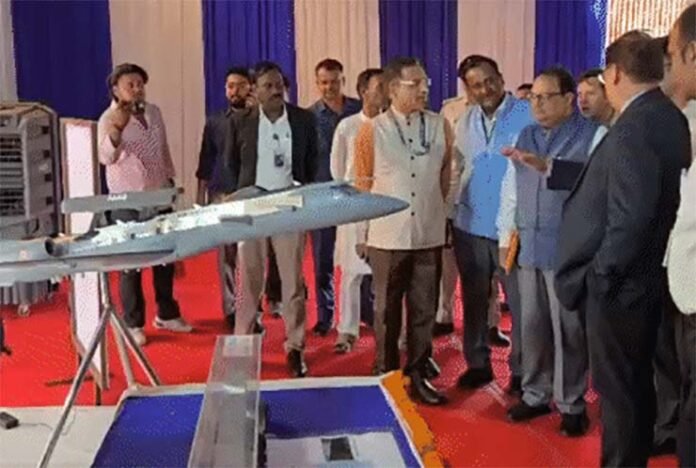
Motihari, one of the fastest-growing regions of Bihar, played host to a significant event recently organised by a top defence scientific body of India. The Defence Research & Development Organisation (DRDO) organised the mega defence exhibition at the Mahatma Gandhi Prekshagrih (auditorium) from April 15-18. It showcased several cutting-edge technologies, advanced systems, and progress toward the Aatmanirbhar Bharat initiative. Member of Parliament and Chairman of the Parliamentary Standing Committee on Defence, Radha Mohan Singh, inaugurated the exhibition. The theme of the event was ‘Shanti, Satya Aur Vigyan Ka Sangam – Surakshit Aur Aatmanirbhar Bharat Ki Aur’.
On display were some of India’s most cutting-edge defence platforms and military assets, which inter alia, included:

Missiles
BrahMos, a state-of-the-art supersonic cruise missile, is the outcome of a collaboration between India and Russia. With a Mach 2.8 speed potential, BrahMos is a two-stage missile. It has a solid propellant booster engine. With a maximum range of 290 km, it operates on the ‘fire and forget’ principle. Its annihilating power is compounded by its large kinetic impact on hitting the target. In addition, it carries a conventional warhead, weighing 200 kilograms.
The NAG missile: This is a third-generation, ‘fire and forget’ Anti-Tank Guided Missile (ATGM) missile, with a range of 500 metres to 4 km (ground variant), using an Imaging Infrared (IIR). Its other variants include the helicopter-launched (HELINA) and shoulder-fired (MPATGM).
PRALAY: It is an indigenously developed, solid propellant, quasi-surface to surface ballistic missile. Designed for conventional strike capabilities, it possesses a range of 150-500 km and travels at a speed of Mach 6.1. The distinguishing feature of this missile is its ability to change its trajectory mid-path as well as its potential to evade interceptors.
SHAKTI: The outcome of India’s Ballistic Missile Defence (BMD) programme, the Shakti missile, in this context, refers to the Prithvi Defence Vehicle Mark-II (PDV Mk-II). A highly interesting feature of the missile is that it uses the massive kinetic energy generated by the collision to destroy the target. It is capable of hitting targets moving at 10 km at altitudes of up to 1,200 km.

The chairman of the Parliamentary Standing Committee on Defence, Radha Mohan Singh, an MP, inaugurated the exhibition. The theme of the event was ‘Shanti, Satya Aur Vigyan Ka Sangam – Surakshit Aur Aatmanirbhar Bharat Ki Aur’
Armoured Vehicles
ZORAWAR: Developed by India’s DRDO and Larsen & Toubro (L&T), Zorawar is an indigenously built 25-tonne light tank; it has been developed for rapid deployment in high-altitude terrain, particularly in the eastern and north-eastern parts of India bordering China. It is equipped with a 105 mm NATO standard main gun, fitted with integrated anti-tank guided missiles (ATGMs) for enhanced destructive capability against enemy bunkers and heavily armoured vehicles like Armoured Personnel Carriers (APC) and other light tanks.
ARJUN MARK 1A: It is an indigenously developed third-generation Main Battle Tank (MBT) for the Indian Army. Possessing a large number of improvements over its predecessor, ARJUN MARK 1, it is equipped with a 120 mm rifled gun that is capable of firing SAMHO gun-launched Anti-Tank Guided Missiles (ATGM). It also possesses a remotely operated 12.7 mm anti-aircraft machine gun. It is protected by the newly developed Kanchan composite armour with integrated Explosive Reactive Armour (ERA) panels, along with an automatic fire detection and suppression system.

Satellite-Oriented System
NATSAT (Navigation, Avalanche warning and Tracking via Satellite): it is a completely indigenous, state-of-the-art satellite-based system developed by DRDO’s DEAL laboratory for the Indian Armed Forces. It provides critical, real-time avalanche and other weather-related alerts and updates, along with tracking, to assist soldiers in high-altitude, snow-covered regions where conventional communications may fail. It is primarily designed for the generation of advanced warning and ensuring the rescue of soldiers caught in inhospitable terrains, with applications ranging from landslide prediction to the prevention of forest fires.
The NAG missile is a third-generation, fire-and-forget platform, with a range of 500 metres to 4 km (ground variant). It uses Imaging Infrared (IIR). Its other variants include the helicopter-launched (HELINA) and shoulder-fired (MPATGM)
Next-Generation Optical Sights
Passive Night Vision Goggle (PNVG): This is a highly versatile, lightweight asset used for surveillance, patrolling, and reconnaissance. It consists of a single-tube, full-field binocular system. It can be handheld, face-mounted, or helmet-mounted. It possesses features like Automatic Brightness Control (ABC), bright source protection, and water resistance. In addition, it can be fixed or adjusted from roughly 5 meters to infinity. Other distinguishing features include a high degree of water resistance, operation on a single AA-size battery, and a red illuminated LED (Light Emitting Diode) for easily engaging targets.
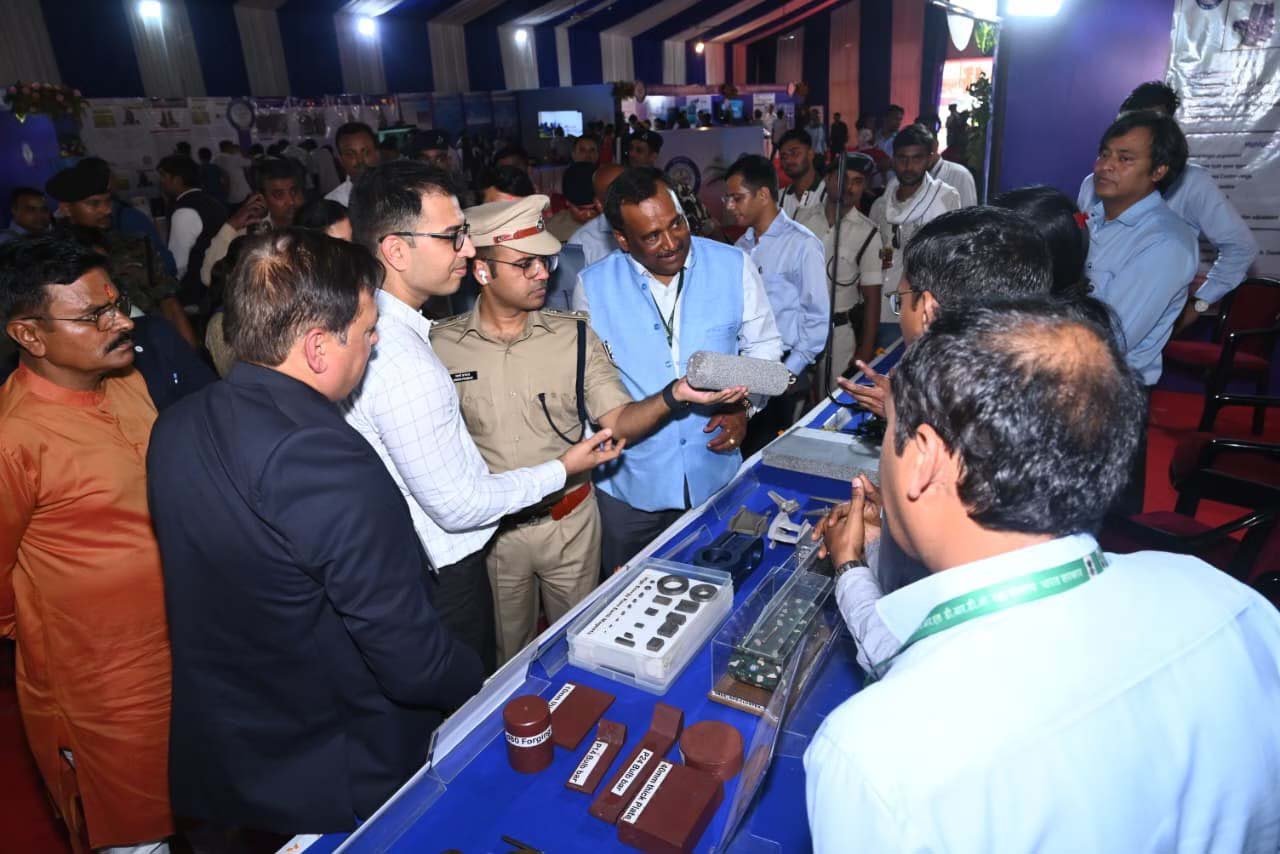
Camouflage Suits
Multi-Spectral Camouflage Suit (MSCS): This is made of specialised fabrics that suppress the user’s Infrared (IR) and Thermal signature. This makes the soldier nearly invisible to Night Vision Goggles (NVGs) and Thermal Imagers. An interesting aspect of this suit is that it uses synthetic, lightweight, and fire-retardant fibres to prevent the suit from becoming a fire hazard.
Developed by India’s DRDO and Larsen & Toubro (L&T), Zorawar is a 25-tonne light tank. It has been produced for rapid deployment in high-altitude terrain, particularly in the eastern and north-eastern parts of India bordering China
Radars
Ground Penetrating Radar (GPR): This is an indigenously built platform that uses “multi-sensor” fusion, combining GPR with traditional metal detection to identify non-metallic threats like plastic-cased landmines and hidden wooden IEDs. It is used not only for mine clearing, but also to detect cross-border underground tunnels in sensitive sectors like Jammu & Kashmir or Punjab.
Active Electronically Scanned Array Radar (AESAR): This is a multimode, solid-state active phased radar. It is fitted with state-of-the-art ECCM features, including a wide-band RF front end, ultra-low antenna side lobes, frequency and waveform agility, multiple SLC channels for jammer suppression, low probability of interception and non-cooperative target recognition. Therefore, it is capable of tracking multiple targets with high accuracy and is suitable for missile firing, with intermeshed air-to-air, air-to-ground and air-to-sea modes to provide all-terrain solutions.
Ground Penetrating Radar is an indigenously built platform that uses multi-sensor fusion, combining GPR with traditional metal detection to identify non-metallic threats such as plastic-cased landmines and hidden wooden IEDs. It is used for mine clearing and to detect cross-border underground tunnels in sensitive sectors, including Jammu & Kashmir and Punjab
Anti-Drone Systems
D4 System (Drone Detect, Deter and Destroy): Manufactured by the DRDO, it has a radar range of 5 km and micro UAVs. The application of the radar is to take down multiple targets, used particularly for Surveillance and Tracking. Its features include a multi-sensor detection and neutralisation system against drones.
In conclusion, it can be inferred that the strength of a country comes not just from the armed forces but also from patriotic citizens. Hence, this mega four-day defence exhibition reflects a conscious and well-developed attempt by India’s scientific-strategic establishment to not only make the common masses aware of India’s growing defence prowess, but also make them believe in the resilience, ability and most importantly — faith in the armed forces to tackle all sorts of threats — conventional and unconventional.

The writer is a doctoral candidate in Political Science at Mahatma Gandhi Central University. The views expressed are personal and do not necessarily reflect the views of Raksha Anirveda





