

Description
The geopolitical turbulence continues to shape the global landscape, and a reflection on the first six months of 2026 reinforces the reality that the future will remain unpredictable and filled with uncertainties. Against this backdrop, global leadership models have come under increasing scrutiny. In today’s complex and rapidly changing world, leadership decisions have often taken unexpected directions, with rising nationalism, personal ambitions, and political egos frequently overshadowing clarity of thought, disciplined action, and broader national interests.
Recognising the rapidly evolving geopolitical environment, India has renewed its diplomatic and strategic engagements with France and other European nations, Japan, South Korea, the United States, Canada, Australia, New Zealand, and ASEAN countries. These growing relationships are gradually establishing a new framework of mutual trust, positioning India as an important player in the emerging global strategic architecture. Such engagements are developing into comprehensive, multi-dimensional partnerships that reflect not only stronger international cooperation but also a significant transformation in strategic thinking, policy execution, and diplomatic priorities.

Despite these positive developments, India continues to face considerable challenges in bridging the gap between aspirations and achievements, policy formulation and effective implementation, and timely decision-making and institutional accountability. One of the country’s most persistent obstacles remains the dominance of political considerations over economic priorities, compounded by weak accountability, institutional complacency, and inconsistent execution. Addressing these structural weaknesses requires a renewed leadership framework rooted in India’s rich intellectual heritage and guided by its enduring civilisational wisdom. Such an approach could provide the strategic direction and institutional discipline necessary to overcome long-standing governance and developmental challenges.
Meanwhile, the military reforms initiated last year have gained prominence, but their implementation must be accelerated through sustained political commitment, adequate financial resources, and institutionalised military advice. Equally essential is the development of strong intellectual and institutional capabilities to translate strategic intentions into enduring operational strengths. With a new military leadership structure comprising the Chief of Defence Staff, the Chiefs of the Navy and Army, and an upcoming leadership transition in the Air Force, expectations remain high that defence reforms will gather greater momentum. These developments must ultimately strengthen India’s military deterrence, operational preparedness, and indigenous defence capabilities.
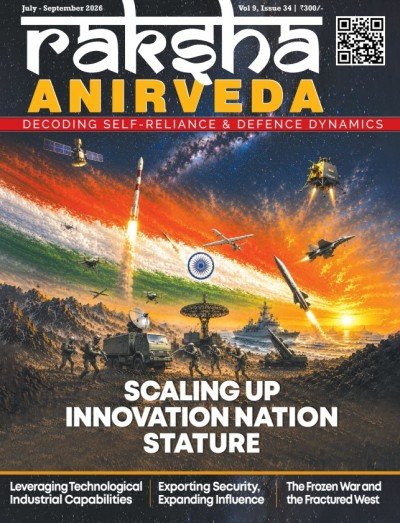
Looking ahead, India must address its internal weaknesses, overcome deeply entrenched misconceptions, and adopt a more disciplined approach to achieving the vision of *Viksit Bharat*. A critical part of this transformation involves moving beyond the traditional culture of *jugaad* towards precision-driven innovation, technological excellence, and systematic research. India must also confront its long-standing research paradox: while the country produces exceptional scientific and technological talent, it has struggled to create sufficient opportunities, research infrastructure, and institutional support to retain and effectively utilise this talent within its domestic innovation ecosystem.
To consolidate its position among the world’s leading innovation-driven nations, India must continue pursuing a policy of multi-alignment guided by strategic realism. This approach must be supported by economic resilience, patient capital, entrepreneurial determination, technological self-reliance, and a mature innovation ecosystem. Strengthening the connection between scientific research, industrial development, defence modernisation, and economic growth will be essential to transforming India’s ambitions into measurable achievements.

India’s journey towards becoming a developed nation will neither be easy nor linear. Sustaining its growth trajectory will require abandoning outdated technological mindsets, attracting and retaining talented Indian professionals from across the world, strategically acquiring technology-driven enterprises to accelerate capability development, and adopting reverse engineering wherever appropriate and lawful. At the same time, prudent investment in frugal innovation, advanced research, and indigenous technological capabilities will be crucial for achieving long-term technological sovereignty. India’s progress towards 2047 will depend less on external geopolitical circumstances and more on the strength of its domestic institutions, industrial competitiveness, scientific capabilities, and ability to capitalise on emerging opportunities amid intensifying competition among major global powers.
At *Raksha Anirveda*, our commitment remains focused on engaging our esteemed readers and encouraging informed, meaningful discussions among policymakers, strategic thinkers, defence experts, industry leaders, and other key stakeholders. Through insightful analysis, diverse perspectives, and constructive dialogue, we aim to contribute to a deeper understanding of India’s evolving strategic challenges, national security priorities, and aspirations for a stronger, self-reliant, and globally influential future.