


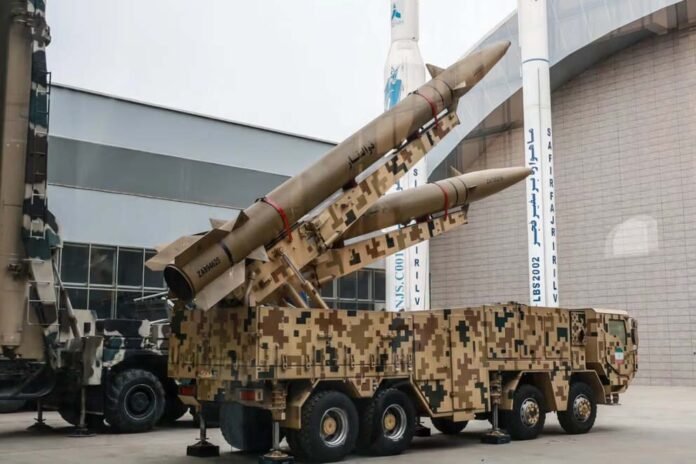
Tel Aviv: Iran’s Islamic Revolutionary Guard Corps (IRGC) is developing biological and chemical warheads for the country’s long-range ballistic missiles, informed military sources told Iran International on Sunday, December 28.
Iran International is the website of the opposition to the regime in Tehran operated from London.

According to the report, the IRGC Aerospace Force is working on the unconventional warheads for ballistic missiles as it transfers missile launchers to eastern regions of Iran.
The sources, who requested anonymity due to the sensitivity of the matter, said these activities have accelerated in recent months and are being pursued amid rising regional tensions and Tehran’s concerns about the possibility of another direct confrontation with Israel and the United States.
Israeli Prime Minister Benjamin Netanyahu is in Florida to meet the US president on Monday, December 29 when he plans to brief Donald Trump on options for potential future strikes against Iran, amid concerns that Tehran is rebuilding ballistic missile production facilities and repairing air defences damaged during a brief war in June.
Iran International’s sources say these programmes are largely carried out under the supervision of the IRGC Aerospace Force and include optimising ballistic missiles to carry chemical and biological agents, as well as upgrading the associated command-and-control systems.

As per the report, the Revolutionary Guard, anticipating scenarios of large-scale conflict, is building capabilities that, in the view of the Islamic Republic’s decision-makers, would serve as a “complementary deterrent factor” alongside Iran’s conventional missile programme, one source said.
The pursuit of chemical and biological warheads comes six months after Iran’s foreign minister described his country as “the largest victim of chemical weapons in modern history,” citing Saddam Hussein’s chemical attack on Sardasht in western Iran, which, according to OPCW documentation, killed more than 100 people in a large-scale mustard gas assault.

Asked about the contradiction, one source told Iran International, “The Iranian leadership views potential Israeli and American attacks as a threat to its very existence and intends, in the event of a conflict, to significantly raise the cost for the opposing side.”
There is a perception at the highest decision-making levels of the Islamic Republic that “the use of unconventional weapons can be justified in situations of existential threat,” the source added.

-The writer is an Israel-based freelance journalist. The views expressed are of the writer and do not necessarily reflect the views of Raksha Anirveda





