


Tel Aviv: The second annual Innotal Innovation Conference, led by the Directorate of Defence Research and Development (DDR&D/MAFAT) at the Israel Ministry of Defence (IMOD), in partnership with the IDF Technology and Logistics Directorate and the Israel Innovation Institute, took place on June 16, showcasing cutting-edge technologies already making their way into IDF operations.
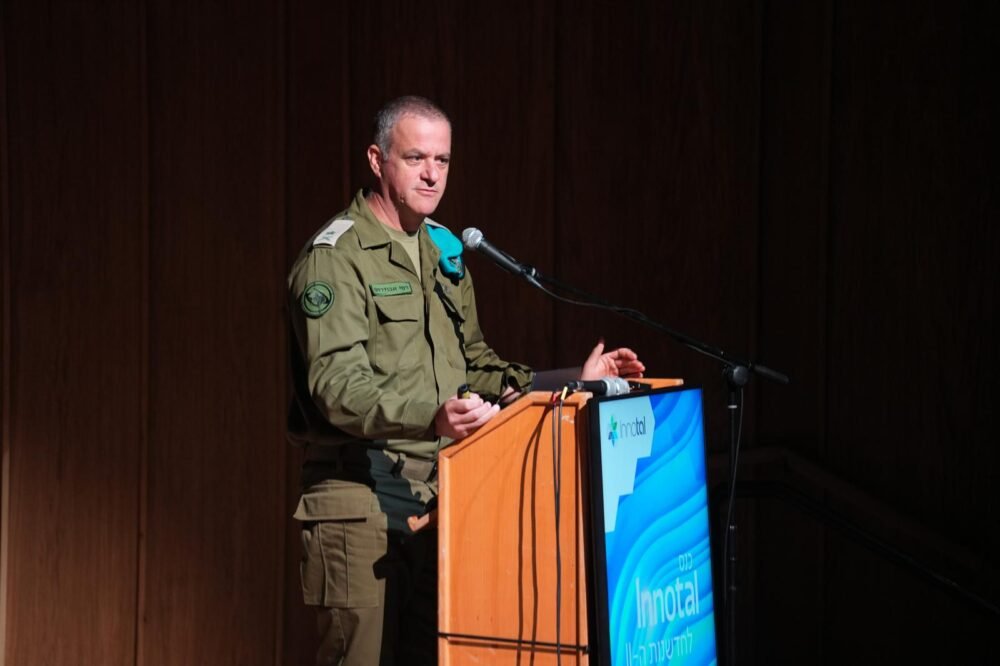
The event was attended by the Director of the DDR&D, Brig Gen (Ret.) Dr Dani Gold, Head of the Technological and Logistics Directorate, Maj Gen Rami Abudraham, and IDF Chief of General Staff Economic Advisor Brig Gen Nir Weingold.

Central to the conference was the Innotal programme, which is concluding its second cycle of integrating advanced civilian technologies into military use across a range of fields, including medicine, robotics, vehicles, energy, and smart operational solutions.
Selected from hundreds of applicants, 11 Israeli startups were chosen to work alongside IDF units to develop technologies tailored to real-world operational challenges and evolving battlefield needs. This year’s programme placed particular emphasis on AI-driven solutions designed to enhance decision-making, improve efficiency and deliver faster, more effective responses on the battlefield.
The conference featured presentations from each startup-IDF collaboration, highlighting technologies ranging from AI-based training tools and battlefield medical systems to innovative logistics and sustainment solutions. Attendees also had the opportunity to experience the technologies firsthand through a live exhibition showcasing the latest developments emerging from the programme.
Innotal is the innovation programme of the IDF Technology and Logistics Directorate, DDR&D at the Israel Ministry of Defence, and the Israel Innovation Institute, run in coordination with the IDF’s Chief Financial Officer. The programme identifies cutting-edge Israeli technologies and integrates them into the IDF through the Technology and Logistics Directorate, which covers medicine, food, vehicles, construction, energy, logistics, ammunition, and more – to upgrade IDF systems and improve conditions for soldiers.

The programme works by publishing operational challenges from the Technology and Logistics Directorate’s areas of responsibility and inviting Israeli tech companies to pitch solutions. Selected companies receive initial pilot funding of NIS 200,000 per project. Pilots that succeed move toward full IDF adoption.
This is the second cycle of the programme. The first cycle resulted in over 10 technologies being integrated into the IDF.

The current cycle includes 11 new technological developments addressing IDF needs. Most are in advanced pilot stages, and based on positive results to date, the majority are expected to reach full integration.
Ayala Tzoref, Head of Innovation and Technological Development, IDF Technology and Logistics Directorate, commented ,“The Technology and Logistics Directorate operates on every front, around the clock, to give IDF soldiers the best support possible. When the war broke out, we launched an innovation programme to deliver fast-track technological solutions into ATAL and, from there, to our troops. Israel isn’t just a powerhouse in cyber and defence — it leads in food tech, transportation, energy, medicine, and more. Israeli innovation is not just about missiles and drones; it’s also about startups solving problems in healthcare and logistics. Now, IDF soldiers can experience those technologies too. In the programme’s first cycle, alumni startups collectively received over NIS 30 million in orders. Innotal is one of a kind, and together with our partners – DDR&D, the Israel Innovation Institute, and the CFO’s office – we’re making it possible to bring groundbreaking innovations into the IDF quickly, getting them straight to the field and into the hands of our soldiers.”
Lt Col R., Head of Accelerators, DDR&D, Israel Ministry of Defence, remarked, “The DDR&D’s core mission is to maintain the technological edge of Israel’s defence establishment and the IDF. Innotal bridges the most advanced civilian innovation with the immediate operational needs of the Technology and Logistics Directorate, and reflects the Ministry’s strategy of fully supporting IDF requirements while accelerating game-changing developments. Beyond finding startups, our job is to rigorously evaluate companies and their capabilities to ensure they’re the right fit for the defence establishment. We work from a deep understanding of what fighters and commanders actually need, translating advanced technologies – AI, robotics, automation, energy, water – into practical tools for both combat and support forces.”
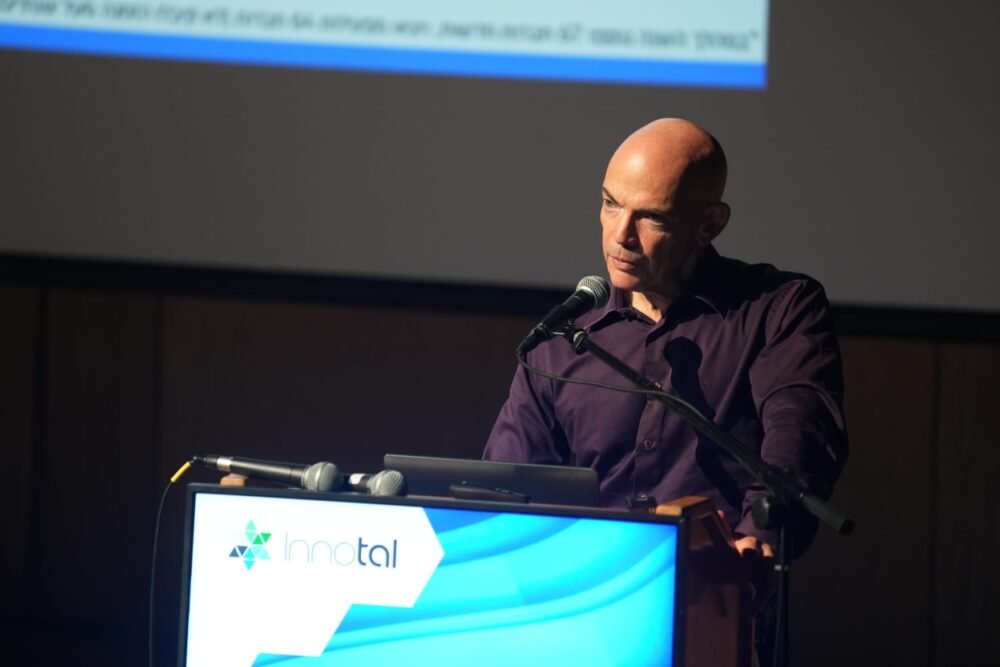
Aden Peled, Programme Director, Israel Innovation Institute, stated, “The Israel Innovation Institute is a nonprofit that drives innovation across Israel, connecting startups, corporations, academia, and government. Internationally, we’re recognised as a professional, neutral body specialising in open innovation and ecosystem development, working with countries and institutions on large-scale programmes. We’re proud to bring that expertise to one of the most consequential organisations in the country – the IDF. Within Innotal, the Institute manages the civilian side: identifying and screening startups, and guiding every pilot from start to finish.”
Technologies Presented at the Conference:
1) Portable Water Purification and Desalination for Troops in the Field
During the war, IDF soldiers were sometimes stationed deep in enemy territory, cut off from logistical supply lines. Woosh Waters was founded specifically to address this problem. In partnership with the IDF’s Ground Technology Brigade, the company is developing a portable, field-deployable water filtration and desalination system to ensure troops have safe drinking water even when resupply isn’t possible. Once R&D is complete, the system will produce approximately 50 cubic meters of clean water per day for drinking and cooking, handling a wide range of contaminated sources — bacteria, viruses, heavy metals, saltwater, and freshwater alike.
The system will run on a generator, be compact and simple to operate, and be built for long-term storage and rapid deployment. The pilot will test it against various water sources in real field conditions, including pumping from up to 2 km away and across elevation differences of up to 50 metres.
Current stage: Operational requirements are being defined with the Ground Technology Brigade.
Next stage: Prototype development and field trials with multiple water sources.
2) AI Simulator Training Soldiers to Recognise Psychological Distress
A soldier in distress often needs just one person to notice. OpenMind360 has developed an AI-based digital platform that trains soldiers and commanders to identify signs of psychological distress and suicidal ideation among their peers. Led by the IDF Medical Corps’ Mental Health Directorate, the platform is accessible from any smartphone. Soldiers practice simulated scenarios involving a distressed peer, then receive detailed personal feedback — including whether they successfully encouraged that peer to seek professional help. The platform draws on over 1,000 mental health workshops and uses AI systems carefully trained to portray soldiers with concealed suicidal potential.
Current stage: Actively being evaluated across combat, combat support, and rear-echelon units, with feedback and competency assessments conducted by the Medical Corps’ Mental Health Directorate.
Next stage: Expansion to additional units.
3) AI-Assisted Mental Health Screening at Recruitment Offices
Processing a recruit’s file – which can run to dozens of documents – is currently done manually and can create significant bottlenecks. The developing company has built an AI system that scans mental health-related medical documents, extracts the relevant information, and generates a professional summary for the mental health officer ahead of their meeting with the recruit. The goal is to shorten classification timelines. Crucially, the system doesn’t replace the officer’s judgment — it frees them up to spend more time on the recruit rather than on paperwork.
Current stage: Final development and customisation ahead of a pilot at IDF recruiting and enlistment offices.
Next stage: A limited pilot measuring efficiency, time savings, and usability.
4) Rapid Suppression of Ammunition and Lithium Battery Fires
Extinguishing ammunition fires, gunpowder combustion, or lithium battery fires is a shared challenge for both defence and civilian sectors (particularly electric vehicles). In the IDF, this falls under the Ground Technology Brigade within the Technology and Logistics Directorate – and it can be immediately life-threatening.
The startup SurtBusters is developing a solution. The pilot will test whether the system can bring ammunition fire temperatures down to 40 degrees Celsius, extinguish flames quickly, and prevent re-ignition – even in the oxygen-rich conditions typical of ammunition or lithium battery fires.
Current stage: Preliminary trials completed.
Next stage: Further trials measuring effectiveness across scenarios simulating real-world incidents.
5) AI for Building Interactive Training Content
Every IDF soldier goes through a range of educational instruction during their service. Mimshak has developed an AI-based platform that helps training staff build quality lesson plans in a fraction of the usual time – cutting preparation from roughly 5 working days to about 2, a 60% reduction. The platform ensures compliance with military formatting standards, pedagogical requirements, and professional accuracy. The pilot will run at the IDF’s Training City, which houses 9 training bodies, and will assess adoption, usage frequency, and satisfaction among both instructors and soldiers.
Current stage: Final refinements ahead of the pilot launch at the Training City, Medical Corps training bases, Technology and Maintenance Corps bases, and additional sites.
Next stage: Expansion to additional IDF training bases and content areas.
6) AI for Mechanical Engineers
LEO has built an AI engineer to support mechanical engineers working at the IDF’s Rehabilitation and Maintenance Centre, who are responsible for a range of armoured combat vehicles including Namers, Eitans, and others. The AI assistant gives each engineer instant access to engineering knowledge drawn from IDF- and industry-approved sources. Instead of spending hours digging through folders or waiting on a subject-matter expert, an engineer can ask a question and get a precise, sourced answer in seconds.
The system works directly with existing documentation – CAD files, PDFs, scanned drawings, work instructions, and product files. The pilot is running at MASH (the Maintenance and Rehabilitation Centre), where decades of engineering knowledge are spread across multiple systems and personnel.
Current stage: Being tested on engineering knowledge at the Rehabilitation and Maintenance Centre, evaluating retrieval speed, answer quality, and engineer satisfaction.
Next stage: Continued pilot and performance evaluation against defined targets.
7) Wearable Sensor for Continuous Battlefield Vital Sign Monitoring
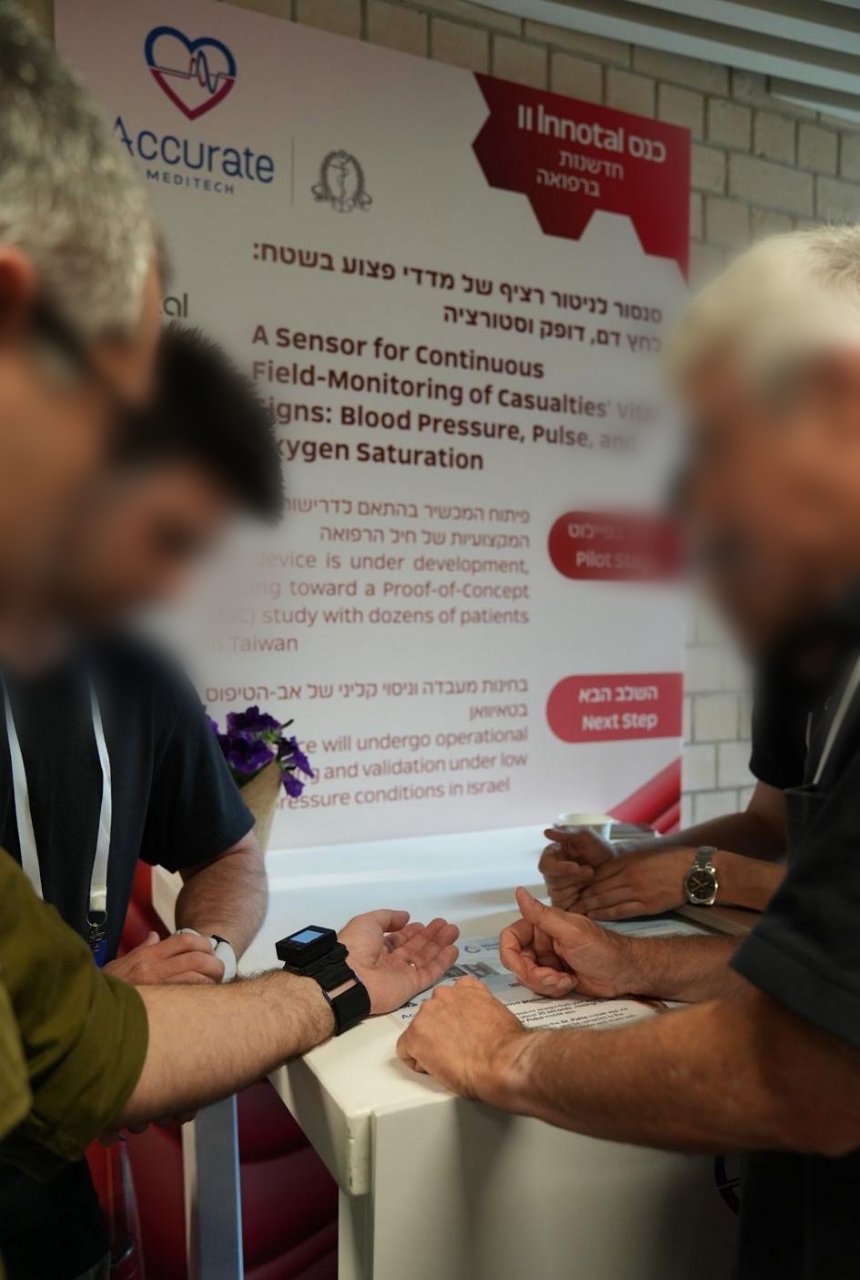
Taking vital signs from a casualty in the field is a critical but often complicated part of saving a life – movement, helicopter vibration, and other factors can force medics to take repeated measurements. AccurateMeditech has developed a wearable device for continuous, non-invasive monitoring of blood pressure and additional vital signs, worn on the wrist or ankle.
The device tracks blood pressure, pulse, and oxygen saturation in real time, maintaining accuracy even during evacuation movement, with no calibration required and no bulky equipment. It looks and functions like a bracelet – no cuff, no repeated measurements.
Current stage: Initial development completed jointly by a Taiwanese startup, an Israeli company, and the IDF Medical Corps.
Next stage: Field trials in evacuation scenarios and low blood pressure conditions typical of battlefield evacuations.
8) AI-Based Robotic System for Ammunition Identification and Sorting
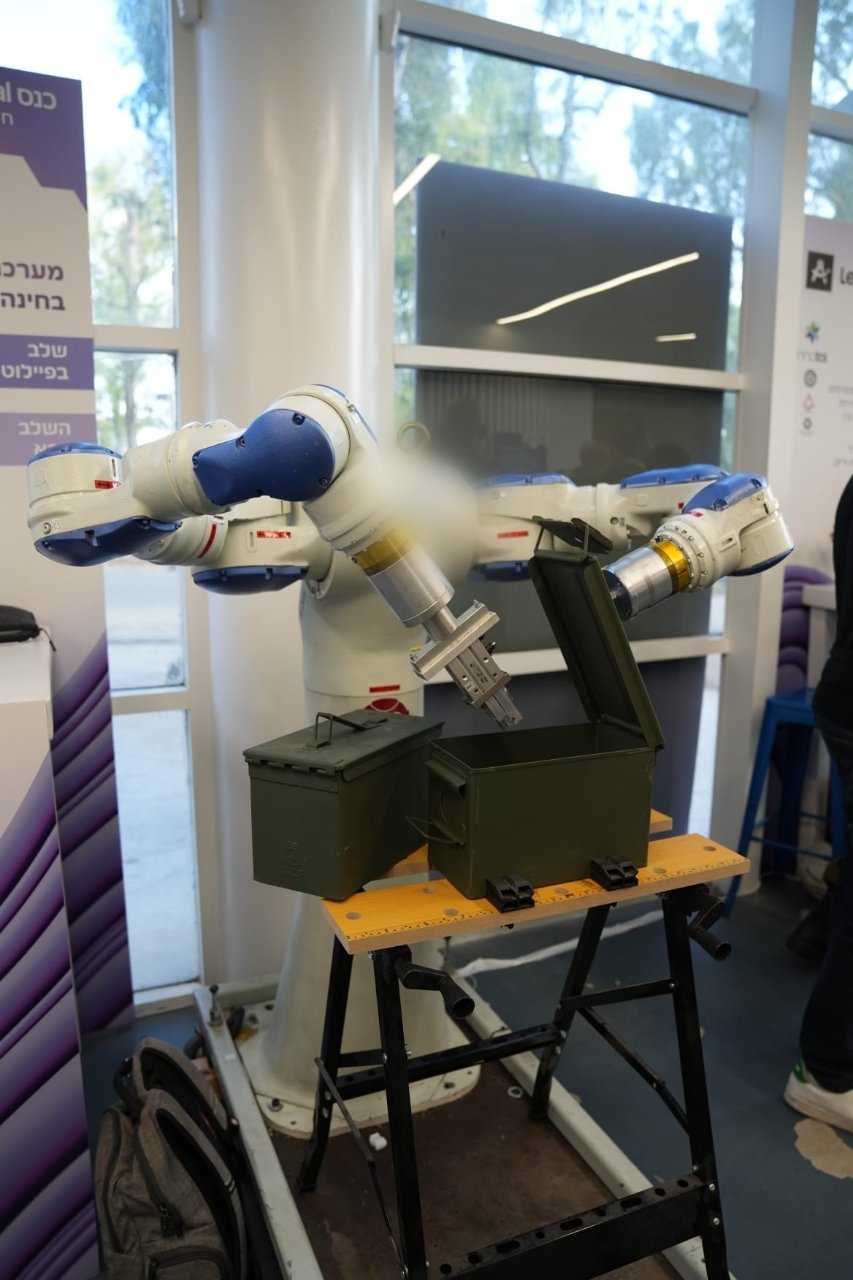
The startup Physical has built an autonomous AI-powered robotic system that identifies, inspects, and classifies ammunition before it’s dispatched to units. A conveyor carries mixed ammunition types through the system, which automatically sorts, classifies, and assesses quality.
The system supports multiple ammunition types — shells of various kinds and sizes — and helps the IDF’s Missiles and Ammunition Centre sort and count inventory without paperwork. The pilot will run at the IDF’s Ammunition Centre, where these checks are currently done by hand, creating bottlenecks in the supply chain.
Current stage: Design phase complete. The system is now being built, and the AI is being trained to identify ammunition types and detect faults. The technological design ahead of the first deployment is nearing completion.
Next stage: First robot installed at the Ammunition Centre; operational pilot phase begins.
9) AI for Documenting Mental Health Officer Sessions
Many IDF soldiers receive care from mental health officers. The intake process – assessing the soldier’s needs and determining a treatment plan – currently ends with the officer manually typing up notes into the soldier’s personal file. This startup has built an AI system that records and summarises therapeutic sessions, freeing the mental health officer from documentation so they can stay focused on the soldier and the treatment itself.
Current stage: Active pilot at a mental health clinic in central Israel, with the system summarising sessions for soldiers who have consented to its use. Summaries are written directly into each soldier’s file.
Next stage: Pilot expansion to a second, larger IDF mental health clinic.
10) Weapons and Ammunition Inventory at the Push of a Button
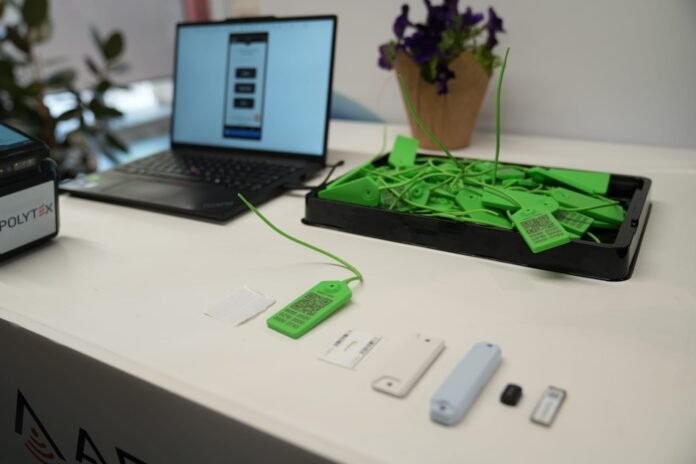
Counting weapons and combat equipment inventory is currently done by hand, with soldiers reporting directly into classified IDF systems – a requirement driven by the intelligence sensitivity of the data. The winning company has developed technology that automates the entire process, enabling real-time inventory management without manual counting.
Current stage: Active pilot at a central Israel weapons depot run by the General Staff’s Supply Centre, with sensitive items being counted automatically and continuously.
Next stage: Development of the world’s first tag of its kind, allowing individual items to be remotely activated and deactivated on demand.
11) Robotic System for Moving Loads of Up to 10 Tons
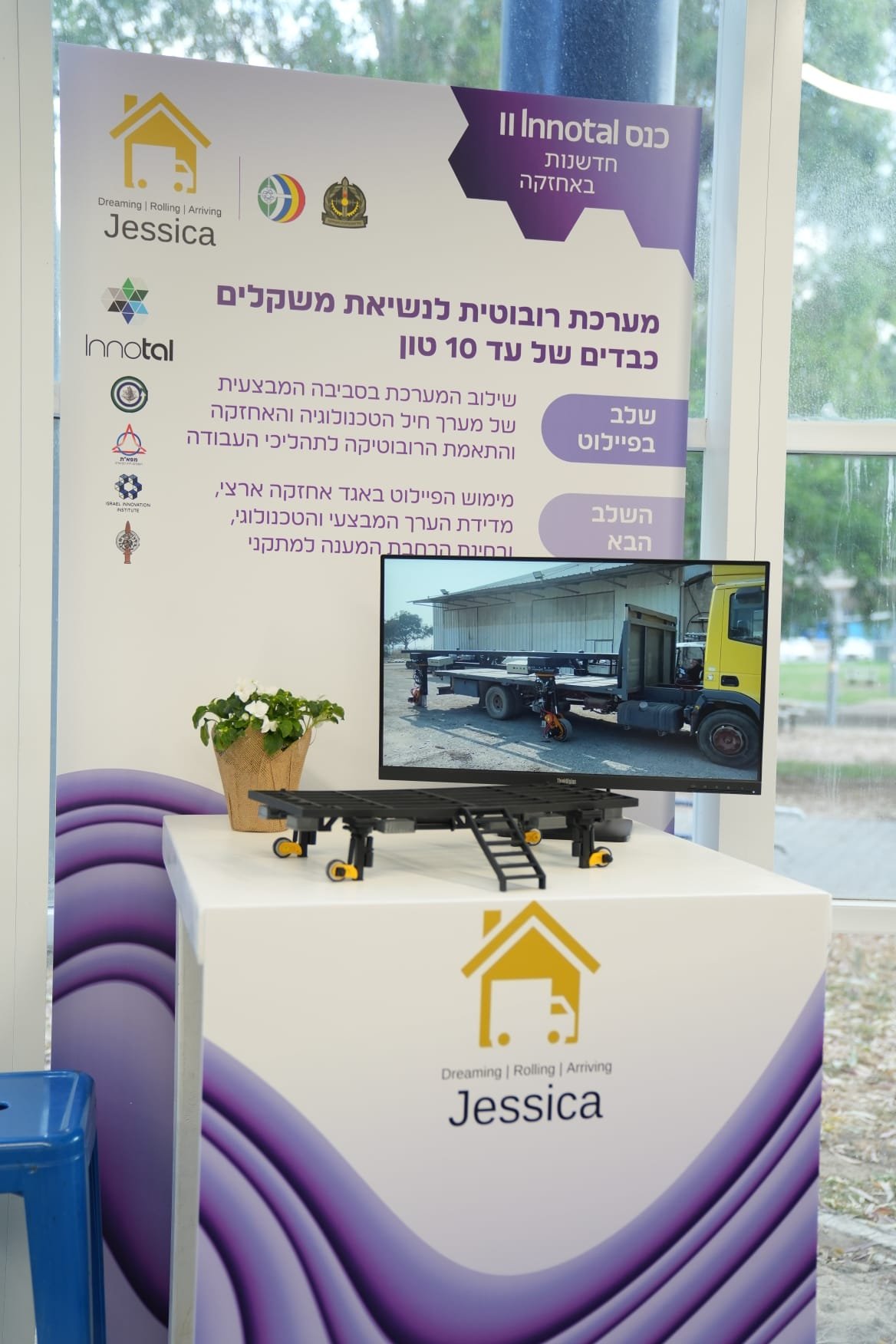
Moving heavy loads – tank engines, vehicle components, containers – requires complex equipment and repeated use of cranes and forklifts at IDF maintenance facilities. Jessica With Roll has developed a smart lifting and transport platform capable of handling loads of up to 10 tons, using electric legs and motorised wheels for lifting, lowering, and remote-controlled independent movement – no forklifts needed.
The pilot, run with the Technology and Maintenance Corps, will adapt the system to move tank engines by converting an existing cart into a robotic transport platform. The goal is to simplify engine handling in tight workspaces, reduce dependence on forklifts, improve safety, and increase throughput.
Current stage: The first system will be delivered to the Technology and Maintenance Corps for tank engine transport at maintenance centres in northern Israel. The pilot will evaluate transport time, reduced reliance on existing lifting equipment, and engine servicing rates.
Next stage: Expansion to moving additional heavy assemblies – hulls, turrets, and engineering equipment. The system will also be evaluated as an adjustable work platform, with autonomous navigation capabilities developed for independent engine transport between workstations.






