

India faces a threat unlike any it has systematically prepared for during decades of counterterrorism operations. There is nothing spectacular about it: no explosives, no coordinated assault, just proximity, intent, and timing.
The Mira Road stabbing crystallises this shift in stark terms. A 31-year-old US returnee, armed with nothing more than a knife and ISIS ideological conviction, subjects two night-shift security guards to what investigators describe as a religious litmus test before attacking them.

Maharashtra’s ATS swiftly takes over, uncovering ISIS references and lone-wolf terminology in his residence. Two men are hospitalised, and one suspect is in custody, but the incident exposes vulnerabilities that conventional security architectures struggle to address.
For generations, India’s internal security doctrine evolved to neutralise structured threats with identifiable chains of command and support. From Punjab’s militancy to Kashmir’s insurgency and the 2008 Mumbai attacks, these challenges birthed sophisticated capabilities: signals intelligence, mapping, command communications, National Investigation Agency cells dismantling modules through confessions, and NSG contingents drilled for high-visibility target defence.
This architecture has delivered results, disrupting many plots over the past decade. Yet lone-wolf violence operates in the blind spots of this system. A solitary individual needs no logistical infrastructure, leaves almost no digital trace, maintains no financial relationships that require monitoring, and often withdraws from communication networks entirely. By the time blood stains Mira Road’s concrete, the system responds to the attack rather than the warning signs that precede it.
Lone-wolf attacks achieve strategic impact not through kinetic scale but through psychological penetration and societal disruption. A single blade stroke in a Mumbai suburb generates fear precisely because it appears random and replicable.

The targeted security guards were easy targets: private personnel working isolated night shifts at a Mira Bhayandar construction site, distant from police patrols and lacking immediate communication protocols or requisite training.
For generations, India’s internal security doctrine evolved to neutralise structured threats with identifiable chains of command and support. This architecture has delivered results, disrupting many plots over the past decade. Yet lone-wolf violence operates in the blind spots of this system
No fortified perimeter to breach, no metal detectors to circumvent, simply the everyday spaces of urban India where ordinary commerce unfolds unprotected.

Radicalisation pathways explain why conventional detection methodologies consistently fail against this threat profile. Contemporary lone actors rarely live in genuine isolation.
They maintain physical social embeddedness while cultivating psychological detachment through virtual ecosystems that reinforce stronger beliefs.
Online ecosystems reinforce grievance, blending personal frustration with larger ideological narratives and normalising violence.
The Mira Road suspect’s trajectory likely followed this path, shifting from curiosity about global jihadist brands to seeking local validation for violence against perceived targets in his immediate environment.
Personal accelerants amplify this drift: chronic unemployment, at 23% among urban Muslim youth in Maharashtra, according to National Sample Survey Organisation data; perceived communal marginalisation; and encounters with Gulf returnee networks that import Wahhabi interpretations incompatible with India’s cultural traditions.
Urban India faces compounded exposure because metropolitan security has historically prioritised high-value fixed assets, such as international airports, parliamentary complexes, and religious sites that attract large numbers of pilgrims.
Lone-wolf logic inverts these assumptions. Operatives bypass hardened nodes, seeking gaps in time and place instead.
Nationally, India’s four thousand-plus statutory cities generate 70% of GDP while maintaining barely 40% of the required police strength, according to Bureau of Police Research and Development assessments.
This diffusion demands a shift beyond perimeter defence towards constant awareness across cities.
This secondary propagation exemplifies terrorism scholarship’s “propaganda of the deed” concept: violence as a communications event explicitly intended to provoke state overreaction, societal polarisation, or vigilante counterviolence.
India’s twenty-four-hour news ecology and polarised social media environment amplify this dynamic exponentially, transforming localised stabbings into national psychodramas that erode intercommunity trust capital for months or years to come.
An effective response requires doctrinal evolution across five interdependent vectors, each demanding immediate resource reallocation and institutional redesign.
Intelligence Architecture: Nodes Over Networks
Disaggregate lone-wolf threats analytically by establishing dedicated Individual Threat Assessment cells within NIA headquarters, state Anti-Terrorist Squads, and Multi Agency Centre fusion points.
Shift the analytical focus from relational graphing to behavioural analysis, including indicators such as withdrawal, ideological fixation, and anomalous digital patterns.
India requires integration through a National Radicalisation Index that fuses open-source intelligence with judicially sanctioned telecom metadata.
Personal accelerants amplify this drift: chronic unemployment, perceived communal marginalisation, and encounters with Gulf returnee networks that import Wahhabi interpretations incompatible with India’s cultural traditions
Digital Ecosystem Disruption
Weaponise cyber capabilities against online spaces that constitute the primary infrastructure for radicalisation. The National Investigation Agency’s Cyber Wing remains critically understaffed, with approximately 200 personnel serving 1.4 billion citizens.
Triple the establishment immediately, and mandate platform accountability through geo-fenced content de-boosting algorithms targeting ISIS Khorasan keywords, mandatory transparency reporting on pathways for amplifying extremist content, and criminal liability for persistent channel administrators.
Urban Defensive Recalibration
Re-engineer municipal security architectures for decentralised threat profiles. Retrofit Category Three soft targets nationwide with tiered technological interventions: panic-button wearables distributed to private security personnel; DRDO-developed NetraAegis closed-circuit television systems with high accuracy in detecting concealed threats at transportation chokepoints; and fifth-generation network integration that reduces emergency response intervals from fifteen minutes to three minutes through automated dispatch protocols.
Standardise 40-hours training mandates across India’s 1.2 million-strong private security workforce, emphasising threat recognition, verbal de-escalation, and rapid radio protocols. Initiate a drive for National Citizens Security Culture in Mumbai’s twenty-four administrative wards as a proof of concept.
Precursors of radicalisation should be confronted through comprehensive socio-psychological intervention frameworks. Studies show many lone actors are driven by economic distress and identity crises
Societal Inoculation Infrastructure
Confront precursors of radicalisation through comprehensive socio-psychological intervention frameworks. Studies show many lone actors are driven by economic distress and identity crises.
Deploy Resilience Hubs within high-vulnerability zones and analogous geographies nationwide, integrating accelerated Industrial Training Institute programmes with psychosocial counselling audits conducted by clinical psychologists and narrative countering delivered through clerics credentialed by mainstream theological seminaries explicitly rejecting Wahhabi absolutism.
Narrative Containment Protocols
Institutionalise counter-narrative as a core counterterrorism strategy. Post-incident information vacuums predictably spawn rumour cascades that exponentially amplify the initial kinetic impact.
Institutionalise counter-narrative as a core counterterrorism strategy. Post-incident information vacuums predictably spawn rumour cascades that exponentially amplify the initial kinetic impact
The Home Ministry should mandate standardised Truth Window protocols, mandating time-bound public briefings with verified information, and unity appeals through multilingual press conferences.
Political leadership across the spectrum must adhere to evidence-based public discourse protocols during active investigations, recognising that rhetorical escalation is precisely the societal fracture Islamist terrorism seeks to provoke.
India’s demonstrated capacity to neutralise complex threats affirms institutional adaptability. Yet lone-wolf violence exposes deeper systemic weaknesses: intelligence compartmentalisation, chronic urban under-policing, naivety about the digital ecosystem, and reactive rather than predictive postures.
The fracture lines now stand out clearly across India’s urban continuum. These fault lines are no longer abstract. They run through India’s cities, its screens, and its silences. The real risk is not the next attack; it is whether we learn to prepare, predict, and prevent it
This trajectory demands not episodic panic but sustained precision; a security state that is simultaneously vigilant and restrained, technologically empowered, and that creates a security-conscious society led by citizens as the first responders.
The fracture lines now stand out clearly across India’s urban continuum. These fault lines are no longer abstract. They run through India’s cities, its screens, and its silences. The real risk is not the next attack; it is whether we learn to prepare, predict, and prevent it.

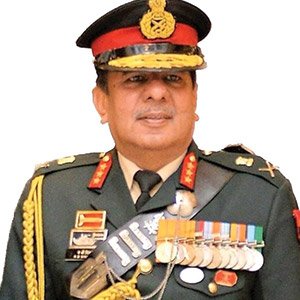
The writer, a PVSM, AVSM, VSM has had an illustrious career spanning nearly four decades. A distinguished Armoured Corps officer, he has served in various prestigious staff and command appointments including Commander Independent Armoured Brigade, ADG PP, GOC Armoured Division and GOC Strike 1. The officer retired as DG Mechanised Forces in December 2017 during which he was the architect to initiate process for reintroduction of Light Tank and Chairman on the study on C5ISR for Indian Army. Subsequently he was Consultant MoD/OFB from 2018 to 2020. He is also a reputed defence analyst, a motivational speaker and prolific writer on matters of military, defence technology and national security. The views expressed are personal and do not necessarily carry the views of Raksha Anirveda





