


Power in the current era is not based solely on a country’s military strength and economic potential. It is also about its ability to influence global dialogue, form alliances, and make an impact on the world agenda. In the last 10 years, India has proved to be doing all of the above, thus transitioning from being an emerging power to a global power.
This transition was most visible in India’s foreign policy approach, where it did not bind itself to any geopolitical grouping but practised strategic autonomy and formed alliances with centres of power despite their ideological orientation.

Multi-alignment Strategy
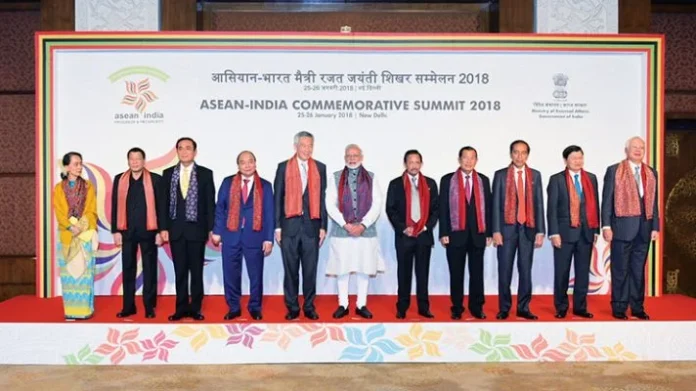
Currently, India has strong strategic relations with the US, preserved its traditional defence relations with Russia, developed its economic relations with Europe, improved its relations with the Gulf states, enhanced its cooperation with ASEAN, increased its presence in Africa, and continues to be an active participant in forums such as the Quad, BRICS, G20, and Shanghai Cooperation Organisation. India’s multi-alignment strategy is thus more pragmatic than non-alignment because of the growing fragmentation of international relations.
India’s multi-alignment strategy has been clearly exemplified since the Russia-Ukraine tension began in February 2014. Many countries took sides during the conflict, but India maintained an independent position based on its national interest. India engaged in dialogue with all the significant parties, pushed for a peaceful settlement of the crisis while protecting its own strategic and energy interests without hurting its relations with Western nations.
Also noteworthy has been India’s role in representing the Global South. India brought to attention, through efforts such as the Voice of the Global South Summit in August 2024, issues related to food security, climate financing, and debt sustainability, among other aspects of development for developing nations during India’s G20 Presidency.
India has strong strategic relations with the US, preserved its traditional defence relations with Russia, developed its economic relations with Europe, improved its relations with the Gulf states, enhanced its cooperation with ASEAN, increased its presence in Africa, and continues to be an active participant in forums such as the Quad, BRICS, G20, and Shanghai Cooperation Organisation
India’s success in chairing the G20 in 2023 may very well be the perfect example of this diplomatic transformation. When geopolitics seemed to have torn apart with divided consensus, India proved that diplomacy, built on credibility and trust, could still make way for positive developments even in the age of strategic competition.

Economic and Technological Diplomacy: Expanding India’s Strategic Influence
Diplomacy in the modern era goes well beyond just embassies and summits. Economic agreements, cyber capabilities, supply chains, semiconductor collaboration and emerging technologies have become tools of foreign policy. India has successfully realised that and made economic and technological considerations integral parts of its diplomacy.
The growing Indian economy has increased India’s clout in all international negotiations. Being among the fastest-growing major economies in the world, India is no less a huge market than an industrial hub and an attractive place for investment. Thus, enabling New Delhi to confidently build relationships with many regions.

Economic Diplomacy has transcended its traditional role of trade diplomacy to encompass resilient supply chains, infrastructure connectivity, energy security, critical minerals, and investments. Ease-of-doing-business policies that aim to reduce compliance burdens, digitise regulatory processes, and decriminalise minor offences encourage entrepreneurship and manufacturing development strategies that support India’s overall foreign policy goals by ensuring that India is perceived as a dependable ally for value chain integration across the globe.
The growing Indian economy has increased India’s clout in all international negotiations. Being among the fastest-growing major economies in the world, India is no less a huge market than an industrial hub and an attractive place for investment, enabling New Delhi to confidently build relationships with many regions
Technology Emerges as a Major Pillar
Digital India, launched in July 2015, is not only an important step in making India technologically powerful but also helped create interest of various nations in India’s Digital Public Infrastructure. Programmes such as Aadhaar, UPI, DigiLocker and CoWIN showed how technology can be used to provide public services to citizens. Several nations have already looked into collaboration with India to develop similar programmes, and thus India has developed a new kind of soft power due to technology.
Semiconductors, Artificial Intelligence, Quantum Computing, Cybersecurity and Space technology collaborations have increased India’s strategic importance. Technology collaboration has become an integral part of India’s bilateral relations with several nations such as the US, Japan, Australia, and some European nations.
India’s dynamic start-up ecosystem serves as yet another testament to this characterisation. Innovation has become a tool for diplomacy, allowing India to work with both governments and private industries as well as research and technology firms all over the world.
In addition to this, India has shown its commitment to climate diplomacy through its initiatives in the realm of renewable energy, including leading the International Solar Alliance and pushing for sustainable development. This proves that the environment can be looked after while still achieving economic growth.
Hence, economic and technological diplomacy has served as force multipliers for India’s power in the international community.
From Regional Stakeholder to Global Agenda Setter
Probably the best evidence of the transformation in India is to be found in the expectations of the international community. A decade ago, India was seen as a nation full of potential. Today, the major players of the international community expect India to play a part in addressing international issues.
Semiconductors, Artificial Intelligence, Quantum Computing, Cybersecurity and Space technology collaborations have increased India’s strategic importance. Technology collaboration has become an integral part of India’s bilateral relations with several nations such as the US, Japan, Australia, and some European nations
When it comes to maritime security in the Indo-Pacific region, like the Quad, India is making sure of resilient supply chains, addressing humanitarian crises, and taking part in peacekeeping missions.
Furthermore, India’s increased involvement in West Asia demonstrates its transformation. India today enjoys constructive relations with Israel, Iran, Saudi Arabia and the UAE, something that few nations can boast about. Such engagement has made India strategically important for one of the most volatile regions in the world and safeguarded India’s energy and diaspora interests.
India’s Indo-Pacific strategy has reinforced its strategic alliances with Australia, Japan, France, and the USA, without compromising its established strategic autonomy policy. Unlike getting involved in alliance systems, India has focused more on partnerships based on areas of common interest, such as maritime security, disaster response, technologies, and infrastructure.
The formation of the Quad has been a clear demonstration of this approach. In this case, the Quad has transformed from being a military alliance to becoming an engagement platform for cooperation on areas of common interest, such as vaccines, emerging technologies, cybersecurity, resilient supply chains, and maritime domain awareness.
Defence diplomacy has also seen some degree of sophistication in recent years. This has been evidenced by joint military exercises, defence exports, logistics support and capacity building with friendly countries. This is in tandem with the development of an indigenous defence manufacturing industry in India.
However, India’s ascendancy is not free from challenges. A resurgent China, regional turmoil, technology rivalry, cybersecurity, climate change and the changing dynamics of the world economy will continue to pose challenges for Indian diplomacy. Handling such issues demands consistent efforts to strengthen diplomatic capacities, innovations, defence upgrades, and institutional reforms.
India’s ascendancy is not free from challenges. A resurgent China, regional turmoil, technology rivalry, cybersecurity, climate change and the changing dynamics of the world economy will continue to pose challenges for Indian diplomacy. Handling such issues demands consistent efforts to strengthen diplomatic capacities, innovations, defence upgrades, and institutional reforms
Nevertheless, India’s major diplomatic strength lies in its ability to remain credible across multiple geopolitical fault lines. Few countries can engage Washington, Moscow, Brussels, Tokyo, Riyadh, and African capitals with equal confidence. Such diplomatic agility has emerged as one of India’s most important national strengths.
In the era of the shifting global order of multi-polarity, Indian foreign policy is moving more towards proactive statecraft than reactive diplomacy. India is not just reacting to what is happening globally but is also influencing it.
The past decade has thus gone beyond mere economic progress or technological developments. The truth is that this past decade has seen India emerge as a different kind of nation, from one that was aspiring for greater importance on the world stage to one that has begun to shape the world order of things.
Perception usually follows performance in strategic affairs, and this past decade has seen India prove itself on both fronts. It has been through carefully managed diplomacy combined with economic strength, technological development, and strategic alliances that India has made a certain milestone. The issue is no longer about whether or not India is an emerging power. The real issue now is how well India will utilise its newfound influence in defining the new order of global governance.

The writer is a seasoned writer specialising in geopolitics and national and international security affairs. With a strong understanding of strategic, political, and security dynamics, he writes insightful analyses on regional and global developments, foreign policy, defence, and emerging security challenges. The views expressed are personal and do not necessarily carry the views of Raksha Anirveda





