



ADefining Decade for Indian Aviation: India’s aviation sector is entering one of the most transformative phases in its history. Over the past decade, it has evolved from being primarily a fast-growing passenger market into a vital component of the global aerospace ecosystem. Today, India is the world’s third-largest domestic aviation market and is steadily progressing toward becoming one of the top three aviation ecosystems globally.
India’s aviation sector reflects the country’s growing confidence in advanced technology and manufacturing excellence. Aviation today represents a powerful engine of national strength, driving progress in engineering, innovation, and high-value employment. It stands as a symbol of how India’s industrial transformation is deepening into areas that combine precision, quality, and global standards of performance. Within this wider evolution, the development of regional aircraft presents a significant opportunity to strengthen self-reliance and position India as a global centre for aerospace design, manufacturing, and innovation.

The growing demand for short-haul connectivity presents an ideal opportunity for India to nurture domestic expertise in regional aircraft design, manufacturing, maintenance, and training
Regional Aviation as the Foundation of Growth
India’s regional aviation network has expanded rapidly through the UDAN initiative, which has redefined connectivity for emerging cities and remote regions. As on March 25, 2026, a total of 663 routes have been operationalised across 95 airports, heliports and water aerodromes under UDAN. More than 3.44 lakh flights have been operated, carrying over 163 lakh passengers.
The next stage of expansion, under the Modified UDAN programme, includes an allocation of ₹28,840 crore over the next decade to develop 100 airports and 200 helipads. This expansion will extend commercial air access to Tier II and Tier III locations while strengthening regional logistics and tourism networks. The growing demand for short-haul connectivity presents an ideal opportunity for India to nurture domestic expertise in regional aircraft design, manufacturing, maintenance, and training.
Building Capabilities Through Regional Aircraft
Globally, regional aircraft have often served as the foundation for advanced aerospace manufacturing ecosystems. Such programmes encourage the development of domestic skills across aerostructures, avionics, composites, interiors, electronics, tooling, and systems integration.
For India, the economic and technological benefits of such an approach are significant. A single aircraft programme can support hundreds of suppliers, including MSMEs, engineering firms, and technology startups. This creates high-value employment and strengthens industrial capacity across multiple sectors.

Investing in regional aircraft development aligns with national priorities such as Make in India and Viksit Bharat. Aerospace manufacturing is among the most complex and technology-intensive industries,
Aerospace manufacturing is among the most complex and technology-intensive industries, requiring precision, certification discipline, and global quality benchmarks. By mastering these capabilities, India can reinforce its position as a high-technology manufacturing economy
requiring precision, certification discipline, and global quality benchmarks. By mastering these capabilities, India can reinforce its position as a high-technology manufacturing economy.

Momentum in India’s Aerospace Manufacturing
Over the past few years, India’s aerospace ecosystem has gained tangible momentum. Investments in aerostructures, components, avionics, and MRO facilities are rising steadily. Industrial corridors in states such as Andhra Pradesh, Telangana, Gujarat, and Tamil Nadu are seeing strong aerospace manufacturing growth supported by local skill and infrastructure initiatives.
At the same time, the MRO ecosystem is expanding quickly. New facilities across the country are creating end-to-end maintenance capabilities, reducing import dependence, and strengthening domestic aviation services. Budget 2026 introduced measures that encourage local manufacturing of aircraft parts and improve ease of doing business for aviation suppliers. These policy developments signal a decisive move toward a capability-driven model built on innovation and resilience.
Technology and Innovation: The Next Leap
Aviation leadership in the twenty-first century rests on technological strength. Modern aircraft development integrates digital engineering, simulation, additive manufacturing, lightweight composites, and intelligent data systems. India’s strong base in software, digital technologies, and engineering design provides a natural advantage in this environment.
The next leap lies in integrating these digital competencies into physical manufacturing. Indigenous design capability will be vital in this process. The ability to conceive, model, test, and certify aircraft domestically is what will ultimately determine India’s aerospace maturity
The next leap lies in integrating these digital competencies into physical manufacturing. Indigenous design capability will be vital in this process. The ability to conceive, model, test, and certify aircraft domestically is what will ultimately determine India’s aerospace maturity. Regional aircraft programmes offer an excellent platform to cultivate these capabilities through a scalable and commercially viable path.
The Importance of Collaboration and Skill Creation
India’s progress in aviation has been built on alignment among government, industry, academia, and research institutions. Continued collaboration across policy, investment, and innovation will be essential for the next phase.
Aerospace manufacturing requires highly specialised expertise in materials, flight sciences, certification, and production systems. Leveraging India’s large pool of engineering talent through focused skilling, apprenticeships, and hands-on training will ensure that the workforce grows in step with industry requirements. Institutions and industries are now increasingly working together to create curriculum and training modules aligned with global aerospace standards. This collaborative approach will foster both capability and confidence across the value chain.
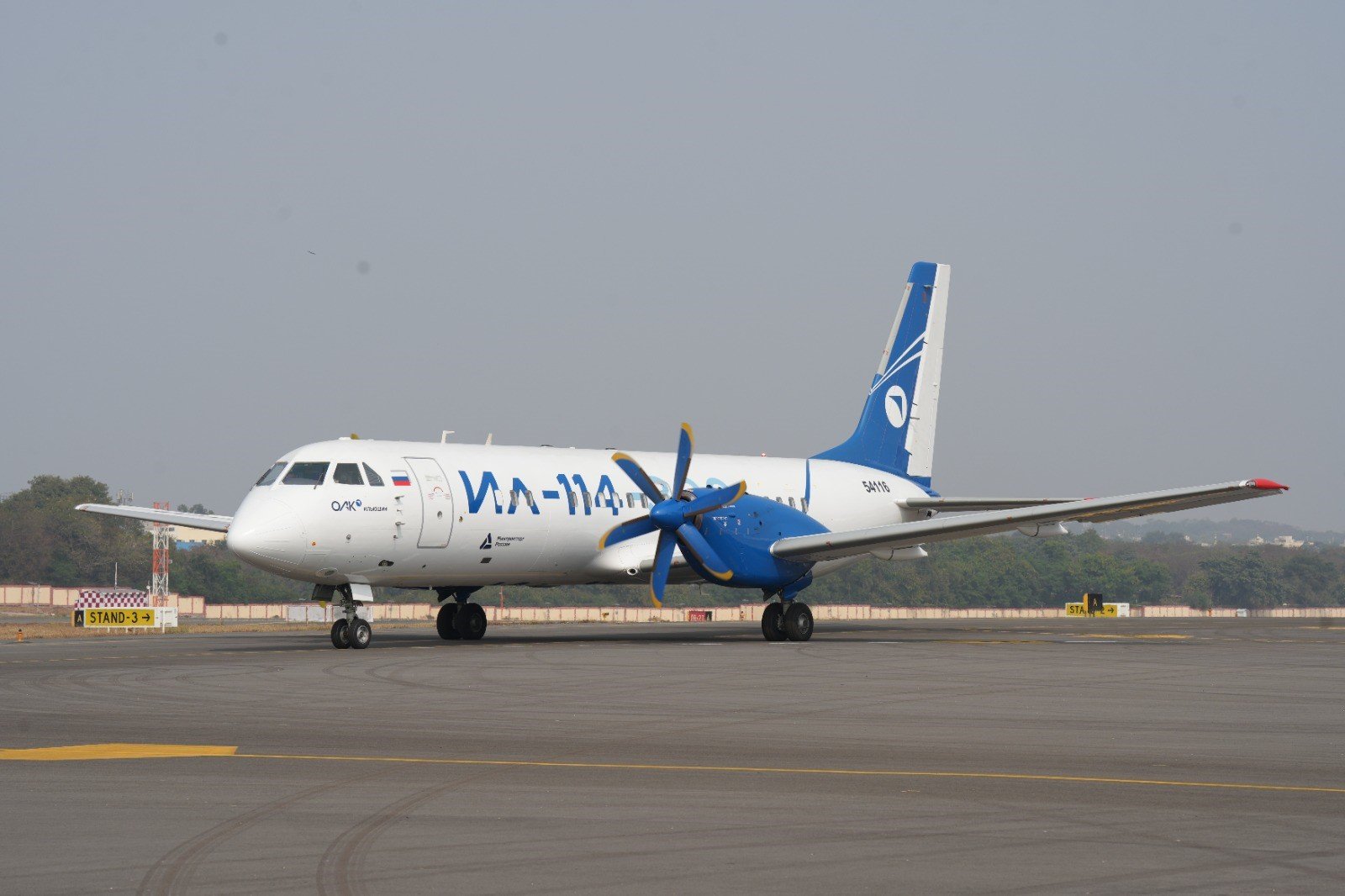
Building India’s Aviation Future, in India
India now possesses all the fundamentals necessary to create a globally competitive aerospace ecosystem: a large domestic market, skilled talent, manufacturing infrastructure, policy support, and expanding global partnerships. According to projections for 2026, India and South Asia will require more than 3,200 commercial aircraft over the next fifteen years. Meeting even a portion of this demand through locally manufactured regional aircraft can transform the industry’s structure and value capture within the country.
With strategic planning, long-term policy consistency, and an unwavering focus on innovation, India is prepared to shape its aviation destiny. The coming decade can mark the rise of India not only as one of the world’s largest aviation markets but also as one of its most capable aerospace manufacturing and technology hubs
Regional aircraft development offers a practical entry point to achieve this transformation. It ties together design, manufacturing, supply chains, maintenance, certification, and innovation within a single integrated framework. The momentum already visible across airports, MRO, skilling, and technology adoption can now be channelled toward creating a self-sustaining aviation ecosystem.
With strategic planning, long-term policy consistency, and an unwavering focus on innovation, India is prepared to shape its aviation destiny. The coming decade can mark the rise of India not only as one of the world’s largest aviation markets but also as one of its most capable aerospace manufacturing and technology hubs.
India’s journey toward aviation self-reliance must begin with regional aircraft as a practical, scalable pathway to deepen manufacturing, skills, and innovation at home. With steadfast policy support, sustained industry–academia collaboration, and targeted investment in design and certification capabilities, India can not only meet domestic demand but emerge as a global hub for aerospace excellence.
The time to act is now.

The writer is Founder and CEO of Flamingo Aerospace. The views expressed are personal and do not necessarily carry the views of Raksha Anirveda





