


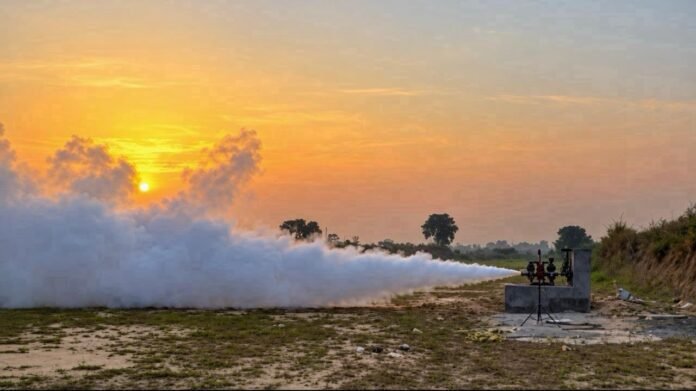
Bhubneshwar. Indian defence start-up IG Defence has test-fired two solid rocket motors under its JWALA micro-missile programme, according to a company statement. The test was successfully conducted at approximately 04:00 Hours, advancing JWALA towards its objective of providing a cost-effective interceptor capability against hostile drones.
JWALA is India’s first indigenously developed private micro-missile programme, focused on creating a robust, affordable and scalable hard-kill Counter-UAS system to neutralise drones.

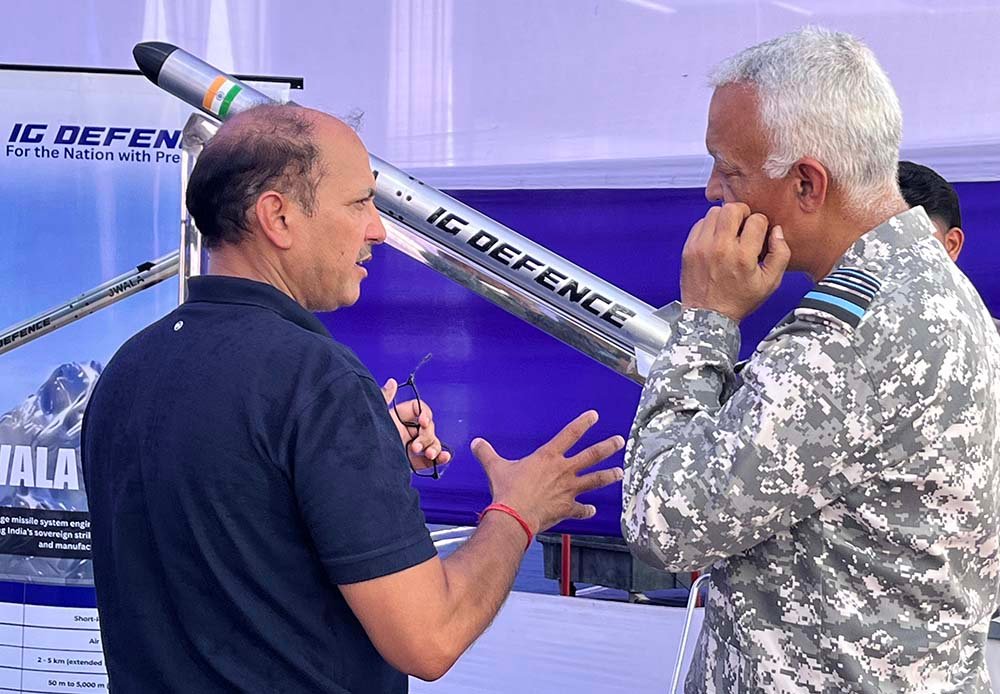
“The drone threat is evolving rapidly, and Counter-UAS systems must evolve with it. There is a growing need for affordable interceptors that can be produced and deployed in meaningful numbers. JWALA is being developed with exactly this requirement in mind. This successful propulsion test is an important milestone towards building an indigenous hard-kill capability for the evolving drone threat,” stated Wing Commander Anoop Sharma (Retd.), AVP, IG Defence.
The company calls it a significant step toward a hard-kill counter-unmanned aerial system (C-UAS) built entirely in India. Hard-kill systems physically destroy a drone, unlike jamming or spoofing. The test details come from IG Defence’s own announcement, and no independent performance data has been released.
Why the Motor Matters
The rocket motor is the heart of any missile, and success here is a prerequisite for flight trials. Solid-fuel motors are favoured for battlefield weapons because they are reliable and easier to store than liquid-fuel alternatives. For a counter-drone weapon, the motor must also be cheap enough to make the economics work, since defenders cannot afford to spend far more on an interceptor than the drone costs.
From Unveiling to Hardware
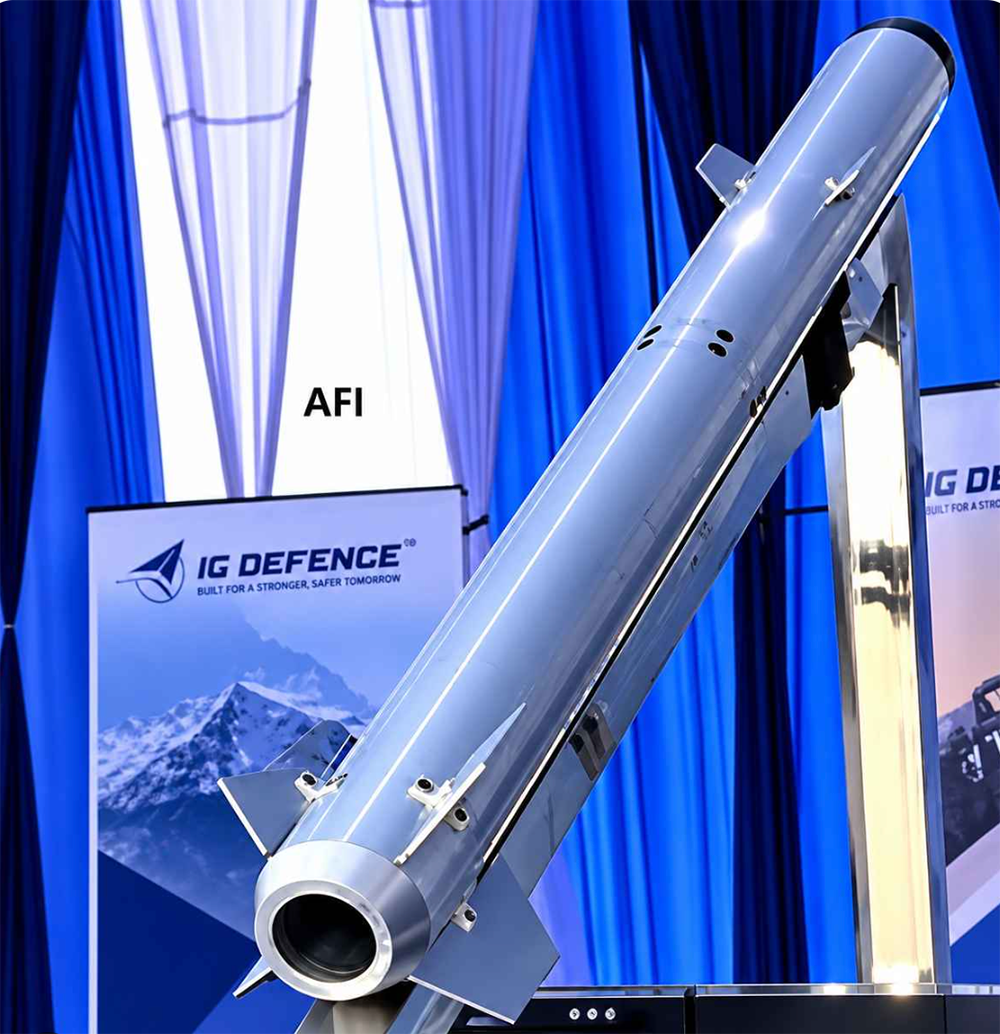
IG Defence, an Odisha-based start-up, first showed JWALA publicly at the North Tech Symposium in Prayagraj in May 2026. The system was presented as a privately developed short-range surface-to-air and surface-to-surface missile, alongside the KAL long-range one-way attack drone. The company says it uses a solid-fuel dual-pulse rocket motor, which gives rapid acceleration at launch and extra speed in the final attack phase. That configuration was shown with a larger warhead and a stated reaction time of about 15 seconds.

The company’s counter-drone push has since sharpened. In September, IG Defence showed its Jwala-MK1 short-range surface-to-air concept to Indian Air Force officials at Dronathon 2026. The company says it is designed mainly to engage UAVs, with an engagement range of 2-5 km and an altitude envelope from 50 metres to 5,000 metres.
IG Defence also claims a launch reaction time under seven seconds, a circular error probable below 2 metres at maximum range, and a small 0.5-1.5 kg pre-fragmented warhead with a proximity fuse. The planned launcher is a truck-mounted multi-canister unit that can be fitted to 4×4 transporters used by the Army and Air Force.

GRID Defend: AI-Powered Mission Management
JWALA is being developed as part of IG Defence’s broader GRID ecosystem, its AI-powered Battle Management System designed to connect sensors, effectors and command systems.
GRID Defend is designed to enable an integrated Counter-UAS response by bringing together detection, identification, tracking, threat assessment and engagement management within a common operational architecture.
The system is designed to support the autonomous execution of authorised Counter-UAS missions. GRID can process information from multiple sensors, build a common operational picture, identify and track aerial threats, assess the developing situation and coordinate an appropriate available effector.
This creates a sensor-to-shooter architecture in which JWALA provides the hard-kill interceptor while GRID provides the intelligence and mission-management layer.
“We are not building JWALA as a standalone missile. We are building it as part of an intelligent defence architecture. GRID is designed to bring sensors, AI, command and effectors together so that the system can autonomously execute authorised Counter-UAS missions from detection to engagement. JWALA becomes the hard-kill effect, while GRID provides the brain that coordinates the mission,” commented Bodhisattwa Sanghapriya, Founder and CEO, IG Defence.
The combination of an affordable interceptor with an AI-enabled battle management system is intended to address one of the fundamental challenges of modern Counter-UAS operations: defending against large numbers of increasingly capable and affordable drones without relying exclusively on high-cost defensive effectors.
The successful solid rocket motor test represents an important step in the JWALA programme as IG Defence continues development of indigenous propulsion, interceptor and Counter-UAS technologies. The company will continue the development and testing of JWALA with a focus on system maturity, reliability, manufacturability and scalability.
A Crowded, Urgent Field
Cheap drones have changed how armed forces think about air defence, and India’s private sector is moving into the gap. The competition is not standing still. Solar Defence and Aerospace’s Bhargavastra system uses inexpensive micro-rockets and micro-missiles for hard-kill defence, and a single launcher can carry 64 of them. Government-backed and private programmes are now converging on a similar idea: low-cost, mass-producible interceptors to defeat swarms and loitering munitions.
IG Defence also markets electronic warfare tools for the softer side of the problem. Its anti-drone systems are described as able to detect, track, jam and neutralise hostile UAVs using electronic warfare and counter-UAV technologies. A micro-missile would add a kinetic layer for targets that jamming cannot stop.
The Road Ahead
The sequence from here is fairly standard. Further motor qualification would be followed by guided flight trials, seeker and fuse integration, and user evaluation by the armed forces. Each stage typically takes months, and a start-up must also show it can manufacture motors consistently at scale, which is where many indigenous programmes struggle.
IG Defence’s leadership frames the effort as meeting real operational needs while strengthening India’s domestic defence ecosystem. Founder and CEO Bodhisattwa Sanghapriya has said the aim is deliver platforms for the nation, with precision and suited to today’s battlefield realities.
For now, the successful motor firings give the company something tangible to show. Whether JWALA becomes a fielded counter-drone interceptor will depend on what comes next: flight trials, user feedback and eventually, orders.






