


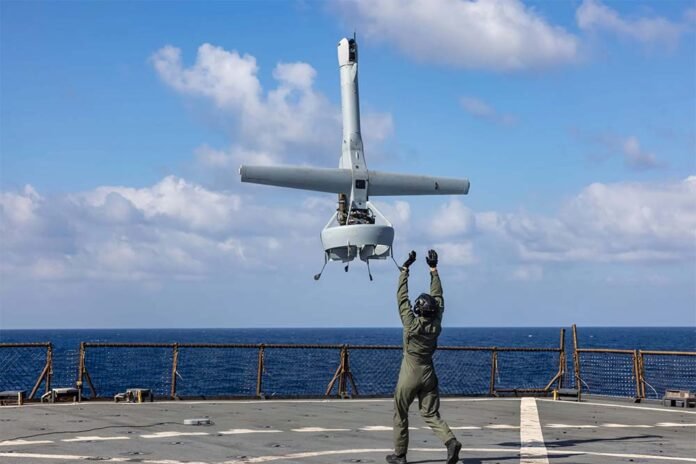
The character of war is changing faster than the military institutions can keep pace with. The monopoly of the air power is now beyond question on the battlefields of Ukraine, West Asia, the Caucasus and the Indo-Pacific. The ability to conduct precision strikes is no longer limited to advanced air forces or states with expensive missile inventories. It has been democratised by the rapid proliferation of cheap unmanned aerial systems.
Today, a commercially built drone, costing a fraction of a conventional precision-guided munition, can identify, track and destroy assets worth millions. More importantly, it can do so with denial, persistence, scalability, and a psychological effect out of proportion to its size. This isn’t just a tech shift. It is a structural shift in the economics and conduct of warfare.

The implications for India are immediate and deeply consequential.
The June 2021 drone attack on the Jammu Air Force Station was a strategic inflexion point in India’s internal and external security environment. What was once a peripheral threat suddenly became a direct challenge to military installations and critical infrastructure. Since then, repeated drone intrusions along the western border, narcotics and weapons drops into Punjab and Jammu, and the growing availability of commercially modified drones have exposed widening vulnerabilities in India’s low-altitude security architecture.
But the threat is much more than border infiltration.
The future battlefield will be dominated by persistent surveillance drones, FPV kamikaze systems, autonomous swarms, loitering munitions and AI-assisted aerial ecosystems that can saturate traditional air defence grids with mass and speed. Low-cost aerial attacks are threatening military headquarters, logistics hubs, energy facilities, communication points, ports, refineries, ammunition stores, airports, rail lines and densely populated cities.

Missiles and aircraft might not be the only way to start wars in the future. They could begin quietly, with hundreds of small unmanned systems simultaneously burrowing deep into civilian and military networks.
India’s existing air defence architecture was primarily designed to counter conventional air threats such as aircraft, helicopters and missiles. It was never intended to engage thousands of cheap, low-flying, low-signature, expendable drones operating in dispersed patterns across tactical and urban environments. The country therefore now faces a doctrinal challenge, not just a technological one.

The character of war is changing faster than the military institutions can keep pace with. The monopoly of the air power is now beyond question on the battlefields of Ukraine, West Asia, the Caucasus and the Indo-Pacific. The ability to conduct precision strikes is no longer limited to advanced air forces or states with expensive missile inventories. It has been democratised by the rapid proliferation of cheap unmanned aerial systems
The answer is not to have individual counter-drone technologies operating in isolation across fragmented agencies and services. India needs a layered, mobile, autonomous, sovereign and network-centric Counter-Unmanned Aerial System architecture that integrates military air defence, homeland security, critical infrastructure protection and civilian airspace management into a unified low-altitude defensive grid.
The future of counter-drone warfare will not be solved by a single sensor or weapon. It will depend on decision superiority.
The side that can detect, identify, classify, prioritise and neutralise aerial threats faster than its adversary will dominate the lower airspace. In this environment, reaction times are measured in seconds to minutes. Modern FPV drones fly at high speed, leaving defenders little time to observe, orient, decide and act. Traditional command chains, which depend on slower, more predictable air threats, are becoming obsolete.
This means the next generation of Counter-UAS systems must be integrated operational ecosystems, supported by sensor fusion, artificial intelligence, electronic warfare, autonomous response cycles, and human-supervised battle management. The coming defender cannot just stop drones. The defender must own the entire low-altitude battlespace.
The Emerging Drone Threat Landscape
The modern drone threat is no longer limited to reconnaissance platforms or isolated terrorist applications. The operational lessons from Ukraine and West Asia show that drones are now key tools for shaping the battlefield.
Commercial drones converted into explosive delivery systems now serve as tactical artillery. FPV drones pursue tanks with incredible precision. Loitering munitions can remain airborne for extended periods before striking time-sensitive targets. Swarm systems can overwhelm traditional air defence networks through mass, coordinated attacks. Autonomous drones are increasingly used in ways that do not depend on GPS or continuous communication links, reducing the effectiveness of conventional electronic warfare systems.
This change is altering tactical geography.
An inexpensive unmanned platform can now detect, track and engage a soldier several kilometres behind the front line within minutes. Battlefield transparency is becoming universal. Concealment is increasingly fleeting. Mobility itself is under constant surveillance.
India’s threat matrix is uniquely complex, encompassing conventional military threats, proxy warfare, terrorism, organised crime and strategic infrastructure vulnerability.
The western theatre has already demonstrated the use of drones for infiltration, weapons delivery, narcotics trafficking and reconnaissance operations under deniable conditions. The northern borders pose a more sophisticated challenge, with state-backed unmanned ecosystems integrated with long-range ISR networks, electronic warfare, satellite support and precision fires.
The future battlefield will be dominated by persistent surveillance drones, FPV kamikaze systems, autonomous swarms, loitering munitions and AI-assisted aerial ecosystems that can saturate traditional air defence grids with mass and speed. Low-cost aerial attacks are threatening military headquarters, logistics hubs, energy facilities, communication points, ports, refineries, ammunition stores, airports, rail lines and densely populated cities
Future conflicts may feature synchronised drone swarms operating in concert with cyberattacks, electronic warfare saturation, missile strikes and information warfare campaigns. Such convergence would place enormous pressure on traditional command and control systems.
The operational environment for the drone threat can be broadly categorised into five domains.
Tactical UAVs, Modified for Commercial Use
The most accessible and proliferating category remains commercial drones. They are inexpensive, readily available and easily modified, making them ideal for use by proxy groups and asymmetric actors. These systems can carry explosive payloads, surveillance equipment or electronic warfare devices, and are difficult to detect with conventional radar due to their low radar cross-section and low-altitude flight profiles.
FPV Kamikaze Drones
The Russia-Ukraine war has demonstrated the lethal effectiveness of FPV drones as precision-guided munitions. These drones, operated via immersive video interfaces, can target armour, artillery, bunkers, logistics nodes and troop concentrations with extraordinary precision and at a very low cost.
India’s existing air defence architecture was primarily designed to counter conventional air threats such as aircraft, helicopters and missiles. It was never intended to engage thousands of cheap, low-flying, low-signature, expendable drones operating in dispersed patterns across tactical and urban environments. The country therefore now faces a doctrinal challenge, not just a technological one
Their operational advantage is not just accuracy but also compression of engagement timelines. A fast-flying drone close to the ground may give defenders only seconds to react.
Autonomous Systems and Swarm
The most disruptive challenge in the future is swarm warfare. Swarm systems use distributed autonomy and collaborative targeting to saturate and overwhelm defensive systems, rather than relying on a single platform. Even if some of the swarm is neutralised, surviving drones continue the attack through adaptive coordination.
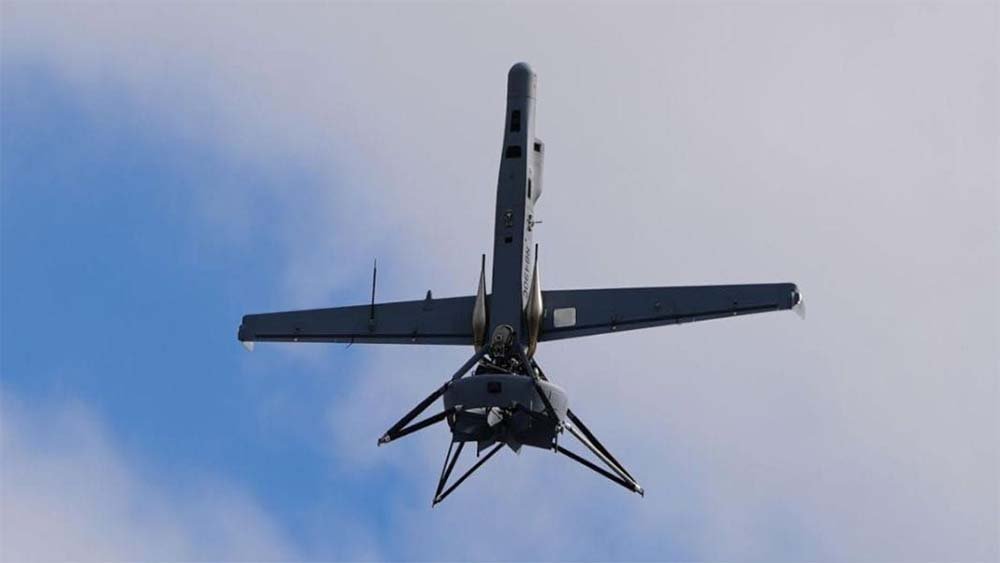
This creates a significant economic asymmetry. Expensive interceptors and missile systems can soon become untenable against large volumes of expendable drones.
Loitering Munitions
Loitering munitions mix the surveillance ability of drones with the lethality of missiles. They can remain airborne while looking for targets, which keeps command posts, radars, artillery systems, logistics nodes, and mobile formations under constant threat.
Drone and Electronic Warfare Integration
Future drones will increasingly operate as airborne electronic warfare nodes, capable of jamming communications, relaying targeting information, extending ISR coverage, or serving as decoys within a larger strike network. The convergence of drones, AI, cyber systems, and electronic warfare will create highly complex battlespaces that require integrated response architectures.
Nor should we underestimate the psychological effect of drone warfare.
This means the next generation of Counter-UAS systems must be integrated operational ecosystems, supported by sensor fusion, artificial intelligence, electronic warfare, autonomous response cycles, and human-supervised battle management. The coming defender cannot just stop drones. The defender must own the entire low-altitude battlespace
The constant presence of drones causes operational fatigue, uncertainty, and anxiety about being under constant surveillance. The psychological impact of invisible airborne threats hovering over both civilian and military environments may be more significant than their physical impact. Drone warfare targets both infrastructure and cognition and morale.
Why India Requires a Layered Integrated Sovereign Counter-UAS Architecture
No one technology can address the full range of emerging drone threats.
Drones that fly low to the ground may be able to avoid radar systems. RF detection no longer works on autonomous or fibre-optic-controlled systems. Acoustic sensors degrade in the noisy environments of urban and battlefield conditions. Electronic warfare is less effective against hardened autonomous platforms. Swarms alone make kinetic systems economically unsustainable.
Hence, future Counter-UAS operations need to be based on layered defence rather than single interception.
The first layer must deliver persistent airspace awareness by fusing wide-area sensor data from radar, EO/IR systems, acoustic arrays, RF scanners, satellite feeds and tactical ISR networks into a common operating picture.
The second layer should focus on identification and classification. Artificial intelligence should help operators distinguish between hostile drones, birds, civilian traffic, friendly unmanned systems, and environmental clutter. The problem is especially pronounced in urban areas, where civilian use of drone technology is set to explode in the next decade.
The third layer should focus on non-kinetic defeat mechanisms, such as directed jamming, protocol hijacking, GPS spoofing, electromagnetic disruption, and cyber intrusion. These remain the preferred first response because they cause the least collateral damage.
The fourth layer must provide kinetic interception against hardened, autonomous, or swarm systems that survive electronic disruption. This includes programmable munitions, interceptor drones, directed-energy systems, rapid-fire weapons, and future electromagnetic defeat systems.
India should focus on indigenous development of AI algorithms, electronic warfare modules, autonomous navigation systems, anti-swarm systems, secure communication networks, semiconductors, directed-energy weapons, and tactical battle management software
This layered approach provides defensive redundancy. Failure at one layer does not imply system collapse.
The Human Dimension: “Man on the Loop”
The growing integration of autonomy into military systems raises serious ethical, operational, and escalation concerns.
Counter-UAS operations increasingly require machine-speed processing because human cognition alone can’t process multiple concurrent drone threats within compressed timelines. AI-assisted tracking and autonomous response systems are therefore operational imperatives.
But autonomy should not do away with responsibility.
The right doctrinal balance lies neither in fully autonomous lethal systems operating without oversight nor in rigid “Man in the Loop” constructs that delay engagement decisions. The optimised model is “Man on the Loop,” in which autonomous systems operate under continuous human supervision, with the operator retaining override authority, escalation control, and ethical accountability.
This principle is particularly important in urban areas where drones might operate near civilian populations, airports, public events, communication networks, and critical infrastructure.
Sovereign Technology and Strategic Autonomy
India cannot afford to be overly dependent on imported drone and counter-drone ecosystems.
Future conflicts could involve software denial, supply chain disruption, electronic compromise, or embedded vulnerabilities in imported systems. Counter-UAS technologies are therefore strategic assets comparable to cyber infrastructure and space systems.
India requires a layered, mobile, sovereign, AI-enabled, and network-centric Counter-UAS architecture that integrates military, civilian, intelligence, and homeland security ecosystems into a single unified defensive grid
India should focus on indigenous development of AI algorithms, electronic warfare modules, autonomous navigation systems, anti-swarm systems, secure communication networks, semiconductors, directed-energy weapons, and tactical battle management software.
The issue is not merely one of economic self-reliance. It is sovereignty as a national strategy.
It would not be wrong to conclude that the drone revolution has permanently changed the grammar of war.
Future conflicts will increasingly be competitions between networks rather than between formations, between algorithms rather than platforms, and between decision cycles rather than firepower alone. Nations unable to defend their low-altitude airspace will be subjected to strategic coercion at unprecedented speed and scale.
For India, the challenge is particularly acute because the threat environment combines conventional military competition, hybrid warfare, terrorism, urban vulnerability and exposure of critical infrastructure.
The response cannot be reactive and piecemeal.
India requires a layered, mobile, sovereign, AI-enabled, and network-centric Counter-UAS architecture that integrates military, civilian, intelligence, and homeland security ecosystems into a single unified defensive grid.
The nation that dominates the low-altitude battlespace will do more than defend its skies. It will establish the operational logic of deterrence in the twenty-first century.

The writer, a PVSM, AVSM, VSM has had an illustrious career spanning nearly four decades. A distinguished Armoured Corps officer, he has served in various prestigious staff and command appointments including Commander Independent Armoured Brigade, ADG PP, GOC Armoured Division and GOC Strike 1. The officer retired as DG Mechanised Forces in December 2017 during which he was the architect to initiate process for reintroduction of Light Tank and Chairman on the study on C5ISR for Indian Army. Subsequently he was Consultant MoD/OFB from 2018 to 2020. He is also a reputed defence analyst, a motivational speaker and prolific writer on matters of military, defence technology and national security. The views expressed are personal and do not necessarily carry the views of Raksha Anirveda





