


Jabalpur. Speaking at a ceremony in Jabalpur, Madhya Pradesh, Defence Minister Rajnath Singh highlighted India’s transformative transition from a major arms importer to a global defence manufacturing power.
He revealed that domestic arms and ammunition production jumped from ₹ 46,000 crore in 2014 to approximately ₹ 1.80 lakh crore, while military exports expanded dramatically from roughly ₹ 1,000 crore to nearly ₹ 39,000 crore during the same decade.

The defence minister underscored that the government has set an ambitious target of reaching ₹ 50,000 crore in defence exports by 2028-29. He noted that global perception of India is rapidly evolving under the Aatmanirbhar Bharat initiative, which emphasises complete self-reliance across the defence sector.
According to Singh, self-reliance extends beyond local manufacturing to encompass comprehensive capabilities for repairing, maintaining, overhauling and upgrading military hardware indigenously so that national armed forces remain independent of volatile foreign supply chains.
Singh delivered these remarks while laying the foundation stone for a modern ₹ 472-crore overhauling facility for main battle tanks at the Vehicle Factory Jabalpur.The 57-year-old defence unit, operating under Armoured Vehicles Nigam Limited, spans a massive 330-acre factory complex and an adjoining 600-acre estate.
Originally established in 1969 to manufacture military transport trucks like the Shaktiman alongside Jonga and Nissan utility vehicles, the premier plant is expanding its operational scope to support heavy armoured vehicles.

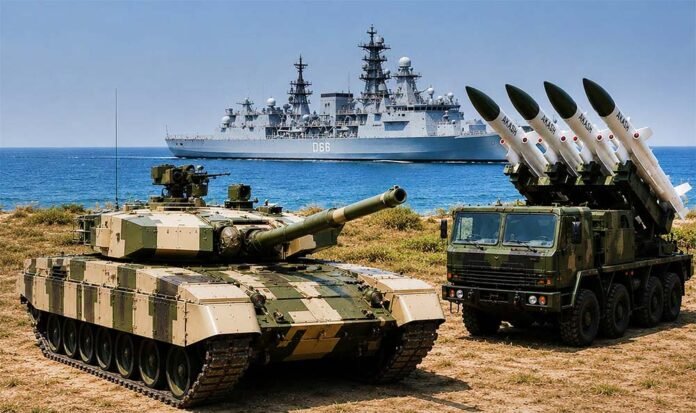
The new Jabalpur plant is engineered to overhaul 80 T-72 and T-90 main battle tanks annually, directly boosting operational readiness for armoured formations deployed along critical fronts. The Indian Army requires the overhauling of approximately 230 T-series battle tanks every year to maintain operational readiness.
Currently, the Heavy Vehicles Factory in Avadi, Tamil Nadu, overhauls around 150 tanks per year.The upcoming facility in Jabalpur will bridge the 80-tank annual deficit, completing the national requirement locally.

Describing the tank overhaul initiative as a landmark link in India’s defence industrial chain, the minister emphasised that building internal technical capabilities serves as a vital asset for frontline soldiers while generating skilled employment opportunities for local populations.The ongoing industrial expansion underscores India’s broader strategic shift toward domestic defence autonomy, ensuring long-term military preparedness and economic resilience.






