


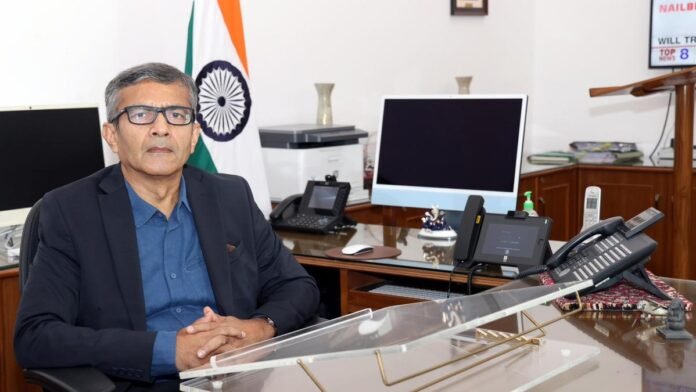
New Delhi. Defence Secretary Rajesh Kumar Singh has set out a multi-pronged plan to accelerate military procurement, reshape the Defence Research and Development Organisation (DRDO) and deepen private-sector participation in defence manufacturing.
Speaking at the Society of Indian Defence Manufacturers’ annual conference in Delhi, Singh said major acquisition proposals were being processed at the highest levels, while stressing that procurement rules must be followed to protect accountability.

The message was aimed at addressing a persistent tension in defence acquisition: the need to equip the armed forces quickly while maintaining checks on large, complex public purchases. Singh cautioned against bypassing statutory procedures, noting that doing so could expose decisions to legal or institutional challenges. He pointed to major programmes, including multi-role fighter aircraft, as examples of acquisitions that require established processes even as the government seeks to reduce delays.
A central part of the agenda is revision of the Defence Acquisition Procedure (DAP). Singh said the government is working on reforms intended to streamline procurement and reduce bottlenecks in trials, evaluations and cost negotiations. One option under consideration is faster induction of equipment offered by industry through expedited trials, potentially on a no-cost, no-liability basis where appropriate. The DAP already provides for reimbursement of trial costs, a provision he said could also be examined.
The proposals come as India pursues a larger domestic role of the private sector in supplying its armed forces. For 2026-27, the government has earmarked about 75% of the capital acquisition budget for domestic defence industries, with ₹1.39 lakh crore allocated for procurement from them. The Union Budget provides ₹1.85 lakh crore for capital acquisition within a total defence capital allocation of more than ₹2.19 lakh crore. Those figures offer context for Singh’s estimate that Indian industry could see annual opportunities of around $20-25 billion over the coming decade.
Singh said private companies currently account for about 24% of defence production, while the government wants the sector to move towards a more balanced partnership with public-sector manufacturers. He cited a goal-also articulated by the defence minister-that ideally at least half of defence production should come from private industry. Public-sector enterprises, private firms, small businesses, start-ups and universities, he said, need to work together towards strategic autonomy rather than operate as separate parts of the system.

The proposed DRDO changes are intended to clarify that organisation’s role, with greater emphasis on research and development and a stronger hand for industry in production. The wider policy direction reflects a shift away from the public sector’s historic dominance towards collaboration across government laboratories, manufacturers and research institutions. For private firms, a transfer of production responsibilities could create opportunities, but it would also require the technical capacity and quality controls needed to meet military requirements.
India’s 2026-27 budget allocates ₹29,100.25 crore to DRDO, including ₹17,250.25 crore for capital expenditure. The government says about 25% of the defence research budget has been opened to industry, start-ups and academia. Those measures sit alongside the proposed procurement changes, which aim to draw domestic suppliers into development and production, not simply purchasing.

Singh also linked the reforms to export ambitions, saying Indian firms should become part of international defence supply chains, particularly those connected to friendly countries. Whether the overhaul can deliver faster contracts and stronger industrial capacity will depend on implementation: procurement safeguards must remain credible, while trials and approvals become more efficient. The projected opportunity is substantial, but translating it into production, technology development and export-ready products will require sustained cooperation between the armed forces, DRDO and industry.






