


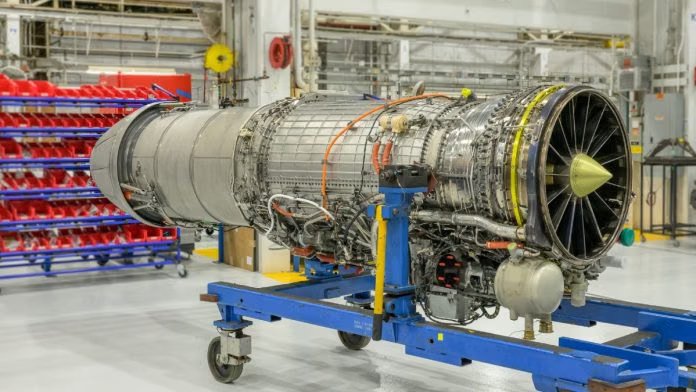
The reported shipment by GE is a welcome sign for India’s Tejas Mk1A programme, which has been held back by slow engine deliveries. But four engines alone cannot settle the larger controversy: the gap between promised supply schedules and actual arrivals, and the resulting uncertainty over when HAL can deliver the upgraded fighters to the Indian Air Force (IAF), remains.
“GE Aerospace shipped four F404–IN20 engines in September 2026. We remain focused on delivering the engines needed to power India’s Tejas indigenous fighter jets. We are proud to partner with Hindustan Aeronautics Limited (HAL) and the Indian Air Force,” a company spokesperson said.

The F404-IN20 is the single-engine Tejas Mk1A’s powerplant. India’s dependence on GE for this critical component means that engine availability directly affects HAL’s ability to complete aircraft. The supply constraint has become more conspicuous as production has advanced: a June report described around 30 Mk1A airframes as built or flight-tested, while stressing that engine shortages and other programme requirements continued to impede delivery. Those figures are reported estimates, not a count confirmed in the spokesperson’s statement.
The latest shipment follows earlier signs of uneven progress. A September 4 report said HAL had received three F404-IN20 engines in August, citing supply-chain bottlenecks and a backlog of aircraft. The spokesperson’s statement now describes four engines shipped in September, but it does not specify when they reached HAL, whether they were part of a previously announced delivery target, or how many engines have been delivered under the contract in total.
That distinction matters. A shipment announcement is not the same as an engine being received, fitted and cleared for an aircraft, nor does it by itself establish that production is back on schedule. HAL must integrate the engines and complete assembly and testing, while aircraft acceptance also depends on the readiness of systems and required clearances. Reporting on the programme has described engine supply as a major bottleneck, but not the only step between a completed airframe and a delivered fighter.
The dispute has contractual as well as operational dimensions. GE’s 2021 order covered 99 engines for the Mk1A programme; reports have put its value at about $716 million and said deliveries were expected to start in 2024. After delays, HAL reportedly invoked liquidated-damages provisions. The amount of any penalty has not been publicly established in the reporting reviewed, and the company statement supplied here does not address compensation or explain the causes of the latest schedule.

GE has previously pointed to the challenge of restarting a production line that had been dormant after an earlier engine order was completed. The company said that the line had to be restarted and its global supply chain re-engaged after HAL placed a new order in 2021, during the Covid-era disruption. Those factors help explain the industrial challenge, but they do not erase the consequences for HAL, the IAF or a programme whose output depends on a single overseas engine source.
The programme’s scale increases the stakes. The IAF has ordered 83 Mk1A fighters under the original contract, and India approved a further 97-aircraft order in 2025, taking the planned total to 180. That expansion raises the importance of a dependable supply stream-not just intermittent batches-and makes it harder to separate the engine issue from the broader question of whether HAL can meet its production and delivery commitments.

Public frustration has also focused on whether India should replace the F404 or accelerate development of a domestic alternative. But changing the Mk1A’s engine would involve substantial redesign and testing, and could delay the aircraft further. For the current programme, that makes improved delivery performance more immediately practical than a rapid engine substitution, even as longer-term efforts to reduce reliance on foreign propulsion remain strategically important.
For now, the four-engine shipment is evidence of movement, not proof that the backlog is resolved. The central tests will be whether GE sustains regular deliveries, whether HAL converts engines into completed and accepted aircraft, and whether the companies provide clear, consistent updates on schedules. The spokesperson’s pledge to deliver the engines India needs sets out the partnership’s goal; the programme’s credibility will depend on results measured in aircraft reaching the Air Force.






