


CHENNAI. In a major move toward deepening the convergence between India’s military and civilian aerospace capabilities, the Defence Research and Development Organisation (DRDO) has announced it is drawing up a strategic roadmap to utilise the Indian Space Research Organisation’s (ISRO) upcoming spaceport at Kulasekharapatnam in Tamil Nadu.
Speaking on the sidelines of the CII Tamil Nadu Defence X Conclave 2026 in Chennai, Dr BK Das, Scientist and Director General (Electronics & Communication Systems) at DRDO, confirmed that the defence research agency is preparing for a new generation of high-stakes space missions. While declining to disclose the precise mission parameters due to operational security, Das emphasised that DRDO is conceptualising several “big programmes” engineered to align seamlessly with the unique geographic and structural advantages offered by the new southern launch station.

The Strategic Value of Kulasekharapatnam
Located in the coastal Thoothukudi district of Tamil Nadu, the Kulasekharapatnam Small Satellite Launch Vehicle (SSLV) Launch Complex is being rapidly built over 9.5 square kilometres at an estimated cost of Rs 950 crore. Slated for partial commissioning by late 2026 or early 2027, the facility provides an invaluable tactical asset for military and surveillance operations.
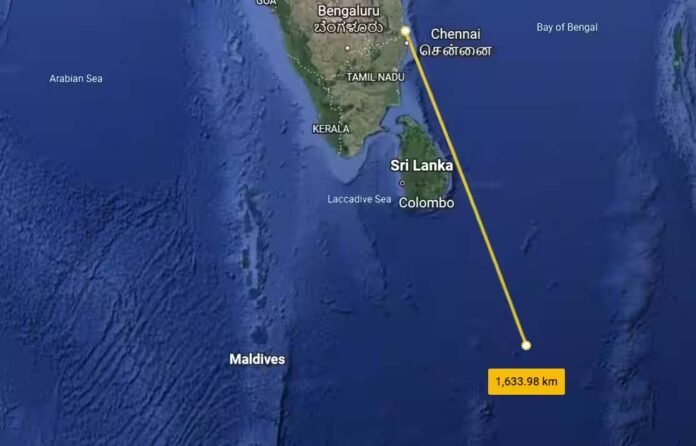
Unlike the existing Satish Dhawan Space Centre at Sriharikota – where rockets bound for polar orbits must execute a fuel-intensive dog-leg manoeuvre to steer clear of Sri Lanka – launching directly south from Kulasekharapatnam allows an unhindered trajectory over the open ocean. For DRDO, this means small, rapid-response reconnaissance satellites or military payloads can be inserted into Sun-synchronous Polar Orbits using significantly less fuel, vastly enhancing payload capacities.
The integration comes amid a broader push to scale up India’s aerospace industrial landscape. Dr Das highlighted that a proposed industrial corridor connecting Bengaluru and Hosur is being actively eyed to support research and future production for the indigenous Netra Airborne Early Warning and Control (AEW&C) system. The Netra programme, which recently achieved its milestone Final Operational Clearance (FOC) for full combat roles within the Indian Air Force, represents India’s core “dependable surveillance eye in the sky.” Advanced iterations featuring heightened power and extended detection ranges are already in development, requiring robust cross-state supply chains.
Meanwhile, the Tamil Nadu Industrial Development Corporation (TIDCO) is actively moving to acquire land for a dedicated space industrial park and a Propellant Park in Thoothukudi to directly feed the ecosystem surrounding the spaceport.

A More Inclusive Ecosystem
To support these highly demanding, long-gestation aerospace and defence programmes, DRDO is overhauling its bureaucratic framework to cultivate a highly resilient domestic supply chain. Das revealed that the DRDO is finalising a significantly streamlined, industry-friendly procurement policy.
The updated framework aims to actively lower barriers to entry, encouraging sustained participation from private micro, small, and medium enterprises (MSMEs), commercial startups, and heavy manufacturing units capable of sustaining multi-year hardware development cycles.

By fusing ISRO’s rapid-launch capabilities at Kulasekharapatnam with DRDO’s evolving electronics, early-warning, and satellite technologies, India is steadily positioning itself to deploy tactical space assets at a fraction of standard international costs and timelines.






