


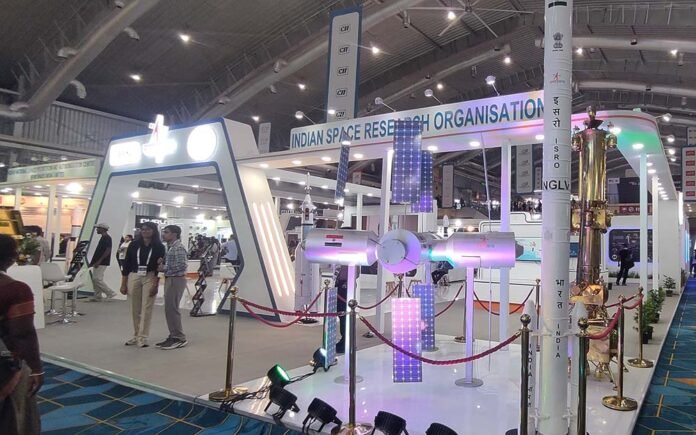
India’s emerging space companies took centre stage at Bengaluru Space Expo (BSX) 2026, presenting technologies aimed at improving satellite imaging, secure communications, Earth observation and access to space. The event brought together startups, established aerospace companies, government agencies, foreign missions and industry associations at a time when India is seeking a larger role in the global commercial space economy.
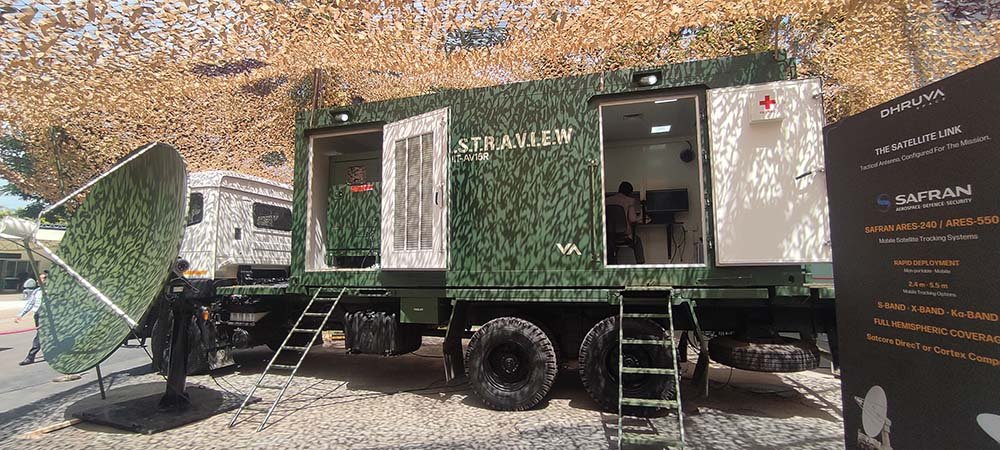
Among the most closely watched technologies was Astra View, a satellite-imaging initiative associated with Dhruva Space. The platform reflects the changing priorities of India’s private space sector: rather than focusing only on launching satellites, companies are increasingly developing complete systems that combine spacecraft, payloads, ground infrastructure and data services.

Astra View is positioned around the delivery and use of high-value Earth-observation data. Such systems can support applications including agriculture, disaster management, urban planning, infrastructure monitoring, maritime awareness and climate analysis. The significance of the platform lies not only in its imaging capability but also in the possibility of making satellite-derived information more accessible to commercial and public-sector users.
Dhruva Space has emerged as one of India’s best-known private space companies, building satellite platforms, deployers and associated mission hardware. Its presence at BSX 2026 underlined how Indian startups are moving from component manufacturing towards integrated space solutions. The company’s participation also reflected the growing importance of privately developed satellite systems in India’s expanding space ecosystem.
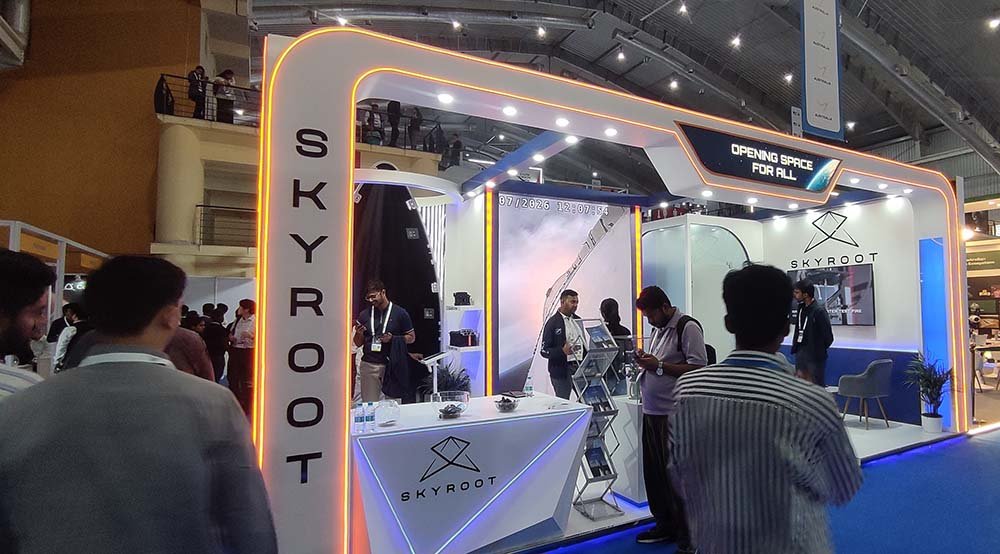
GalaxEye brought another major development to the expo: its secure United States patent for satellite-imaging technology. The patent is significant because it strengthens the company’s intellectual-property position in a sector where proprietary sensor design, image processing and data-fusion techniques are central to commercial success.
At the Bengaluru Space Expo (BSX) 2026, emerging Indian space companies signaled a major evolution, shifting focus from low-cost manufacturing to building end-to-end mission platforms, proprietary hardware and data services for the global market
GalaxEye is developing Earth-observation systems that combine different sensing methods to generate useful imagery under conditions that can challenge conventional optical satellites. Technologies capable of operating through cloud cover, darkness or adverse weather could have applications in defence, border monitoring, disaster response, logistics and environmental surveillance.

The company’s patent milestone also illustrates the shift in India’s space sector from technology adaptation to technology ownership. Securing intellectual-property protection in the United States gives an Indian startup greater scope to commercialise its technology internationally, attract strategic partners and negotiate licensing or service agreements in overseas markets.

The wider message from BSX 2026 was that India’s space startups are competing not merely on launch costs. They are seeking differentiation through sensors, software, satellite platforms, secure communications, propulsion, analytics and mission services.
Astrogate Labs showcased what was described as India’s first indigenous optical inter-satellite link terminal. The terminal is designed to enable high-speed communication between satellites using optical signals rather than relying solely on traditional radio-frequency links.
Optical communication can offer higher data rates and reduced spectrum congestion, making it valuable for future satellite constellations and data-intensive missions. However, it requires accurate pointing, acquisition and tracking between moving spacecraft. The development of an indigenous terminal therefore represents an important step in building domestic capabilities for next-generation satellite networks.
Highlighting its transition to complete mission systems, Dhruva Space showcased Astra View – an Earth-observation platform delivering high-value satellite imagery and data services to support agriculture, disaster management and urban planning, besides defence
The participation of Astrogate Labs, Dhruva Space and GalaxEye demonstrated the breadth of India’s startup landscape. While one company is focused on satellite platforms and imaging services, another is working on advanced communications and a third is pursuing intellectual property in space-based Earth observation.
The companies were joined by other Indian startups and space-sector firms working across propulsion, launch services, satellite components, ground stations, analytics and defence applications. Their presence reflected the impact of policy changes that have opened more opportunities for private participation in India’s space activities.
Speaking at the event, US Ambassador Sergio Gor said India-U.S. space ties were moving from cooperation towards “co-creation”. His remarks pointed to a deeper phase in the relationship, in which the two countries would seek to jointly develop technologies, build supply chains and create commercial opportunities rather than limiting engagement to government-led collaboration.
The ambassador’s message was particularly relevant for India’s startups, which require access to capital, global customers, advanced research networks and predictable regulatory pathways. Greater cooperation with US companies and institutions could help Indian firms scale technologies developed domestically and integrate them into international missions.
Astrogate Labs introduced India’s first indigenous optical inter-satellite link terminal, enabling ultra-fast laser communication between spacecraft to tackle spectrum congestion and power next-generation satellite constellations
The US-India space relationship has expanded in recent years across human spaceflight, Earth observation, space science, satellite communications and commercial cooperation. Private companies are increasingly expected to play a central role in converting bilateral agreements into products and services.
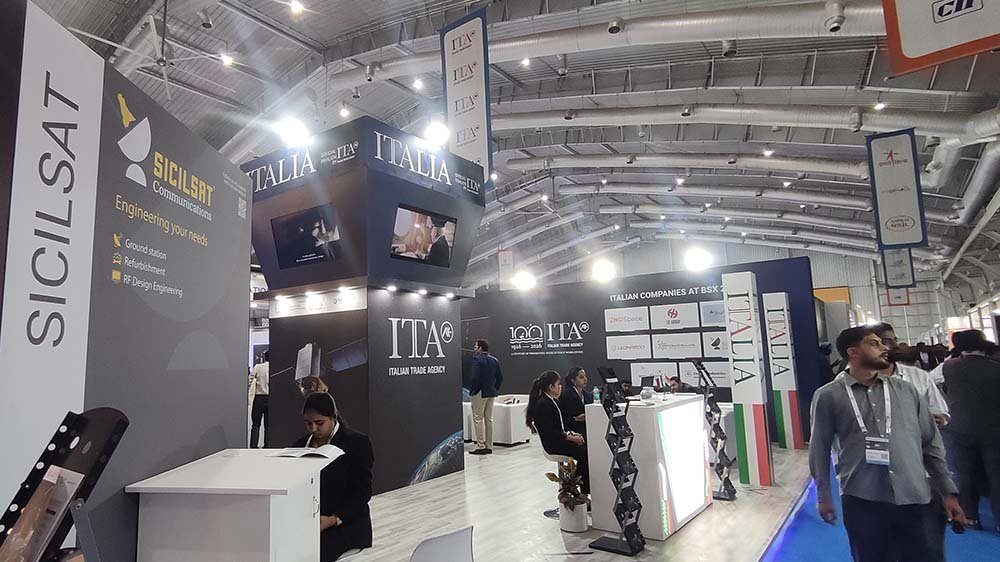
Australia also used BSX 2026 to underline its interest in expanding space ties with India. Australian High Commissioner Philip Green, addressing the event, said the two countries could “certainly grow together” by combining their capabilities and market opportunities. The remarks highlighted the complementary strengths of the two space ecosystems: India offers a large technology and manufacturing base, while Australia contributes expertise in remote sensing, mining-related applications, space science and advanced research.
Stronger India-Australia cooperation could benefit startups working in Earth observation, climate monitoring, satellite communications and space situational awareness. Australian users and institutions could also become customers or partners for Indian companies seeking international markets.
Diplomats at BSX 2026 called for deeper integration, with US Ambassador Sergio Gor advocating for “co-creation” and Australian High Commissioner Philip Green highlighting complementary strengths in remote sensing and situational awareness
Indian officials from the Indian National Space Promotion and Authorisation Centre, or IN-SPACe, emphasised the importance of creating an enabling environment for private space companies. IN-SPACe is responsible for facilitating and authorising private-sector participation in space activities, including satellite development, launches and associated services.
The organisation’s role has become increasingly important as more startups seek approvals, access to testing infrastructure and opportunities to work with public-sector institutions. Officials have stressed that India’s ambition to expand its space economy will require stronger partnerships between startups, ISRO, universities, manufacturers and investors.
ISRO representatives highlighted the continuing importance of public-sector research and national space infrastructure. For startups, ISRO remains a source of technical expertise, launch opportunities, testing facilities and institutional credibility. At the same time, the growth of private companies is expected to allow ISRO to focus more heavily on advanced missions and strategic national programmes.
Representatives from Indian space associations called for closer coordination across the industry. They pointed to the need for standardisation, access to finance, skilled manpower, insurance, export support and clearer procurement pathways. Industry bodies also stressed that startups must be connected to larger aerospace companies and government users if innovative technologies are to reach operational scale.
Key industry stakeholders, alongside ISRO and IN-SPACe, emphasised the need for streamlined regulatory approvals, shared infrastructure and international partnerships to help Indian space startups scale from domestic projects to global market competitors
BSX 2026 therefore became more than a technology exhibition. It served as a platform for diplomatic engagement, industrial networking and commercial positioning. The speeches by the US Ambassador, the Australian High Commissioner and Indian officials converged around a common theme: India’s next phase in space will depend on partnerships that produce tangible technologies and markets.
For Astra View, GalaxEye and Astrogate Labs, the expo offered an opportunity to demonstrate that Indian startups can contribute to the full space value chain. Their technologies point towards a sector increasingly defined by data, secure connectivity, intellectual property and international collaboration.
The challenge now is to convert demonstrations and partnerships into repeatable business. That will require sustained investment, timely approvals, reliable testing infrastructure and customers willing to adopt new systems.
If those conditions develop, BSX 2026 could be remembered as a moment when India’s private space sector moved decisively from building for domestic missions to competing in global markets.

-The writer is a New Delhi-based senior commentator on international and strategic affairs, environmental issues, an interfaith practitioner, and a media consultant. The views expressed are personal and do not necessarily carry the views of Raksha Anirveda





