


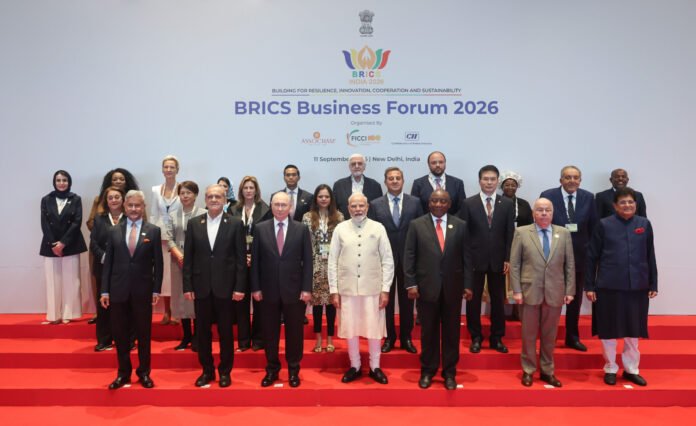
India’s most important achievement at BRICS 2026 was not a single agreement but the creation of diplomatic space among adversaries. New Delhi hosted Russia, China, Iran, the UAE and other major developing powers at a moment when the international system is strained by the Russia-Ukraine war, the Iran conflict, trade tensions and an increasingly confrontational US-China relationship.
The summit therefore tested whether BRICS could function as more than an anti-Western political platform. PM Modi repeatedly insisted that BRICS was “not against anyone” and argued that the Global South should become a group of “rule-shapers”, rather than passive “rule-takers”. That framing reflected India’s preferred role: not an ideological leader of a bloc, but an intermediary capable of speaking simultaneously to Washington, Moscow, Beijing, Tehran and Gulf capitals.

The New Delhi Declaration’s adoption was itself significant. Earlier ministerial discussions had reportedly struggled to produce consensus, particularly over the Middle East conflict. The final document used careful language: it condemned attacks on civilians and civilian infrastructure, opposed unilateral sanctions, supported Palestinian statehood and called for UN reform without directly naming or humiliating individual countries. This diplomatic restraint bore the imprint of India’s chairmanship.
Bilateral diplomacy: from ceremony to strategic insurance
PM Modi’s bilateral meetings strengthened India’s position beyond the summit’s formal agenda. His interaction with Putin reaffirmed the durability of the India-Russia relationship, even as New Delhi continues to face pressure from Western partners over Moscow’s war in Ukraine. The significance lay less in rhetorical warmth than in India’s ability to retain communication channels with the Kremlin, while advocating dialogue.
By hosting Russia, China, Iran, the UAE and other major powers, New Delhi positioned itself as an intermediary in a deeply divided international system
The meeting with Xi Jinping was equally consequential. Relations between India and China remain burdened by the 2020 border crisis, unresolved military tensions and strategic competition across the Indo-Pacific. Yet, the BRICS setting enabled the two leaders to project a controlled thaw. Dialogue at the highest level does not erase the boundary dispute, but it lowers the risk that bilateral hostility will contaminate every multilateral forum.
PM Modi also met leaders from South Africa, Nigeria and Kazakhstan, with trade, energy, critical minerals, investment and connectivity reportedly featuring prominently. These engagements broadened the summit’s economic value for India. A successful BRICS chairmanship had to demonstrate that the grouping could deliver commercial and developmental opportunities, not merely issue declarations against Western dominance.

India’s gain, consequently, was cumulative. Each meeting created a separate channel of influence, while the summit as a whole positioned PM Modi as the host leader able to connect otherwise disconnected geopolitical conversations.
Putin and Xi’s Ukraine message
The Kremlin’s disclosure that PM Modi and President Xi had offered to help Putin find a solution to the Russia-Ukraine war gave India an important diplomatic opening. Putin and Xi’s stated resolve to contribute to ending the conflict was politically useful because it placed the language of negotiations inside a forum that includes Russia and China, rather than leaving peace diplomacy entirely to the Western capitals.

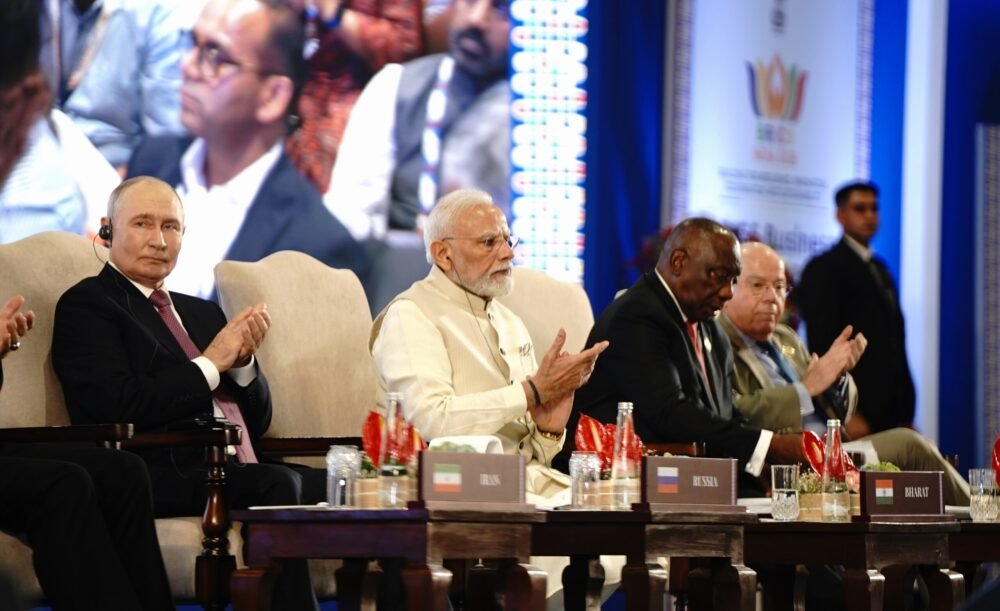
India has consistently argued that wars cannot be resolved on the battlefield alone and that dialogue and diplomacy remain necessary. PM Modi’s role at BRICS was therefore, not to present an Indian peace plan, but to keep the possibility of political engagement alive. The distinction matters. India lacks the leverage to compel Moscow or Kyiv to accept terms, but it possesses relationships with both Russia and the West that few other major powers can replicate.
The Kremlin’s suggestion that trilateral Russia-US-Ukraine negotiations could resume as early as October further raised the value of India’s diplomatic positioning. Yet, expectations should remain measured. Moscow’s willingness to discuss talks does not necessarily mean readiness for compromise, while Kyiv’s acceptance would depend on security guarantees, territorial questions and the credibility of the negotiating framework.
Meetings with Putin, Xi Jinping and leaders from South Africa, Nigeria and Kazakhstan expanded India’s political, economic and security partnerships
The Indian gain is thus best understood as agenda-setting. New Delhi helped ensure that BRICS was not reduced to a platform for defending Russia or attacking the West. It redirected attention toward a broader principle: major powers must keep channels open for conflict resolution, even when immediate peace remains distant.
Iran-UAE Rapprochement
The meeting between Iranian President Masoud Pezeshkian and Abu Dhabi Crown Prince Sheikh Khaled bin Mohamed bin Zayed Al Nahyan was among the summit’s most symbolically important moments. It was their first such encounter since the regional war, and the talks indicated a desire to turn the page on confrontation.
Pezeshkian’s interview with an Indian television channel reinforced Tehran’s diplomatic messaging. His description of the United States and Israel as the “real terrorists” reflected Iran’s entrenched political narrative, but the broader significance was that he chose an Indian platform to communicate it. India offered Tehran visibility without requiring New Delhi to endorse every Iranian claim.
The Iran-UAE contact also highlighted India’s usefulness as a convening power. New Delhi maintains ties with Iran, the Gulf monarchies, Israel, Russia and the United States. That network is strategically valuable because instability in West Asia directly affects Indian energy security, expatriate workers, shipping routes and projects such as the Chabahar port.
Putin and Xi’s stated willingness to support negotiations, along with PM Modi’s advocacy of dialogue, kept the possibility of renewed peace talks alive
UN spokesperson Stéphane Dujarric welcomed the Iran-UAE meeting and said India could act as a “bridge-builder” in efforts to end the conflict. That endorsement gave international legitimacy to India’s claim that its diplomacy can produce contact where formal alliances cannot.
Chabahar, energy and the material side of diplomacy
India’s diplomatic gain will matter only if it generates concrete economic outcomes. Chabahar is central to that test. The port provides India with access to Afghanistan and Central Asia while offering an alternative route that bypasses Pakistan. Continued investment, despite sanctions-related complications, demonstrates that India sees Iran not merely as a political partner but as a connectivity and energy stakeholder.
The summit also brought trade, energy and critical minerals into focus. These are precisely the areas in which BRICS can evolve from a declaratory forum into a practical institution. India wants secure supplies of oil, gas, minerals and industrial inputs, while also reducing vulnerability to unilateral sanctions and supply-chain disruptions.
However, a push for local-currency trade or alternative financial arrangements remains difficult. BRICS economies have different monetary systems, regulatory structures and strategic priorities. The group can expand settlement in national currencies, but creating a common financial architecture would require trust and technical coordination that political statements alone cannot provide.
For India, the sensible approach is gradualism: improve payment mechanisms, strengthen development finance, expand logistics and protect access to strategic commodities without turning BRICS into a closed economic camp.
The meeting between Pezeshkian and the UAE leadership showed how the BRICS platform could facilitate regional engagement, while India’s ties with both sides increased its influence
The UN agenda and the politics of representation
The New Delhi Declaration’s reference to the fact that no woman has ever been elected UN Secretary-General added an important institutional dimension to the summit. With António Guterres scheduled to complete his second term at the end of 2026, the issue is no longer abstract. The next selection process offers an opportunity to confront both the gender deficit and the wider under-representation of the Global South.
BRICS also called for comprehensive UN reform, including greater representation for developing countries on the Security Council. This aligns directly with India’s long-standing campaign for a permanent seat. By combining the demand for geographic representation with women’s participation in global decision-making, New Delhi broadened the legitimacy of its reform argument.
The point was not simply that a woman should lead the UN for symbolic reasons. Leadership selection reflects who is considered qualified to shape international order. A more representative process could strengthen the institution’s credibility, although one appointment alone cannot correct structural inequalities.
The limits of India’s victory
India’s BRICS performance was a diplomatic success, but not an unconditional triumph. The declaration avoided the hardest disagreements, particularly over Ukraine and the Middle East. Consensus was achieved partly through ambiguity. That is useful for preserving the forum, but it limits the immediate policy impact of the document.
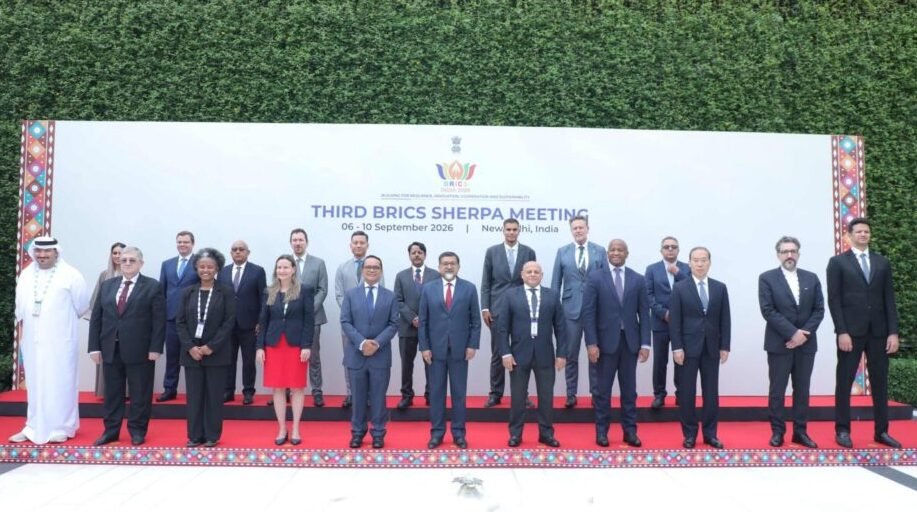
The call for greater representation of developing countries and recognition that no woman has led the United Nations strengthened India’s argument for a more inclusive international order
Nor can India simultaneously satisfy every partner. Russia and China favour a stronger challenge to Western dominance; Gulf states want security and economic stability; Iran seeks relief from isolation; Western countries expect responsible diplomacy without support for sanctions evasion. India’s strategic autonomy works because it is flexible, but flexibility can also appear evasive when crises demand clearer commitments.
Still, the summit delivered what India most needed: recognition that its influence derives from relationships across rival camps. New Delhi did not resolve the Ukraine war, reconcile Iran and the UAE or reform the UN. It achieved something more realistic and potentially more durable – it made itself difficult to bypass. In a fragmented world, that is a substantial diplomatic gain.

-The writer is a New Delhi-based senior commentator on international and strategic affairs, environmental issues, an interfaith practitioner, and a media consultant. The views expressed are personal and do not necessarily carry the views of Raksha Anirveda





