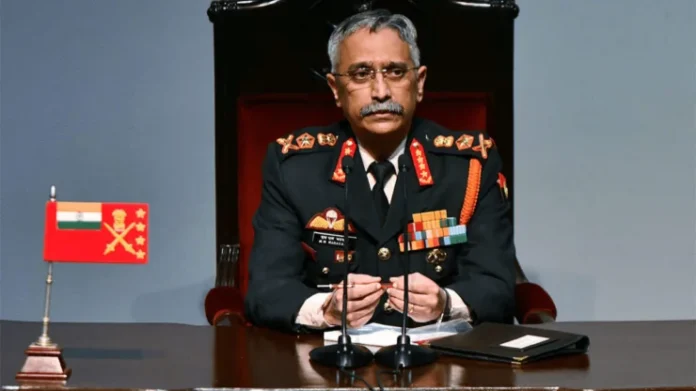
New Delhi: Army chief General M. M. Naravane has called for a “revolution in bureaucratic affairs” and spoke out against procedural lacunae in the defence procurement process because of what he called the ‘Zero Error Syndrome’.

Speaking at a seminar organised by the United Services Institution, the Army chief also called for a rethink of the L1 vendor concept altogether. Under this system, the lowest bidder, known as L1, wins the contract.
The Army chief underlined that the force has brought about major structural changes by aligning both the revenue and capital routes of procurement under the Deputy Chief of Army Staff (Capability Development and Sustenance).
“This alone is not enough. Our procurement process unfortunately has not kept pace with the requirements of time. Many procedural lacunae have crept into the acquisition process due to the overbearing nature of our rules and regulations, leading to a ‘Zero Error Syndrome’,” he said.
The Zero Error Syndrome, as he sees it, is the bureaucratic web of checks and balances, in place to ensure zero error, that in turn results in a slower pace of functioning.

Speaking on the topic ‘Transformation Imperatives for the Indian Army in the coming decades’, the Army chief said the needs of the information era warfare “cannot be hamstrung by the procedures of the Industrial Age”. “The need of the hour is to have a metamorphosis here too, perhaps even doing away with the concept of the L1 vendor altogether. For real transformation to take place, we require a revolution in bureaucratic affairs.”
Gen. Naravane added that the dual requirement of fast-tracking modernisation, and simultaneously promoting self-reliance, are indeed challenging objectives for a developing nation such as India. Considering the quick pace of defence modernisation being undertaken by our adversaries, we cannot afford to lag behind, he said.

The Army chief said wars today, more than ever before, require a ‘whole of nation’ effort. The transformation of the Indian Army, and indeed of the armed forces, needs to be ‘resource informed’, he underlined.
India cannot hope to fight and win the next war with legacy structures evolved from the past, he added. Our force structures must be agile, flexible, modular and networked and they should reflect the realities and challenges of the contemporary battlefield, he said.
What the armed forces have achieved so far is merely jointness for the industrial era, he noted, saying India needs to transit rapidly to full scale integration for digital era combat as well as greater interoperability.
“It is hard enough to be joint, the difficulties in interoperability will be many times greater,” he said.