


“Those who are witnessing an erosion in their primacy no longer believe in the rules that they themselves set.”
S Jaishankar, Minister of External Affairs

The ongoing volatility in the politico-military affairs of the world indicates the shape of things to come. This is undoubtedly the footprints of the emerging New World Order (NWO). The operative words in the above statement of the Indian Foreign Minister are, “Erosion in the primacy of those who had earlier dictated to the world.” It is, in fact, vindication of a famous line, spoken by King Arthur, in a poem by Lord Tennyson, which said:
“The old order changeth, yielding place to new,
And God fulfils himself in many ways,
Lest one good custom should corrupt the world.”
These lines stress the inevitability of change in the established global systems and geopolitical environs. Empires have risen and fallen because of the necessity of the new environs. Time is no friend of anyone and it mercilessly changes. It calls for old ways of living to end so that new ones can begin. Even a good rule or habit can become harmful if people follow it blindly forever. Change keeps the world fresh and alive.
To understand the transitional phase of this change in the global politico- military system, one ought to perfunctorily glance at the current global environs. No doubt, technological advancements, regular military conflicts, and rising levels of awareness and communication have aided the incoming transitional phase. The process has been slow but constant. The world has passed through a bipolar world post-Second World War to a unipolar world on the collapse of the Soviet Union at the start of the 1990s.

Twenty-one world leaders, 11 member nations and 10 invitees, attended this BRICS summit, which was attended by Vladimir Putin of Russia and Xi Jinping of China, along with President Masoud Pezeshkian of Iran, besides the Crown Prince of the UAE and the Foreign Minister of Saudi Arabia
And now it is transitioning to a multipolar world. No wonder Indian Foreign Minister S Jaishankar can thunder to say, “We count more, we influence more, but we also have greater responsibility…” He had said so in his valedictory address to the Indian Council for World Affairs, on September 15, 2026. It is no doubt, a statement of India’s rising clout in world affairs. It was evident in the recent BRICS summit organised in New Delhi on September 12-13, 2026.
Twenty-one world leaders, 11 member nations and 10 invitees, attended this BRICS (Brazil, Russia, India, China and South Africa) summit, which was attended by Vladimir Putin of Russia and Xi Jinping of China, along with President Masoud Pezeshkian of Iran, besides the Crown Prince of the UAE and the Foreign Minister of Saudi Arabia. Crown Prince of the UAE and the President of Iran had bilateral talks. This has to be understood in view of the ongoing conflict in West Asia, where Iran and the UAE were rivals.

Formed in 2009 as BRIC, the grouping became BRICS after South Africa joined in 2011, and now it has 11 members. Besides the original five, it has Egypt, Ethiopia, Iran, Indonesia, the UAE, and Saudi Arabia. Collectively, BRICS comprises more than a quarter of the global economy and nearly half the world’s population. The group has established multilateral institutions and financial mechanisms, such as the New Development Bank, BRICS Contingent Reserve Arrangement, and the BRICS Payment System. It is now generally seen as a rival of the G7 (Group of seven rich countries such as the USA, the UK, Canada, Germany, France, Italy and Japan). It is also seen as an alternative global political power group, challenging US dominance in NATO.
BRICS comprises more than a quarter of the global economy and nearly half the world’s population. The group has established multilateral institutions and financial mechanisms, such as the New Development Bank, BRICS Contingent Reserve Arrangement, and the BRICS Payment System.
Besides the rise of BRICS, another indication is “the declining power of the US.” The first sign of its decline came from its withdrawal from Afghanistan on August 15, 2021, after 20 years of war, leaving most of its military hardware behind. It was a repetition of Vietnam in the late 1970s. It failed to learn the lesson that one cannot win wars in ‘distant lands’ by using some fifth columnists unless supported by the general population. Its recent conflict with Iran (since June 2026) has fully exposed its inability to impose its will on a much weaker nation. It was a lesson that technology alone cannot win a war.
The military weakness of the United States has been further exposed when it failed to open the Strait of Hormuz. Much-talked-about aircraft carriers of the US, once symbols of great power, have now become only ‘white elephants’. Iranian drones and missiles have badly affected their manoeuvrability. What’s more, it could not protect its allies in the Middle East from Iranian missiles and drones. They have been worst hit in the recent conflict. In the bargain, it had to vacate some of its military bases.
Icing on the cake of its military power decay was seen when Saudi Arabia requested help against Houthi rebels’ attack on September 15, 2026, which was declined point blank. It may be noted that Houthi rebels have blocked the Bab-al-Mandeb, the entry point to the Red Sea, which was an alternative route in the supply chain for Saudi oil. Thus, with both routes, i.e., the Strait of Hormuz (20%) and Bab-al-Mandeb (12%), being blocked, the world faces an energy crisis, with 32% of oil supply from the Middle East being cut. And the sole super power has failed to ensure the supply. The so-called ‘policeman of the world’, thus, has been accused of the ‘dereliction’ of duty.
The US has been inciting military conflicts by other nations to sell its weaponry. However, it has backfired because other nations such as India, Iran and China realised the need for ‘self-reliance’ and began to develop their own technology and weaponry as per their needs
A few things have happened since the end of the Second World War, which accounts for this state of affairs. The US has been over-involved in local conflicts and thus overspending. Today, its debt has risen to $40 trillion. Besides its own involvement, it has been inciting military conflicts by other nations to sell its weaponry. However, it has backfired because other nations such as India, Iran and China realised the need for ‘self-reliance’ and began to develop their own technology and weaponry as per their needs. They may not be at par with the USA in high technology, but they are capable of defending themselves, as has been shown by Iran.
Not only US involvement in military conflicts around the world but also the efforts for alternative means of bilateral and multilateral trade in local currencies by other nations and blocs such as BRICS threaten the global domination of the dollar. In such a scenario, the value of the dollar will drop. Being a global reserve currency, the US has taken the liberty to print it at will.
The tariff war has added fuel to the fire. Almost all nations worldwide feel tormented. They are also contesting the US being the solitary authority to levy economic sanctions. These sentiments were obliquely expressed in the recent Delhi declaration of BRICS nations. This has further forced nations to seek alternative markets and trade partners. If it continues, the US might face isolation in trade, thus affecting its dollar-inflated economy. Since, other than the arms industry, the US depends on other nations for consumer goods, its trade would be affected. With trade shifting to local currencies within nations or blocks, the dollar will lose its value, and debt of $40 trillion would affect the US economy.
The downfall of the US might not be immediate, but its journey downhill has begun. It is losing allies. Not only the Middle East but even the EU has become wary of its motives. Canada and Mexico have taken a tough stand against it. Overbearing policies of the current US regime have pushed India closer to Russia. Its rivalry with China is further affecting its global domination
Thus, the devalued dollar would affect the US economy very badly. A dwindling US economy and reduced parity in weapon technology with others would affect the USA’s ‘numero uno’ status. US-Iran war has shown that the US military is no more in a position to have a free run, as others too have acquired high-tech weapons. In fact, it has cut down on its capability to militarily dominate the world. President Donald Trump’s refusal to come to the aid of its strongest Middle East ally, Saudi Arabia, against Houthi rebels, speaks much about US declining military power. In fact, President Trump’s much hyped MAGA (Make America Great Again) dream has turned into a RAFA (Revert America to Fortress Again).
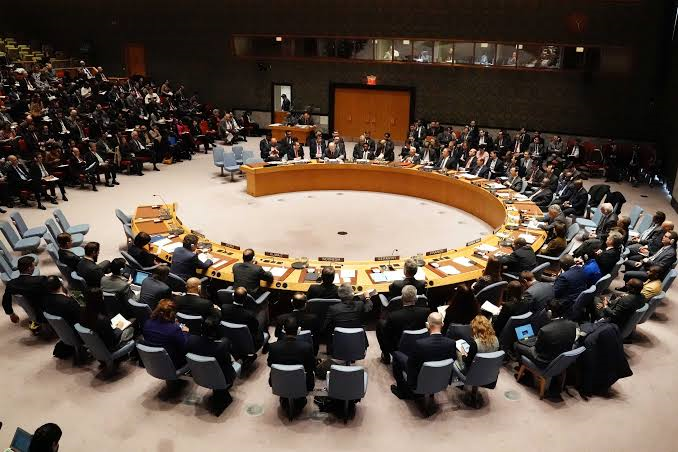
All said and done, the downfall of the USA might not be immediate, but its journey downhill has begun. It is losing allies. Not only the Middle East but even the EU has become wary of its motives. Canada and Mexico have taken a tough stand against it. Overbearing policies of the current US regime have pushed India closer to Russia. Its rivalry with China is further affecting its global domination. Blow Hot – Blow Cold policy of President Trump has seriously damaged US credibility. Power space being vacated is bringing other players into play. The world is thus transitioning from a unipolar to a multipolar world, which will not only fill up the power vacuum but also transform global economic and security institutions like UNO — which has been under the sole thumb of the USA so far. The real message of the emerging multipolar world is: Real power lies in sharing of power and not behaving as a ringmaster treating the globe as a circus.

-An ex-NDA and Wellington Staff College graduate, Col Rajinder Singh is a renowned author and security analyst. He has authored four books, two individually and two in collaboration. His best-selling books are Kashmir – A Different Perspective and The ULFA Insurgency. The views expressed are of the author and do not necessarily reflect the views of Raksha Anirveda





