


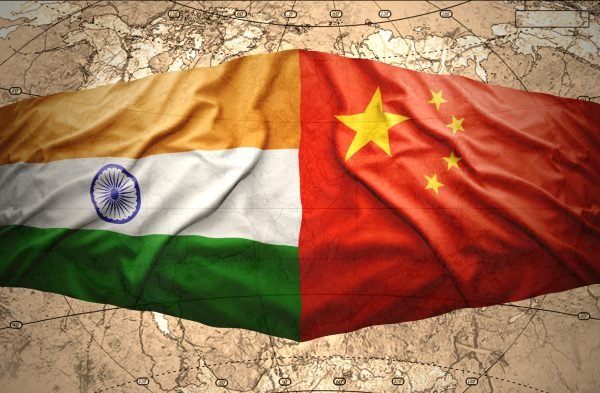
“As far as India is concerned, China has a malevolent eye towards us.” — Atal Bihari Vajpayee, Lok Sabha Debates, May 8, 1959
In 431 BCE, the Greek general and historian Thucydides wrote in his book, the History of the Peloponnesian War: “It was the rise of Athens and the fear that this instilled in Sparta that made war inevitable.” Nearly two and a half millennia later, Harvard scholar Graham Allison dusted off that thesis and applied it to the modern world in his landmark 2017 work Destined for War, finding that in 12 of 16 major power transitions over the past five centuries, the result was armed conflict. Today, the framework is most urgently relevant not in the familiar theatre of Washington and Beijing — but in the mountain passes of the Himalayas, the contested waters of the Indian Ocean, and the boardrooms of Mumbai and Shanghai. The world’s most consequential strategic question of the coming decades may well be this: Can a rising India ascend to global prominence without triggering the catastrophic logic of the Trap?

The answer is not inevitable. But it is far from assured. What unfolds between India and China over the next quarter-century will shape the security architecture of Asia — and, by extension, the global order — more profoundly than almost any other variable in geopolitics. Understanding the dynamics of this rivalry demands clear eyes, strategic patience, and a willingness to move beyond the comforting certainties of both triumphalism and fatalism.
India’s demographic dividend — a median age of just 28, a workforce of nearly a billion people — provides a generational engine that a rapidly ageing China simply cannot replicate
The Metrics of an Ascent
The raw numbers are extraordinary. India’s economy, now the world’s fifth-largest by nominal GDP and third-largest by purchasing power parity, grew at 7.4% to 7.8% in the most recent fiscal year — a pace that major industrialised economies can scarcely imagine. Projections from Goldman Sachs and the IMF converge on a striking forecast: India is poised to become the world’s third-largest economy by nominal GDP around 2030, and potentially the second-largest by 2075. By mid-century, optimistic scenarios place India’s output anywhere between $20 trillion and $30 trillion — a figure that would represent one of the most dramatic economic ascents in recorded history.
The structural underpinnings of this growth are formidable. India’s demographic dividend — a median age of just 28, a workforce of nearly a billion people — provides a generational engine that a rapidly ageing China simply cannot replicate. The digital revolution, from Aadhaar biometric identity to the Unified Payments Interface that processes billions of transactions monthly, has unlocked productivity in ways previously inconceivable in an economy of this scale. Production-linked incentive schemes are reorienting global supply chains, as multinational corporations execute the long-anticipated ‘China-plus-one’ strategy by onshoring critical manufacturing in Pune, Chennai, and beyond.
“The four peaceful power transitions in history prove one thing above all: agency matters. The Trap is a warning, not a sentence.”

An India that outpaces China’s growth rate, that builds blue-water naval capabilities in the Indian Ocean, that anchors a democratic coalition in the Indo-Pacific, is an India that directly contests China’s regional supremacy
Defence planners in Beijing, Washington, and New Delhi are watching these numbers with equal intensity — though for very different reasons. A prosperous India with a modernised military, deepened Quad partnerships, and credible nuclear deterrence represents a fundamentally altered strategic landscape. The question is whether that altered landscape invites accommodation or confrontation.
The Trap Closes In
China’s strategic calculus regarding India is rooted in a sense of civilisational primacy that predates the People’s Republic by millennia. Beijing views itself as Asia’s natural hegemon — a status it considers not aspirational but restorative. India’s accelerating rise therefore presents a qualitatively different challenge than, say, the growth of a smaller Southeast Asian economy. An India that outpaces China’s growth rate, that builds blue-water naval capabilities in the Indian Ocean, that anchors a democratic coalition in the Indo-Pacific, is an India that directly contests China’s regional supremacy.

The friction points are already bleeding. The June 2020 Galwan Valley clash, in which 20 Indian and up to 45 Chinese soldiers were killed in brutal hand-to-hand combat at 14,000 feet, shattered two decades of managed border relations and exposed the fragility of the Line of Actual Control as a stable boundary. Both nations have since dramatically accelerated military infrastructure along their shared frontier — roads, airbases, forward logistics depots, and brigade-strength deployments now characterise a border that was, a decade ago, sparsely manned. The 2024 patrolling agreements that partially disengaged forward positions at several flashpoints were welcomed by diplomats, but sober military analysts noted that the underlying territorial disputes remain entirely unresolved.
The fear, honour, and interest that Thucydides identified as the drivers of Spartan anxiety are all present in Delhi’s strategic calculus, in roughly equal measure
Simultaneously, China’s Belt and Road Initiative encircles India through Pakistan and Sri Lanka, its naval vessels are increasingly present in the Arabian Sea and Bay of Bengal, and its deep strategic partnership with Islamabad — including the China-Pakistan Economic Corridor running through disputed Kashmir — constitutes what Indian strategists describe without exaggeration as a two-front encirclement strategy. The fear, honour, and interest that Thucydides identified as the drivers of Spartan anxiety are all present in Delhi’s strategic calculus, in roughly equal measure.
Nuclear Shadows and Economic Chains
And yet — the war has not come. This is not accidental. Several structural forces have, thus far, held the worst instincts of the rivalry in check, and understanding them is essential to any serious assessment of whether peace can be sustained.
The most powerful deterrent is the one that cannot be spoken aloud in polite diplomatic company: both India and China are nuclear-armed states with second-strike capability. The doctrine of mutually assured destruction has not been rendered obsolete by the Himalayan frontier. A conventional border conflict that escalated towards the nuclear threshold would threaten both nations’ existence — a reality that alerts the minds of even the most hawkish military planners. Limited clashes have occurred and will likely recur, but the nuclear overhang has, to date, imposed a ceiling on escalation that has held.
Economic interdependence adds a further layer of complexity. Chew on this: bilateral India-China trade exceeded $118 billion in 2023-24, making China India’s largest trading partner by volume — even amid sustained strategic rivalry. India is significantly dependent on Chinese imports for pharmaceutical precursors, electronics components, and solar panels, critical to its energy transition. This is not a comfortable dependence — New Delhi’s Aatmanirbhar Bharat self-reliance initiative is explicitly designed to reduce it — but it creates short-term costs of confrontation that neither economy can easily absorb. Global value chains, moreover, are not respecters of geopolitical fashion: multinationals operating in both markets have little appetite for the disruption that open conflict would generate.
A conventional border conflict that escalated towards the nuclear threshold would threaten both nations’ existence. Limited clashes have occurred and will likely recur, but the nuclear overhang has, to date, imposed a ceiling on escalation that has held
Multilateral institutions, too, have provided unexpected ballast. India and China both sit in BRICS, the Shanghai Cooperation Organisation, and the G20. These forums do not resolve disputes, but they create channels of communication and create political costs for unilateral escalation. The very architecture of post-Cold War multilateralism — imperfect, contested, and frequently toothless — nonetheless raises the diplomatic price of open conflict in ways that have no historical precedent.
Strategic Autonomy and the American Factor
India’s response to Chinese pressure has been characterised by a strategic autonomy that frustrates allies and confounds adversaries in equal measure. New Delhi has deepened its Quad partnership with the United States, Japan, and Australia, participating in joint naval exercises, intelligence-sharing arrangements, and defence technology transfers of increasing sophistication. It has signed foundational defence agreements with Washington — the Logistics Exchange Memorandum of Agreement, Communications Compatibility and Security Agreement, and Basic Exchange and Cooperation Agreement — that bring it closer to American military infrastructure than any non-NATO partner.
And yet India has simultaneously refused formal alliance status, maintained its historic posture of non-alignment, and declined to join Western sanctions regimes against Russia following the 2022 invasion of Ukraine — continuing to purchase discounted Russian energy and powerful defence systems. This is not strategic confusion; it is strategic sophistication. By refusing to be locked into any single camp, India preserves its freedom of manoeuvre, avoids the geopolitical entrapment that formal alliances can invite, and maintains lines of communication with all major powers — including Beijing itself.
China is India’s largest trading partner. India is significantly dependent on Chinese imports for pharmaceutical precursors, electronics components, and solar panels, critical to its energy transition
The United States, for its part, has a compelling interest in India’s successful rise. A prosperous, democratic, militarily credible India provides exactly the kind of counterbalancing force in the Indo-Pacific that American grand strategy has sought since the pivot to Asia — without the costs and commitments of direct military confrontation with China. Washington’s accommodation of India’s strategic autonomy, including its tolerance of continued Russian arms purchases, reflects a clear-eyed assessment that a fully aligned India is less valuable than a strategically independent India that nonetheless broadly shares American interests in a free and open Indo-Pacific.
The Risks That Remain
None of this allows complacency. The risks of miscalculation are real and growing. As both nations construct military infrastructure at breakneck speed along a disputed border, the margin for error narrows. A patrol encounter that escalates, a tactical air incursion misread as a strategic provocation, a domestic political crisis in either capital that makes nationalist assertion irresistible — any of these could trigger a conflict that neither government wants but neither may be able to stop.
India’s domestic trajectory also matters enormously. Sustaining 7% growth requires difficult structural reforms in labour markets, land acquisition, education, and judicial efficiency that have repeatedly proven politically treacherous. Widening inequality, inadequate formal job creation, and climate vulnerability — India’s agricultural sector employs nearly half the workforce and is acutely exposed to monsoon disruption — represent internal pressures that, if unmanaged, could undermine the economic foundations of India’s strategic rise.
A Warning, not a Sentence
History offers reason for cautious optimism. Of Allison’s 16 case studies, four ended without war. The post-war integration of Germany into European institutions, the managed decline of British imperial power accompanied by the rise of American hegemony, the post-Cold War recalibration of the international order — these episodes demonstrate that the Trap is not inescapable. What they share is the presence of wise leadership, creative institutional frameworks, credible deterrence, and a willingness by both the rising and the established power to define success in terms that do not require the other’s humiliation.
Washington’s accommodation of India’s strategic autonomy reflects a clear-eyed assessment that a fully aligned India is less valuable than a strategically independent India that nonetheless broadly shares American interests in a free and open Indo-Pacific
India’s path forward demands exactly this combination: sustained economic growth through inclusive reform, military modernisation sufficient to ensure credible deterrence without provoking arms races, and diplomatic creativity that builds the multilateral frameworks within which rivalry can be managed rather than inflamed. For China, the imperative is equally clear — that accommodating a multipolar Asia with a strong, democratic India serves long-term interests better than the sterile pursuit of exclusive regional hegemony. For the United States, the task is to support India’s rise without so constraining it that New Delhi’s strategic autonomy — its most valuable asset — is forfeited.
The Thucydides Trap is a warning that history’s gravity tends towards certain catastrophic outcomes. But Thucydides himself was no simple fatalist. He wrote his history, as he said, as a possession for all time: a record of human choice under pressure, of wisdom and folly, of moments when statesmen saw the abyss and stepped back from it. The question for the leaders of India and China in the decades ahead is whether they are reading the same book — and whether they dare to act on what it teaches.
The dragon and the elephant are circling one another on the roof of the world. The outcome of that encounter will define the 21st century. The Trap is not destiny. But escaping it will require everything that great statesmanship demands: patience, realism, creativity, and the wisdom to know that in a world of nuclear weapons, economic interdependence, and multilateral institutions, there are no victors in the wars that the Trap predicts.

The writer is a defence journalist specialising in military affairs, security policy and defence technology. He reports extensively on operation strategies, defence manufacturing initiatives and geopolitical developments across the Indo-Pacific region. The views expressed are personal and do not necessarily carry the views of Raksha Anirveda





