


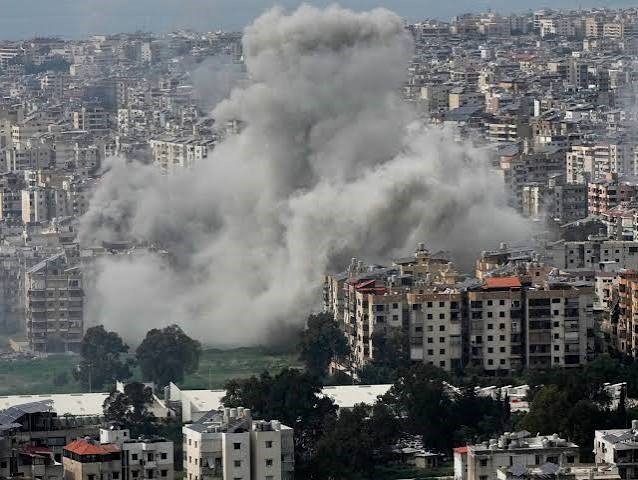
In the realm of International Relations, certain events have contributed to seismic shifts in the world order. The two World Wars and the Cold War in the 20th century, the 9/11 attacks on American soil — followed by America’s War on Terror campaign in the first decade of the 21st century — changed the very perception of how state actors dealt with each other in different realms. In the third decade of this century, one such paradigm-shifting event is the ongoing Israel-United States war against Iran in the Middle East.
Launched on February 28 by the US and Israel via operations Epic Fury and Lion’s Roar, the attacks marked a definite shift in how global communities dealt with each other as far as the issues of economy, defence, and energy security are concerned. Today, we are witnessing not just the shifting sands of the existing world order but are also becoming recipients of a new, yet more uncertain world.

Over the decades, the politico-economic architecture relied on a consensus; no matter what happened, supply lines remained open. The Iran War has put that consensus under strain
A thorough analysis of this emerging new world order merits attention.
The Primacy of Hydrocarbon Resources
Ever since a new climate change adaptation and mitigation regime took shape more than fifty years ago, humanity has been at a crossroads. It had to deal with a simple yet tough question — should it be business as usual? Or must we take hard steps to save us and the planet?
Since then, the result has seen the world exhibiting a decisive shift in favour of clean energy sources on one hand, and a change in the behavioural attitudes of communities by adopting a lifestyle that embraces a low-carbon emission pathway. The shift in favour of the former assumed particular importance as countries around the world, both in the Global North as well as the Global South, have embraced clean energy in varying forms and manifestations.
Today, we are witnessing not just the shifting sands of the existing world order but are also becoming recipients of a new, yet more uncertain world
However, this war has brought the primacy of hydrocarbon resources back into the energy policy matrix of the globe. America and Israel’s targeting of Iran’s oil facilities, followed by Iran’s blockading the Strait of Hormuz, has triggered a global energy and economic crisis. This crisis has been characterised by several critical pressures —

- Skyrocketing crude oil prices are exerting pressure on the economies of different countries;
- Inflationary pressures are mounting domestically for different countries, particularly in developing countries like India;
- A severe threat to global food security is emerging owing to a lack of movement of ships carrying chemical fertilizers needed to enhance the fertility as well as productivity of different crops.
This energy crisis is reflective of how, no matter how much importance clean energy sources acquire in the energy matrix of countries, hydrocarbon resources, which have been the mainstay of the world economy at least since the 19th century onwards, will continue to remain so, at least for the foreseeable future.
Given the uncertainty in the global energy market, the development of a country’s national power through the exhibition of force becomes essential, particularly for a country like India.

The world is exhibiting a decisive shift in favour of clean energy sources, and a change in the behaviour of communities adopting a lifestyle that embraces a low-carbon emission pathway
Shoring up Defence Capabilities
Given the egregious nature of the attacks, it becomes amply clear that force is the ultimate currency of influence in international politics. The neo-realist school of thought of international politics contends that, given the fact that there is the absence of an omnipotent state that can act as Thomas Hobbes’ sovereign, state actors are left to fend for themselves. This finds its expression in states ending up arming themselves to ensure their survival.
This ongoing war has clearly demonstrated that India cannot afford to remain complacent as far as the defence of its internal and external security aspects are concerned. This necessitates the need for India to arm itself, not for imperial expansion like many countries did at different times in their history, but to enhance the element of deterrence against foes, both internal and external.
Keeping that in mind, the Government of India has been instrumental in not only hiking the defence budget but also developing a strong indigenous defence base through a combination of critical defence assets manufactured by both public and private sector companies.
Unravelling the Consensus on Global Commons
Apart from defence, economic considerations also play an important role in the political affairs of a nation-state. The global politico-economic architecture over the decades relied on a consensus — no matter what happens, supply chains and supply lines will never be put in peril. America and Israel’s campaign against Iran and the ensuing blockade have put that global consensus under serious strain.
This Iran War has demonstrated that India cannot afford to remain complacent. It needs to arm itself to enhance deterrence against its foes, both internal and external
Just like the Strait of Hormuz, other vital continental and maritime chokepoints can be put in peril in the future by the West seeking to satisfy its imperialist ambitions. Not only will this undermine the prospects of global economic growth, but it will also undo years of hard work achieved through the painstaking efforts of countries and civil society organizations in fulfilling the aims outlined in the Millennium Development Goals (MDGs), followed by the Sustainable Development Goals (SDGs), thereby unleashing a multifaceted catastrophe across the interconnected systems of global trade, development, and poverty alleviation.
This series of interconnected changes in the world order underscores the need for the global community’s like-minded actors and institutions to devise new and innovative strategies to not only deal with the shocks emanating from this event but also enhance resilience at both the micro and macro levels.

The writer is a doctoral candidate in Political Science at Mahatma Gandhi Central University. The views expressed are personal and do not necessarily reflect the views of Raksha Anirveda





