


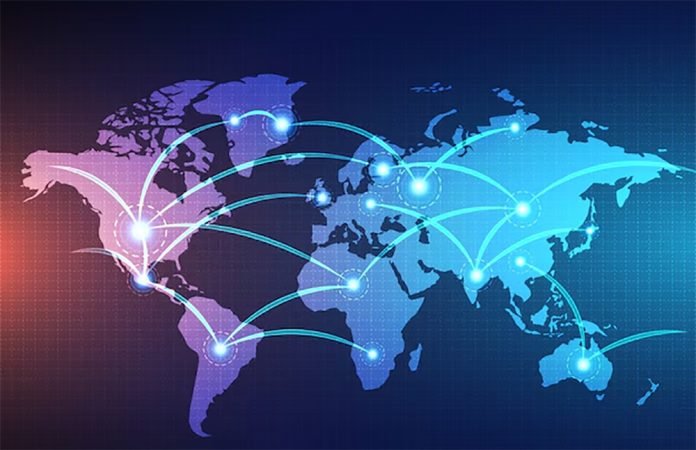
As an idea, globalisation dates back to ancient times when seen from the perspective of different civilisations. In India’s case, it was the Indo-sphere, in China’s case it was the Silk Route. For the West, globalisation began with the age of colonialism and discovery. However, globalisation began in its truest form in the 1990s following the end of the Cold War and the collapse of the Soviet Union.
Since then, globalisation has changed the very face of humanity; it has touched every facet of human life – social, economic, financial, and cultural to name a few. It has contributed to the phenomena of global interconnectedness, leading to the phenomenal expansion of global trade, finance, and entertainment.

Today, an event in one part of the world has repercussions at every level, in every nook and corner of the planet. A key dimension of globalisation has been the worldwide movement of people for myriad reasons, bringing with them their ideas, cultural traits, beliefs, and skills, changing the face of every society they touch.
In 2025, however, globalisation as an abstract idea and a practical reality is under increasing stress, especially on the immigration issue. Today, we witness countries across the geographical zones, from the western hemisphere all the way to the eastern hemisphere erecting institutional and security barriers that are meant to keep ‘illegal elements’ out, reduce the entry of skilled outsiders, and securitise their country.
A key dimension of globalisation has been the worldwide movement of people for myriad reasons, bringing with them their ideas, cultural traits, beliefs, and skills, changing the face of every society they touch
But in doing so, are we relegating ourselves to our primitive roots? Hence, an analysis of this issue demands attention.
Migration
Human history has been a history of immigration. Yuval Noah Harari in Sapiens: A Brief History of Humankind contends that it is in Africa that our ancestors originated; with the passage of time as evolution contributed to the progress of human cognitive and social abilities, humans began to understand that the mind is a restless entity that demands the satisfaction of abstract ideas and beliefs.

This quest to satisfy our increasing urges and exploratory mindset caused us to venture out of our place of origin to explore more and more places and conquer new areas.
Over the centuries, various factors, particularly the emergence of the institution of private property spurred the human endeavour to gain more material resources that caused various forces of history to take shape.

Among them the European urge to explore new areas to serve as a potential market for its products and extract natural resources served as a catalyst in the establishment of contact between the old world and the new world.

Fast forward to the last decade of the 20th century, the demand for cheap labour and the objective of attracting the best talent on the planet caused the developed world to open up their countries. Ideas such as the nation-state becoming redundant and international organisations eclipsing the nation-state as the most powerful political institution came to be advocated by hyper-globalists.
It seemed that the borders of nation-states would no longer matter.
The world seems to have turned its back on the free movement of people since the 9/11 terror attacks on American soil, creating the fear of the ‘other’ in the American psyche, especially the white Anglo-Saxon protestant communities
Erection of Barriers
But that positive sentiment was short-lived. Today, it clearly seems that the world has turned its back on the promise of the free movement of people. It began with the 9/11 terror attacks on American soil when the fear of the ‘other’ became ingrained in the American psyche, especially the white Anglo-Saxon protestant communities.
This sentiment was closely echoed in Europe with the rise in the population of an ethno-religious community hailing from the Middle East. Today adherents of that cultural system constitute the fastest growing community in the world.
This coupled with the increasing belief that multiculturalism was an intellectual coup facilitated by the liberal left in the developed world caused a backlash, leading to the rise of right-wing governments in the world.
Crackdown on both illegal and legal immigration ensued, which became manifest in the virulent anti-immigration drives of American President Donald Trump. Many countries in Europe today have erected institutional barriers against legal immigration, particularly in the educational sector.
This sentiment is not limited to Europe; it has spread to the global south, most notably India, it is most prominently being seen in the form of a mass crackdown against illegal immigration which has acquired a more aggressive shape.
India must promote a world full of tolerance, pluralism, and inclusivity, protecting human rights and recognising the importance of human agency. We must remind the world that humanity can live peacefully only by creating a big family
Reviving Internationalism
Rabindranath Tagore was an ardent believer in the idea of internationalism. His vision caused him to advocate a vision of a world transcending borders. Being one of the most prominent personalities who played a pivotal role in shaping the idea called India; it is our duty as Indians to promote India as a country that shall promote internationalism.
While our intellectual heritage speaks of ‘Vasudhaiva Kutumbakam’, we need to turn this vision into reality. India of today must take positive steps in promoting a world full of tolerance, pluralism, and inclusivity, which protects human rights and recognises the importance of human agency. We must hope to remind the world that it is only by creating a big family that humanity can live peacefully.

The writer is a doctoral candidate in Political Science at Mahatma Gandhi Central University. The views expressed are personal and do not necessarily reflect the views of Raksha Anirveda





