


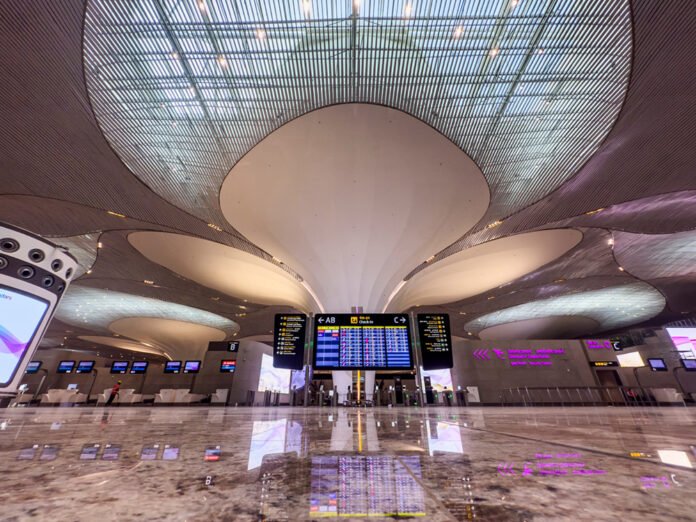
Mumbai: Navi Mumbai International Airport (NMIA) will begin commercial flight operations on December 25, marking a key milestone for India’s civil aviation sector and expanding capacity for the Mumbai Metropolitan Region (MMR).
The opening adds a critical new gateway for a region that has faced sustained congestion for over a decade. Planned as part of a distributed aviation framework, NMIA supports Mumbai’s transition to a multi-airport system aimed at improving capacity, operational resilience and long-term scalability.

On Day One, domestic services will be operated by IndiGo, Air India Express, Akasa Air and Star Air, connecting NMIA to nine destinations across India. The airport will handle 15 scheduled departures on the first day. During the initial phase, NMIA will operate between 08:00 hrs and 20:00 hrs, with up to 24 scheduled daily departures to 13 destinations and the capability to manage up to 10 aircraft movements per hour. From February 2026, operations are planned to progressively scale up to round-the-clock services.

NMIA was inaugurated by the Prime Minister Narendra Modi on October 8. Since 2021, Adani Airports Holdings Limited (AAHL), a subsidiary of Adani Enterprises Limited (AEL), has led the development, construction, and operational readiness of the greenfield airport, progressing it from accelerated construction to phased commercial operations within a compressed timeframe.
Passenger services from day one will be supported by Digi Yatra–enabled contactless processing at designated touchpoints, along with trained terminal staff across kerbside, check-in, security and boarding areas. Retail and food and beverage offerings have been curated with a focus on affordability and local relevance.
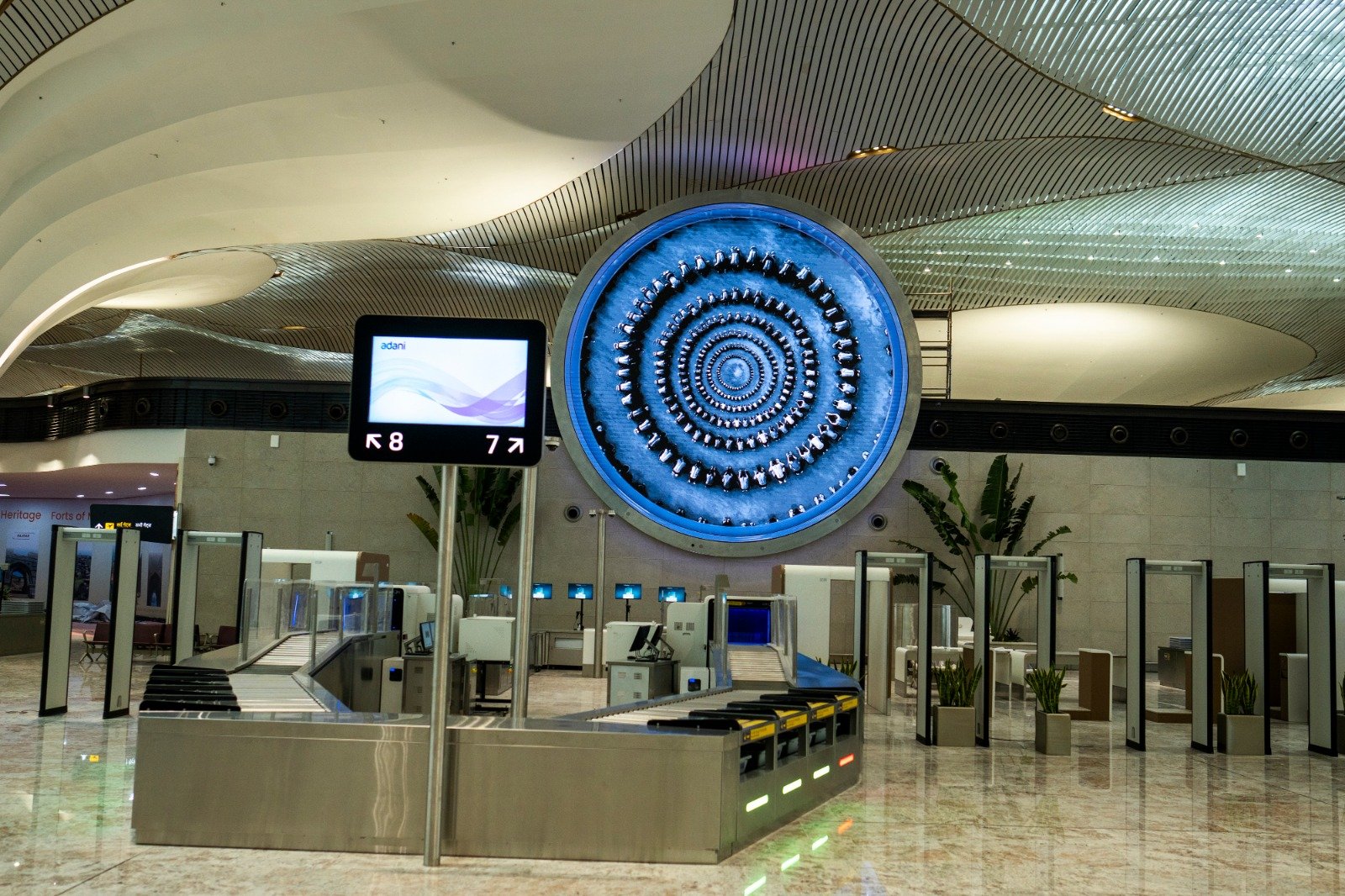

Inspired by the lotus, India’s national flower, the terminal architecture integrates cultural identity with contemporary design and sustainability features. In its initial phase, NMIA is designed to handle 20 million passengers per annum (MPPA), with future expansion planned to scale capacity up to 90 MPPA, supported by dedicated cargo terminals and multimodal connectivity.
With operations set to begin tomorrow, NMIA is expected to strengthen Mumbai’s role as a global gateway and support long-term economic growth through expanded aviation capacity.







