


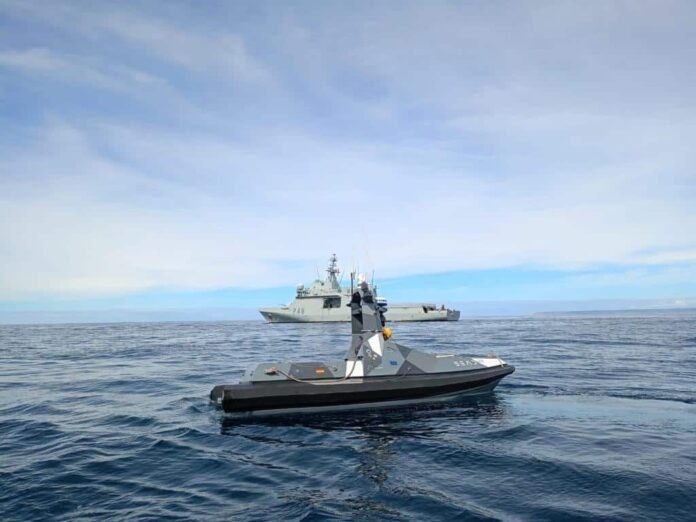
New Delhi: US-based Saildrone deployed a handful of unmanned surface vessels as part of NATO’s Task Force X demonstration in the Baltic Sea, which helped detect and track Russian shadow-fleet vessels operating in the area, according to the company. Launched last year, Task Force X is led by NATO’s Allied Command Transformation (ACT) and seeks to accelerate the acquisition, development and integration of uncrewed maritime systems into naval operations.
The alliance’s top transformation branch hosted its second operational demonstration in June, where over 60 American and French-made uncrewed systems were stress-tested to assess their effectiveness against conditions on the Baltic Sea. Among the platforms deployed were four Voyagers, Saildrone’s ten-metre USVs, which operated in the Gulf of Finland and the western Baltic Sea.

“Saildrone Voyagers detected and tracked hundreds of vessels daily and successfully identified the exercises’ ‘red forces’ and identified real-world dark targets in the area, including Russian shadow-fleet and military vessels,” a company press release said.
Over the last few months, European countries have ramped up sanctions targeting Russia’s fleet of outdated and often uninsured tankers, known as the shadow fleet, used to evade Western bans and export oil.
A report published by the Brookings think tank in April found that Russia has steadily increased the number of oil tankers part of its shadow fleet since 2022, with over 40% of new ships sold by European Union sellers. In the last three years, Russia has added approximately seven new vessels per month to its covert group, which now stands at around 343 vessels.
Saildrone offers governments a so-called contractor-owned and -operated deal, which means that any data provided to the customer is delivered as a service. In the case of the NATO demonstration, the information gathered by the USVs was integrated into the participants’ common operating picture and accessed through the Saildrone mission portal, made available to the alliance’s Maritime Command.

A similar trial was organised in February through the Task Force X initiative near Danish waters in the Baltic Sea, where manned and unmanned assets were integrated into live-firing events and tactical manoeuvres.
According to a recent command statement, ACT has focused its efforts on engaging with manufacturers to “bypass bureaucratic delays” and adopt commercially available off-the-shelf systems when needed in order to speed up the formation of the task force. Individual countries participating in the initiative, including Bulgaria, Romania, Turkey, Norway and the United Kingdom, will launch national variants modelled after the Task Force X Baltic framework to boost regional defence innovation.







