


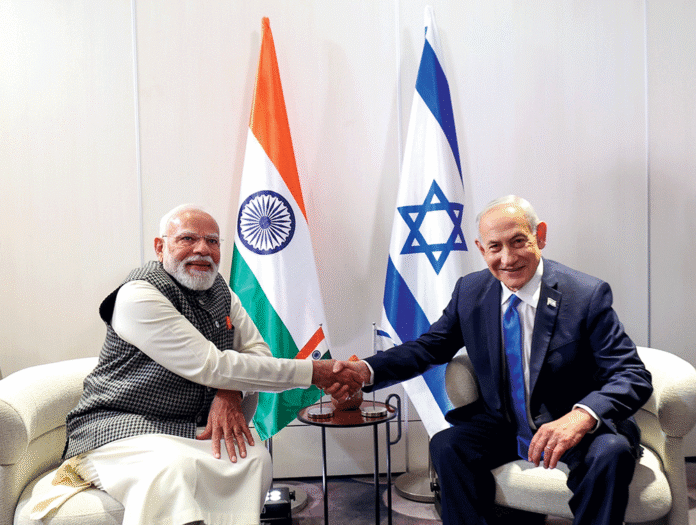
As global supply chains fracture and technology becomes a lever of geopolitical pressure, “Make in India” must be understood for what it truly is – not merely an economic initiative, but a national security doctrine for the 21st century. In an era defined by strategic competition, industrial capability is no longer just about growth; it’s about sovereignty.
“Make in India” has rightly been viewed as a catalyst for job creation, industrial growth and foreign investment. But in today’s world – where supply chains are weaponised, access to technology is restricted and economic leverage is used as geopolitical pressure – domestic defence manufacturing is far more than an economic policy. It is strategic insurance.

Across the globe, we are witnessing the rise of economic and technological coercion as tools of statecraft. Nations that rely excessively on foreign defence supply chains can find themselves exposed at critical moments. In such an environment, the ability to design, develop, manufacture and sustain defence systems domestically is not optional; it’s existential.
A nation that demonstrates the capacity to sustain its defence requirements internally signals resilience. It communicates that attempts at economic pressure or supply disruption will not cripple its preparedness. In this sense, industrial capability itself becomes a strategic asset
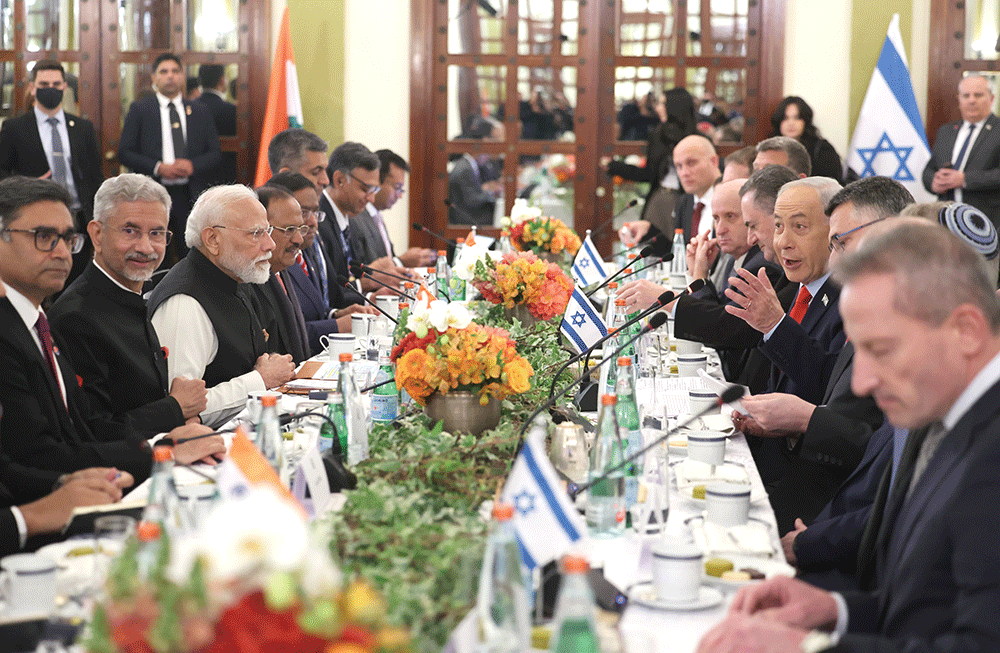
This is why “Make in India” has global relevance. It represents a model for how countries can strengthen sovereignty without retreating from global partnerships. It signals that international collaboration must evolve from simple buyer-seller relationships to genuine co-development and co-production.
At IWI, we understand this shift deeply. Rooted in Israel’s defence ecosystem, we have long operated in an environment where national survival depends on technological agility and industrial resilience. Israel’s experience has demonstrated that innovation, speed and domestic capability are decisive advantages in asymmetric and conventional conflicts alike. We see powerful parallels with India’s strategic trajectory.
Our commitment in India is not transactional. It is transformational.

We work closely with the Ministry of Defence, the Indian Armed Forces and a growing network of Indian private and public-sector partners to ensure that advanced small arms and defence technologies are not simply imported – but manufactured, maintained and continuously improved within India.
This partnership is built on three pillars – technology transfer, joint innovation and ecosystem development.

First, a true technology partnership means transferring know-how, not just hardware. It means enabling Indian engineers, technicians and innovators to master production processes, quality assurance systems and next-generation design principles. It means embedding intellectual capital locally so that capability is sustained even in the face of external shocks.
Second, joint innovation is the future of defence manufacturing. Modern battlefields evolve rapidly. Soldiers require lighter systems, smarter integration, modular upgrades and digital connectivity. These demands cannot be met through static procurement cycles. They require collaborative research and development between global technology leaders and the domestic industry. Together with “our Indian counterparts, we are advancing precisely this kind of innovation-driven manufacturing.”
Third, the ecosystem development ensures that “Make in India” strengthens the broader industrial base. Defence manufacturing drives precision machining, electronics integration, optics and advanced materials. By anchoring production in India, we help cultivate a supply chain that supports not only military readiness but also civilian industry.
This approach enhances operational readiness in tangible ways. When production lines, spare parts and maintenance capabilities are located within national borders, turnaround times shrink. Logistical dependencies diminish. Costs become more predictable. And, critically, the armed forces gain confidence that their equipment will be available when needed most.
But there is another dimension that deserves attention: deterrence.
A nation that demonstrates the capacity to sustain its defence requirements internally signals resilience. It communicates that attempts at economic pressure or supply disruption will not cripple its preparedness. In this sense, industrial capability itself becomes a strategic asset.
For global defence companies, this new paradigm requires humility and adaptation. The era of simple export dominance is fading. The future belongs to companies that are willing to integrate into national industrial strategies, share expertise responsibly, and co-create solutions aligned with sovereign priorities.
At IWI, we embrace this future. We view India not as a market, but as a strategic partner. We believe that aligning with “Make in India” contributes not only to India’s growth but also to a more balanced and secure global defence ecosystem.
In a world where technology can be restricted, supply chains can be politicised, and economics can be weaponised, the path forward is clear – industrial sovereignty through partnership.
“Make in India” embodies this principle. It is bold. It is necessary. And it is a model that other nations would do well to study. National security in the 21st century will not be secured by weapons alone. It will be secured by the ability to build them – confidently, collaboratively and at home.

– The writer is the Vice- Chairman of SK Group, a leading holding company known for driving innovation across multiple strategic industries. Its portfolio comprises globally recognised companies, such as Israel Weapon Industries (IWI), Meprolight, Camero-Tech, ELVO, Israel Shipyards, Israel Shipyards Port, Uni-Scope Optical Solutions, and Oshira. The views expressed are personal and do not necessarily reflect the views of Raksha Anirveda





