


The present Iran-US conflagration has created unprecedented oil and gas disruptions and blockades of sea lanes of communication (SLOCs) in the perspective of Hormuz, besides humanitarian disaster and geo-economic crisis; all perpetrated through ‘Epic Fury’, ‘Lions Roar’ and Operation Promise IV governed by the MAD Syndrome amongst the US, Israel and Iran; which also affects the Armed Forces on a major dimension.
India has been relatively given prioritised movement of its logistical supply chain through the Gulf of Hormuz, which has been much to India’s advantage, attributed to old ties with Iran and the depth of mutual diplomatic symbiosis between the nations on myriad strategic issues. India’s global energy crisis has evolved far beyond temporary shocks. A perfect storm of geopolitical instability, supply chain disruptions and market volatility is now testing the true resilience of nations, the discipline of their strategies, and clarity of their leadership; energy policies mandate prioritisation over rhetoric. Peak power demand soared to 250 GW in 2024-25, while India had the second largest energy demand surge worldwide.

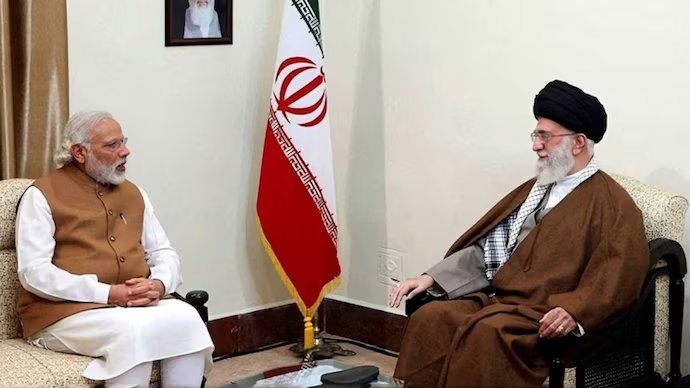
For a country of India’s stature and momentum, reliable and affordable energy is not an option; it is the bedrock of economic competitiveness and inclusive development. India has shown astute pragmatism through unflinching pragmatism and diversification, driven by dialogue, diplomacy, de-hyphenation and de-escalation. India with its ‘Chanakya Neeti’ has managed in this highly volatile and unpredictable environment to secure oil supplies, with procurement done at mitigated prices for the military forces by deploying every proven resource at its disposal, optimising an ‘All India Approach’, keeping the most vital diplomatic channels open, thereby addressing any emergent strategic situations, which may be adversely posed by any nation knowingly or otherwise.
However, incertitude prevails in most sectors and hence the policy of ‘CARPE DIEM’ (seizing strategic opportunities immediately as they arise), is most relevant and must be seized by the country as and when the opportunity arises. The political and military leadership synergy is extraordinary and coherent with commendable clear-headed policies, enabling the perceived impetus with minimum inertia in these multifaceted military domain-centric areas of consummate technological ascendancy and governance.
Independence in a Polarised World
The cornerstone of India’s diplomacy is strategic autonomy. This doctrine gives India the inclusive freedom to collaborate with global powers while retaining the ability to act independently. It is a balancing act, resisting external pressures while safeguarding its national interests. For example, when faced with demands to halt oil imports from certain nations, India has chosen very prudently to prioritise its own energy security in the larger interest of its populace.
Strategic autonomy is not abstract; it is a daily occurrence of great significance for the country, symbolised by the independence of energy supplies and the resilience of domestic production. This principle is rooted in the recognition that reliance on external manpower introduces manifold complexities, both operational and ideological, that undermine cohesion, autonomy, and the very foundation of national independence.

Strategically, this policy ensures the preservation of sovereignty by preventing external influence over India’s defence priorities. Indigenous forces guarantee unity of command, shared ethos, and seamless execution of missions, while reliance on foreign manpower risks diluting operational effectiveness and compromising the sacrificial ethos that binds soldiers to the nation. The belief in supreme sacrifice for a noble cause—the preservation of territorial integrity and sovereignty—cannot be outsourced or replicated by external forces. Thus, India’s doctrine emphasises self-reliance in defence as a cornerstone of strategic autonomy.
India refuses to outsource its combat operations, rejecting foreign troops to preserve unity of command and national sacrifice ethos. This doctrine allows New Delhi to buy defence systems from Russia, trade with China, and partner with the US—without binding military commitments
Historically, India’s colonial experience demonstrated the dangers of external military control, where Indian soldiers were exploited for foreign interests. Post-independence, India has consistently emphasised self-reliance, rejecting the employment of foreign combat troops integrated with its own forces to fight the envisaged wars. Global precedents further reinforce this position: nations that relied on foreign mercenaries or allied troops often faced challenges of loyalty, cohesion, and sovereignty erosion. India’s doctrine draws lessons from these varied experiences, reaffirming that its national defence must remain intrinsic to national identity.

The United States and NATO frequently deploy multinational forces, but cohesion is maintained primarily through standardised doctrines, a shared language base, and common ideology. India’s diverse linguistic and cultural environment makes such amalgamation very challenging, yet integration in a holistic multifaceted dimension is achievable, attributed to archetypical leadership. In contrast, Gulf nations that employ foreign soldiers have faced questions of loyalty and effectiveness in high-intensity conflicts. China has emphasised indigenous manpower, reinforcing the principle that sovereign states rely on their own citizens for defence. India aligns with this model, ensuring that its armed forces are a manifestation of national will and the unique character comprising the element of supreme sacrifice.
The challenges of integrating foreign troops are manifold. Cohesiveness is undermined when diverse nationalities are welded into a single fighting force. Leadership and command structures become ambiguous, team spirit noticeably weakens, and specialised soldierly traits such as discipline and training standards may get diluted across the armed forces. Linguistic barriers hinder communication, while motivational control is compromised when foreign soldiers lack ideological commitment to foreign doctrinal tenets. These factors collectively impinge on operational effectiveness and weaken the moral foundation of the armed forces.
Looking ahead, India will continue to invest in indigenous manpower, training, and technology to ensure operational readiness without external dependence. Strategic autonomy will remain central to India’s defence posture, reinforcing its position as a sovereign power capable of independent military action. While India will collaborate with allies in joint exercises, intelligence sharing, and defence technology, combat operations will remain the exclusive domain of Indian soldiers. This continuity ensures that the armed forces embody the collective will, culture, and spirit of supreme sacrifice for the nation. In doctrinal assertion, the responsibility of safeguarding sovereignty rests solely with its own soldiers, who embody the collective ethos of supreme sacrifice for a noble cause. Outsourcing this responsibility compromises various fundamentals related to the basic foundation of military honour and national independence.
Multi-Alignment: The Art of Balancing Relationships
India’s foreign policy is not about choosing sides; it is about engaging rationally with logical principles with all nations from the correct national perspective, wherein the national interests of the country are paramount. This multi-alignment strategy allows India to buy defence systems from Russia, import agricultural goods from the United States, and trade consumer products with China in concurrent timeframes. Such flexibility ensures that India remains prudently agile in a world where strategic alignments undergo paradigm shifts constantly. Closely linked to this is energy security, achieved by diversifying suppliers rather than relying on reserves or infrastructure-heavy solutions.
Optics: Diplomacy as Theatre
Foreign policy is not only about substance; it is also about perception. India has mastered the art of optics: endearing embraces between leaders, symbolic handshakes, and carefully orchestrated photographs. These benign gestures project India as a rising leader of the Global South. Optics transform setbacks into opportunities, reinforcing India’s image as a nation of growing influence with strong, committed growth-oriented manifestations in multi-domain commercial sectors.
Preparing for Modern Conflict
India’s defence strategy emphasises operational readiness with pre-emptive and multiple solutions emerging to counter unconventional threats, proxy wars, cyberattacks, and asymmetric challenges. These are attained through doctrinal simulations undertaken during rigorous peacetime wargames. India ensures it can respond decisively to achieve its holistic objectives with great effectiveness, while minimising collateral damage. The objective is clear: protect sovereignty without destabilising the economy or societal norms.
Stockpiling diverse ammunition variants across all categories of armament systems is a mission-critical requirement for sustaining operations over defined durations in varied terrain. Without adequate reserves, even the most advanced forces risk operational paralysis in high-intensity scenarios. Among India’s elite formations, the recently created ‘Bhairav’ Units stand out as rapid-response forces customised for the “Fight Tonight” concept, mobilised and ready to deploy at short notice. These light commando units embody speed, stealth, and precision, optimised for lean-and-mean missions where adaptability is paramount. Their operational doctrine emphasises small, agile teams capable of striking decisively in complex environments. Equipped with cutting-edge assault rifles, integrated drone surveillance systems, and real-time intelligence feeds, ‘Bhairav’ specialised units are customised for hybrid warfare, where conventional combat embodies the character of irregular, cyber, and urban threats. Their strength lies not in sheer numbers but in agility: smaller, faster, more lethal, and highly adaptable forces that can outmanoeuvre larger adversaries.
The newly raised ‘Bhairav’ units are lean, AI-enabled rapid-response commandos designed for hybrid warfare, blending stealth, drone surveillance, and real-time intelligence. Their strength lies not in numbers but in agility—smaller, faster, and lethal enough to outmanoeuvre larger adversaries
In essence, they represent the evolution of modern special forces, where technology, intelligence, and mobility converge to deliver maximum impact in minimum time. As the saying goes, “The world is a jungle, and the strongest predator defines the law.” In this jungle, ‘Bhairav’ Units are designed to be the predators, swift, silent and predominantly supreme in all principles of warfare.
Comprehensive Strategic Partnerships
India’s bilateral relationships are framed as comprehensive strategic partnerships. These go beyond transactional deals but stop short of binding commitments. This middle ground allows India to remain flexible, engage constructively, and avoid overextension in a highly sensitive and polarised world.
Defence Modernisation: Aatmanirbhar Bharat in Action
In this volatile environment, the deliberate degradation of assets to weaken a nation’s warfighting capacity must be guided by a prudent and multifaceted framework, integrating ideology, technology, and even novel politico-economic concepts of warfare. Such imperatives must align with the carefully conceived synergy of Armed Forces battle plans, harnessing lethal force composition, cutting-edge technologies, and the integration of new platform-centric weapons and armament systems. Only through this adaptive approach can adversarial combat potentialities be effectively engaged across all foreseeable dimensions of conflict.
India’s defence modernisation reflects its push for Aatmanirbhar Bharat (self-reliant India). The commissioning of INS Vikrant, indigenous helicopters, and advanced missile systems showcases growing domestic capabilities. Defence exports have surged, supported by policies that prioritise local industry. Events like DefExpo 2022 highlight India’s ambition to become a pervasive global defence hub, with investments, partnerships, and innovation driving the sector vigorously forward.
India has recently achieved a series of remarkable milestones in its defence and missile development programmes, underscoring its technological prowess and commitment to national security. The Extended Range Version of the BrahMos air-launched missile was successfully fired from a Su-30 MKI fighter aircraft, marking a significant enhancement in India’s precision strike capability. Complementing this achievement, the Prithvi-II, a short-range ballistic missile, and the Agni series, including the intermediate-range Agni and the longer-range Agni-3 and Agni-4, were successfully test-launched. These trials adequately validate all operational parameters, reaffirm system reliability, and reinforce India’s doctrine of maintaining a ‘Credible Minimum Deterrence (CMD)’ posture.
India’s strategic deterrence was further strengthened with the successful test of a submarine-launched ballistic missile from INS Arihant, which met its predetermined range and validated all technological and operational benchmarks. This capability ensures a robust second-strike option, vital for maintaining strategic stability. On the tactical front, the indigenously developed Helina (Helicopter-Launched Anti-Tank Guided Missile) was successfully flight-tested by both the Indian Army and the Indian Air Force. Similarly, the Laser-Guided Anti-Tank Guided Missile, fired from the Main Battle Tank Arjun, demonstrated its ability to penetrate Explosive Reactive Armour (ERA) using a tandem High Explosive Anti-Tank (HEAT) warhead. The Naval Anti-Ship Missile, launched from a naval helicopter, showcased India’s growing indigenous capabilities in maritime strike weaponry.
Air Defence systems also recorded notable successes. The Quick Reaction Surface-to-Air Missile (QRSAM) and the Medium Range Surface-to-Air Missile (MRSAM) proved their effectiveness against diverse threats, including sea-skimming and high-altitude targets. The upcoming Vertical Launch Short Range Surface-to-Air Missile (VL-SRSAM) promises to further bolster the Indian Navy’s ability to neutralise close-range aerial threats. In addition, the AD-1 long-range interceptor missile, designed for both low exo-atmospheric and endo-atmospheric interception, was successfully tested. This versatile system enhances India’s layered air defence architecture by countering long-range ballistic missiles as well as hostile aircraft.
India also demonstrated its innovation in unmanned systems with the Autonomous Flying Wing Technology Demonstrator, which completed a flawless autonomous flight, including take-off, waypoint navigation, and landing. This marks a significant step toward next-generation stealth and unmanned aerial platforms.
In a historic organisational reform, the Government of India approved the creation of a new Weapon Systems (WS) Branch within the Indian Air Force. This branch will unify all weapon system operators under a single entity, dedicated to the operational employment of ground-based and airborne weapon systems. Encompassing operators of Surface-to-Surface Missiles (SSMs), Surface-to-Air Missiles (SAMs), Remotely Piloted Vehicles (RPVs), and Unmanned Aerial Vehicles (UAVs), the WS Branch will greatly enhance the IAF’s warfighting capability and ensure seamless integration with joint force strategies. Finally, the emphasis on incorporating these advanced armaments and munitions into War Wastage Reserves (WWR) highlights India’s preparedness to respond swiftly to emerging threats, ensuring that national security can be maintained at short notice.
The Defence Research and Development Organisation (DRDO), in collaboration with the Indian Air Force (IAF), successfully flight-tested the indigenously designed and developed Helicopter-Launched Stand-off Anti-Tank (SANT) Missile. This advanced weapon system is equipped with a cutting-edge millimetre wave (MMW) seeker, enabling highly precise strikes against armoured targets from stand-off ranges, thereby enhancing the combat effectiveness of rotary-wing platforms. In parallel, the Pinaka Mk-I (Enhanced) Rocket System (EPRS) and the Pinaka Area Denial Munition (ADM) are poised for induction into the Indian Army. These systems represent a significant leap in indigenous rocket artillery capabilities, offering extended range, improved accuracy, and versatile battlefield applications.
Another notable achievement is the Solid Fuel Ducted Ramjet (SFDR) technology, which provides missiles with the ability to intercept aerial threats at long ranges while maintaining supersonic speeds. This innovation strengthens India’s air defence architecture by enabling rapid response against high-speed, manoeuvring targets.
On the international front, BrahMos Aerospace Private Limited (BAPL) signed a landmark contract with the Department of National Defence of the Philippines for the supply of the Shore-Based Anti-Ship Missile System. This agreement underscores India’s growing role as a reliable defence exporter and highlights global trust in the BRAHMOS system’s unmatched speed, precision, and versatility. Domestically, the Aeronautical Development Establishment (ADE) in Bengaluru has inaugurated a state-of-the-art seven-storeyed Flight Control System Integration facility. Built using a hybrid methodology that combines conventional, pre-engineered, and precast construction techniques, this facility is designed to accelerate the development and integration of advanced flight control systems for future aircraft programmes.
The industrial ecosystem supporting DRDO’s initiatives is vast and dynamic, comprising over 1,800 Micro, Small, and Medium Enterprises (MSMEs), alongside Defence Public Sector Undertakings (DPSUs) and large-scale industries. To further encourage innovation and collaboration, a policy granting free access to DRDO patents has been promulgated, empowering Indian industry to leverage cutting-edge technologies for defence and civilian applications alike.
In the broader context of combat aviation, Indian pilots have expressed a strong preference for the Russian SU-57 fighter aircraft within the general aviation (GA) ecosystem, favouring it over the American F-35. This inclination is attributed to the SU-57’s powerful avionics suite, advanced stealth features, and formidable firepower systems, which align well with India’s operational requirements and strategic vision for next-generation air dominance.
From the INS Vikrant carrier to BRAHMOS-ER and Agni missiles, India’s Aatmanirbhar Bharat push is turning the country into a global defence manufacturing hub. With over 55 warships under construction and Project 75(I) submarines advancing, self-reliance is no longer an aspiration but an operational reality
Technology and AI: The New Frontier
Artificial intelligence is emerging as a force multiplier. India is integrating AI into military operations, research institutions, and defence corridors. It will assume a very significant role in the science academic domain and the school education sector. The challenge lies in balancing innovation with safeguards against vulnerabilities in autonomous systems. AI is not just about machines; it is about reshaping the contours of conflict, strategic decision-making, and protecting the sovereignty of nations.
The Indian Navy: Mission-Based Deployments
The Indian Navy has embraced a very dynamic system of mission-based deployments across the Indian Ocean Region (IOR), ensuring continuous presence in areas of strategic importance. From the Gulf of Oman to the Malacca Strait, Indian ships and aircraft act as first responders and preferred security partners with many strong maritime nations.
India has been steadily working towards becoming a ‘Blue-water’ naval power, which means having the capability to operate effectively far beyond its own coastal waters. This shift is important because a significant portion of India’s trade and energy supplies moves through sea routes. Ensuring the safety of these routes has therefore become a key national priority. As India’s economic and strategic interests expand, so does the need for a navy that can maintain a strong presence across the Indian Ocean and even further.
To achieve this goal, the Indian Navy has focused on developing a modern and capable fleet. This includes aircraft carriers, submarines, and advanced surveillance systems that allow it to operate over long distances and respond quickly to potential threats. Alongside strengthening its own capabilities, India also participates in joint naval exercises and builds partnerships with other countries. Such cooperation helps improve coordination at sea and contributes to maintaining regional stability.
A major part of India’s blue-water strategy lies in its ongoing naval expansion and indigenous shipbuilding efforts. At present, around 55 warships are under construction in Indian shipyards, with an estimated cost of ₹99,500 crore. This reflects a strong emphasis on self-reliance in defence production. In addition, the Navy has received Acceptance of Necessity for 74 more warships, valued at approximately ₹2.35 lakh crore, showing a clear long-term vision for growth.
Several key platforms are included in these future plans, although contracts for them are still pending. These include nine diesel-electric submarines, seven next-generation multi-role frigates, eight anti-submarine warfare corvettes, and twelve mine countermeasure vessels. Each of these plays an important role in strengthening India’s maritime security, particularly in detecting and countering underwater threats, protecting shipping lanes, and maintaining naval dominance in the region.
Infrastructure and logistics are also critical to this strategy. The development of modern naval bases and support systems allows ships to remain deployed for longer durations without frequent returns to port. This improves operational efficiency and ensures that the Navy can maintain a continuous presence in distant waters.
These deployments reflect India’s vision of “Security and Growth for All in the Region (SAGAR),” reinforcing its role as a stabilising force in maritime geopolitics as an emerging ‘Blue Water’ Navy characterised by greater formidability, lethality and multiple options in its strategised initiatives in the IOR and elsewhere.
India’s submarine programme is moving into an important new phase with ThyssenKrupp Marine Systems (TKMS) and Mazagon Dock Shipbuilders Limited (MDL) starting contract negotiations for Project 75(I). The project involves building six advanced German-designed submarines in India, marking a major step toward strengthening domestic naval capabilities and promoting technology transfer under the “Make in India” initiative. This collaboration is expected to deepen India-Germany strategic ties while boosting India’s goal of becoming a global hub for submarine manufacturing. Key progress has already been made, including completion of the concept design phase and submission of proposals for advanced systems like air-independent propulsion. Overall, the initiative reflects India’s efforts to modernise its navy, expand its maritime strength, and enhance self-reliance in defence production through international cooperation.
India’s Project 76 is an ambitious initiative by the Indian Navy to design and build a new class of advanced nuclear-powered attack submarines (SSNs), aimed at strengthening the country’s primary undersea warfare capabilities. Unlike the earlier Project 75(I), which focuses on conventional diesel-electric submarines, Project 76 emphasises indigenous development of nuclear propulsion, stealth features, and long-endurance operations. These submarines are expected to complement India’s strategic deterrent fleet, including vessels like the INS Arihant, by enhancing capabilities for surveillance, escort, and offensive missions in the Indian Ocean Region. Overall, the project reflects India’s broader push for self-reliance in defence manufacturing while addressing evolving maritime security challenges.
The Indian Navy now conducts mission-based deployments across the Indian Ocean, from the Gulf of Oman to the Malacca Strait, acting as a first responder and preferred security partner. Guided by the SAGAR vision—Security and Growth for All in the Region—India is steadily emerging as a formidable blue-water naval power.
Overview: Warfare Spectrum – 2050
By 2050, the warfare spectrum will be holistically focused on multi-domain areas, combining cyber, space, AI, and conventional forces; envisioning integrated operations where drones, loitering munitions, and a plethora of cyber tools will work concurrently alongside tanks, ships and aircraft to attain desired force multiplication in a multi-dimensional space to accomplish strategic objectives within a given timeframe. One critical concept is “masking”: deceiving enemy sensors to survive in a battlespace defined by constant surveillance. Future wars will possess a veritable character, fought not only with weapons but with corroborated information, surprise and deception, and a greater degree of resilience, coalesced around a ‘centric war ideology’.
Towards 2047
India’s ambition is clear: to become a developed power by 2047. Achieving this would require a comprehensive National Security Strategy (NSS), Integrated Theatre Commands (ITCs), and leveraged tri-service synergy, by embracing indigenisation, technological innovation, and strategic patience.
India can adequately safeguard its sovereignty, depending on the threat manifestation level, while asserting itself as a global leader. India’s journey is not just about defence; it is about identity. Strategic autonomy, multi-alignment, and self-reliance are more than doctrines; they are the nation’s way of saying that sovereignty is non-negotiable, adopting resilience, innovation, commitment and the highest determination levels, with cerebral and focused military applications.
It is essential to break free from the ‘crucible of conventional warfare technologies’. Doing so enables the effective orchestration of innovative, platform-centric systems that optimise strategic and operational outcomes, ultimately serving as force multipliers in hybrid warfighting strategies and driving the achievement of the ultimate objective.

Lt Gen S K Gadeock is a distinguished military leader, global strategist, and scholar who served as the Commandant of the Defence Services Staff College. A decorated veteran and former Logistics Advisor to the Botswana Defence Force, he has held numerous high-ranking appointments including Director General of the Amity Institute of Defence & Strategic Studies. Serving on the Advisory Board of Raksha Anirveda, he is a prolific writer and motivational speaker.





