


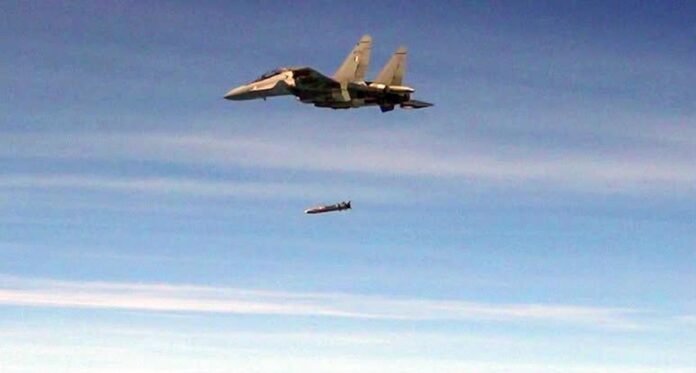
India has done it again. On June 02, the country successfully test-fired its own air-to-surface missile, the Rudram-II, off the Odisha coast over the Bay of Bengal. The missile was launched from a fighter jet flying high in the sky, and it struck its target with pin-point accuracy. Every single goal of the test was met. For a nation working hard to build its own weapons, this is a proud moment.
Let us understand this in simple words. The Defence Research and Development Organisation, better known as DRDO, worked together with the Indian Air Force for this trial. They did not make it easy on purpose. They tested the missile under extreme conditions, pushing it to its limits, to check whether every part inside it works well even in the toughest situations. And it passed with flying colours.

Rudram-II is a radar-hunter. In modern war, the enemy uses radars to spot incoming aircraft and shoot them down. Rudram-II is built to find these enemy radars, lock onto them, and destroy them, along with the command centres that control them
So what exactly is Rudram-II, and why is everyone talking about it? In short, it is a radar-hunter. In modern war, the enemy uses radars to spot incoming aircraft and shoot them down. Rudram-II is built to find these enemy radars, lock onto them, and destroy them, along with the command centres that control them. Once these “eyes” of the enemy are blinded, our fighter jets can move about freely and safely.
Here lies the real beauty of this missile. It can do all of this from very far away. The jet does not have to fly close to dangerous areas. The pilot simply fires the missile from a safe distance and turns back. This idea is called a “stand-off” weapon, because the aircraft stays standing off, away from harm. It keeps our brave pilots alive.
The numbers are impressive too. Rudram-II can carry a 200-kilogram warhead and flies at a blistering speed of around 6,800 kilometres per hour, which is about Mach 5.5, far faster than any jet. The older Rudram-I, tested back in 2020, could only reach targets 150 kilometres away. The new Rudram-II doubles that to nearly 300 kilometres. That extra distance is a massive advantage. Pilots can strike while staying well out of reach of enemy guns and missiles.
But the cleverest trick is in its brain. Rudram-II has a smart seeker that listens for enemy radar signals. The moment it catches such a signal, it locks on and chases it. Enemy commanders know this game, so they quickly switch off their radars, hoping the missile will lose its way. Sadly for them, that trick fails here. Even when the radar goes silent, Rudram-II keeps going. It carries backup guidance, using an Inertial Navigation System and GPS, so it remembers exactly where the target was. No matter what the enemy tries, the missile still finds its mark.

Set to replace the old Russian-made Kh-31 missiles that the Air Force has been using for years, Rudram-II has a smart seeker that listens for enemy radar signals. It carries backup guidance, using an Inertial Navigation System and GPS, so it remembers exactly where the target was. No matter what the enemy tries, the missile still finds its mark
This missile is also set to replace the old Russian-made Kh-31 missiles that the Air Force has been using for years. That, too, is a big step towards depending less on other countries.
Behind this success is a true team effort. Rudram-II was developed by DRDO’s Research Centre Imarat in Hyderabad, with help from many sister laboratories, Hindustan Aeronautics Limited, and dozens of Indian companies. An earlier test in May 2024 had already proved the missile’s engine, controls, and guidance software when fired from a Sukhoi Su-30MKI jet. This latest trial, done under harder conditions, brings it much closer to joining the Air Force for real.

Defence Minister Rajnath Singh praised everyone involved, saying it shows how India’s home-grown defence technology is growing stronger. The DRDO chief called it a landmark for the missile programme.
The message is loud and clear. India is no longer waiting for others. It is building its own future, in its own laboratories, with its own scientists and technology. Double the range, smarter targeting, and complete independence.

-The writer is an award-winning science communicator and a Defence, Aerospace & Geopolitical Analyst. He is the Managing Director of ADD Engineering Components India Pvt. Ltd., a subsidiary of ADD Engineering GmbH, Germany. You can reach him at: girishlinganna@gmail.com. The views expressed are personal and do not necessarily carry the views of Raksha Anirveda





