


On May 24, the Balochistan Liberation Army (BLA) claimed responsibility for the suicide attack on a train carrying military personnel in Balochistan. While the Pakistani army admitted to 24 casualties, including soldiers and their families, the BLA assessed the number to be more than 80, with scores injured. The actual toll was around 40. BLA relies on its intelligence units to monitor train and road movement involving the Pakistani army.
Since the March 2025 hijacking of the Jaffar Express, the Pakistani army changed its modus operandi of movement of troops in Balochistan, fearing attacks. Instead of moving its soldiers to Quetta station, where they could be exposed on open platforms, the army shifted to using a shuttle train to move troops from the garrison to the station. These coaches would then be connected to the main train. When the incident took place, Pakistan’s top leadership, including Prime Minister Shehbaz Sharif and ‘failed marshal’ Asim Munir, were in Beijing on an official visit, celebrating 75 years of diplomatic ties. None bothered to cancel their visit and return to offer condolences to the families of those killed.

All they did was criticise the attack on social media, as usual, blaming others. Asim Munir visited the garrison on his return. Doing so days after the incident did little to assuage the internal anger and the troops’ feelings of betrayal. This was a failure of the nation’s top leadership. Compare this to Prime Minister Narendra Modi cutting short his visit to Saudi Arabia to be with the families of those killed by terrorists in Pahalgam.
Balochistan is an example of how a nation’s leadership, both the military and political, turns an entire region against the state. Balochistan is Pakistan’s largest, most resource-rich, and least populated province, which is today being controlled by the gun alongside the denial of facilities. Its resources are being looted, filling coffers of the leadership, while its people live in abject poverty. Had the government acted differently, the region and the state would both have gained.
When the Jaffar Express was hijacked in March 2025, Pakistan’s top leadership, including Prime Minister Shehbaz Sharif and ‘failed marshal’ Asim Munir, were in Beijing on an official visit, celebrating 75 years of diplomatic ties. None bothered to cancel their visit and return to offer condolences to the victims’ families
The Pakistani army failed to adhere to the tenets of winning hearts and minds when dealing with a hostile population, a basic necessity for putting an uprising to a close. In January 2005, President Musharraf publicly defended an army captain accused of raping Dr Shazia Khalid in Balochistan, sparking the uprising. Currently, Pakistan resorts to human rights violations, extrajudicial killings, and imposing collective penalties on the Baloch. Every inhuman act adds supporters to the BLA cause. The number of suicide bombers within the BLA has increased only because the Pakistani army has pushed locals to desperation.
Post the Quetta train attack, inputs emerged that the army leadership ordered the elimination of the complete family of the suicide bomber as a punishment. This will only alienate the locals, drawing many more into the folds of the BLA.

The Pakistani army has never looked inwards at its own faultlines, preferring to throw the blame on the growth of the BLA on India and Afghanistan. It terms the BLA as ‘Fitna al-Hindustan’, meaning the ‘curse of Hindustan.’ It hides its inabilities by claiming that the BLA is funded, armed, and directed by India’s RAW, and also has bases within Afghanistan. Hence, it takes the easiest way out and launches air strikes on Afghanistan. This may satisfy some of its people, but unless it studies its own approach to the scenario, it can never bring the situation under control.
Balochistan is Pakistan’s largest, most resource-rich, and least populated province, which is today being controlled by the gun alongside the denial of facilities. Its resources are being looted, filling coffers of the leadership, while its people live in abject poverty. Pakistan resorts to human rights violations, extrajudicial killings, and imposing collective penalties on the Baloch
The Pakistani army leadership, headed by Asim Munir, is more interested in running the nation, controlling politics, and enhancing its financial status, rather than caring for its soldiers or resolving internal differences within the country. Their current emphasis is on enhancing ties with the United States and playing a peacemaker, rather than getting involved in military matters, especially in troubled regions. The army needs enmity with India and some level of internal insurgency to ensure its budget and power within. This is one of the reasons why Balochistan and Khyber Pakhtunkhwa will never see peace.

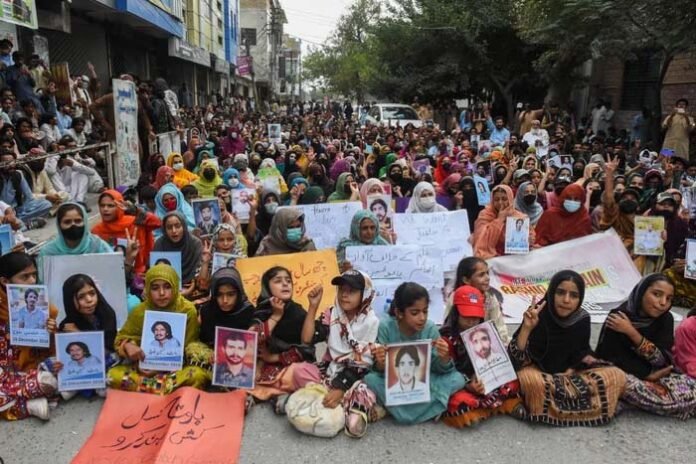
The Pakistani military is aware that, apart from groups seeking independence operating under the banner of BRAs (Baloch Raji Aajoi Sangar), there is also a peaceful movement demanding access to basic amenities, including water and medicines, and stopping Chinese trawlers that impinge on their livelihoods. Ideally, engaging positively with this movement could have isolated those seeking independence. Instead, the rampaging army cracks down on the activists, largely women, and lodges them in prison in inhuman conditions, alienating the region.
The Pakistani army believes that by offering minerals from Balochistan to the US and China, it could curry their support. However, unless the region is peaceful and people permit its extraction, these promises remain meaningless. The CPEC (China Pakistan Economic Corridor) and its flagship product, the port of Gwadar, remain unfulfilled because the Baloch are up in arms against it.
Pakistan believes that offering rare minerals from Balochistan to the US and China would win their support. However, unless the region is peaceful and people permit the extraction, these promises remain meaningless. The China-Pakistan Economic Corridor and its flagship product, the port of Gwadar, remain unfulfilled because the Baloch are up in arms
Their regular targeting of Chinese engineers on the project, which Pakistan fails to prevent, enhances anger in Beijing. Every time a Chinese national is killed, the Pakistani government is forced to pay. These could have been averted if the Pakistani army had operated with reason and understanding, rather than behaving as an occupier and treating the Baloch as a suppressed community.
As Pakistan’s relations with Afghanistan deteriorate, the nexus between the TTP (Tehreek-e-Taliban Pakistan) and the BRAs has increased, adding to insecurity within the state. A major benefit for Pakistan is that Balochistan has not gained global prominence that it should have, largely due to its limited population and the isolation of the region. Simultaneously, the fear it has created within the country restricts the movement of people from other parts of Pakistan to the region.
A common Pakistani soldier is aware that the country paid heavily in Operation Sindoor. He was witness to the destruction of their airfields, strategic assets, posts along the LoC and terrorist camps. He would have smirked when Asim Munir was appointed ‘failed’ marshal, a name aptly chosen for his performance during the operations. It would have made him realise that Pakistan honours failures. Many top military commanders in Balochistan would rise to higher ranks despite failing their troops, solely because of the approach of the state, which honours lies and awards failures, while discarding success.

The writer is a strategic analyst and a motivator. He can be reached at @kakar_harsha. The views expressed are of the writer and do not necessarily reflect the views of Raksha Anirveda





