



The shift is more than a change in rhetoric. At a Federation of Indian Chambers of Commerce and Industry meeting on November 18, Chief of Defence Staff General NS Raja Subramani urged Indian manufacturers to develop critical technologies, designs and intellectual property, and to build capacity to scale production during conflict. His message pointed to a changing expectation of domestic industry: not simply to manufacture what others design, but to help create the capabilities the armed forces will depend on.
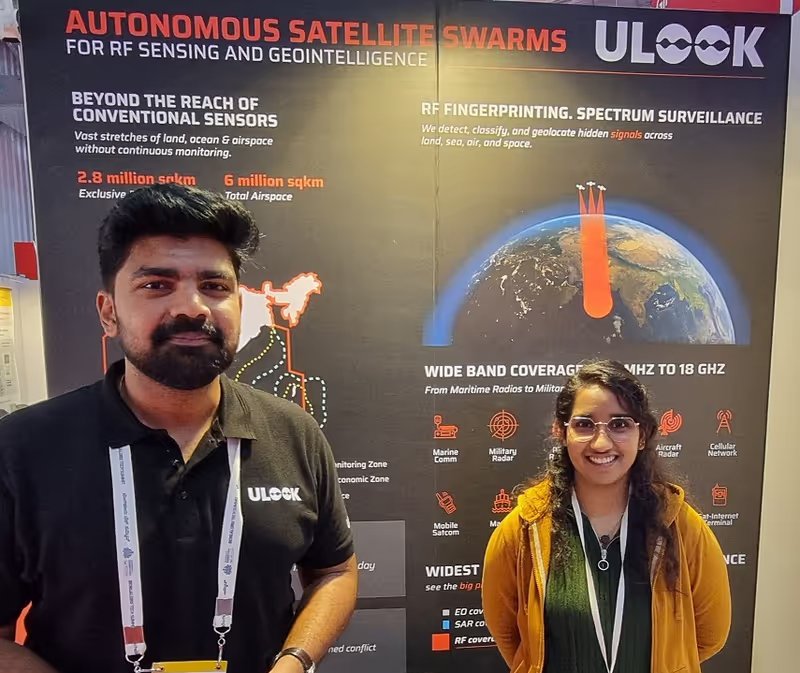
That argument is increasingly visible across India’s defence-technology ecosystem. Startups are pursuing research-intensive products with the potential to become proprietary technologies, rather than treating a contract to assemble or integrate existing equipment as the end goal. ULOOK’s satellite-based radio-frequency sensing and Zenerative Minds’ sovereign artificial-intelligence platform offer two very different examples. Both reflect a broader bet: strategic value comes from controlling the underlying technology, not merely delivering a finished product.

Chief of Defence Staff General NS Raja Subramani is urging Indian defence firms to move beyond assembly and build proprietary tech, IP and wartime surge capacity
The distinction matters because local production does not automatically mean technological independence. A system can be built in India while its most important components, design rights, software or upgrade pathways remain controlled elsewhere. General Subramani’s emphasis on owning technology and IP speaks to this vulnerability. So does his argument that the military and industry should move from a buyer-seller relationship toward co-development and co-production.
But ownership is harder than a slogan. It requires years of engineering, testing and investment before a product may be ready for service. It also demands customer access, trusted data, skilled teams and the capacity to manufacture reliably at scale. Startups often excel at solving a focused technical problem; defence users need dependable systems that work as part of a larger operational network. The transition from promising prototype to enduring capability is where the ambition is most likely to be tested.
Two Startups, Two Routes to Sovereign Technology
Bengaluru-based ULOOK Technologies is developing autonomous satellite swarms for radio-frequency sensing and spectrum awareness. Its PulseTrack payload is intended to provide RF situational awareness across satellites, drones and high-altitude platforms. The company has described applications including maritime awareness and environmental monitoring, while its longer-term development agenda includes swarm autonomy, inter-satellite links and onboard AI.

Making hardware locally does not equal independence if core designs, software or upgrade rights stay controlled abroad
The company’s funding illustrates the capital and time required for deep technology. ULOOK raised ₹19 crore in seed funding in 2025 and said it would invest in research, engineering, payload qualification and testing. The goal was to advance its hardware and software towards deployment readiness, not simply to take an already mature product to market. That is a different risk profile from conventional software startups: space hardware must be validated under demanding conditions, and commercial or defence adoption depends on evidence that it works reliably.
Zenerative Minds is tackling a different strategic constraint: how sensitive information is processed. Its Tathya platform is described by the company as a sovereign, agentic and multimodal AI system for enterprise decision-making, with options to run on-premises or in air-gapped environments. The company says its platform can analyse complex operational data and generate cited intelligence. It also identifies defence as a target sector and says it has been recognised by the iDEX programme. These are company descriptions, not independent proof of performance in an operational military setting.

Turning deep-tech prototypes into trusted, battle-ready systems demands years of testing, operational access and reliable scale, not just grants
However, the contrast is instructive. ULOOK is working on a physical space-and-sensing capability; Zenerative Minds on software and decision support. Both aim to develop a distinctive technology base in India. Yet “sovereign” is not a magic label. For satellite systems, sovereignty depends on control of payloads, data, communications and the ability to maintain and replenish capability. For AI, it depends on data governance, security, model behaviour and how well the system performs with real users and reliable sources. In both cases, an indigenous product must prove not only that it can be built, but that it can be trusted and sustained.
Government programmes are attempting to make this kind of work more viable. The Department of Defence Production says iDEX supports startups, MSMEs, innovators, research institutions and academia in developing technologies with potential defence applications. Its ADITI programme is intended to accelerate deep-tech development and reduce dependence on foreign original equipment manufacturers. Such schemes can help bridge the gap between a research idea and a tested prototype, though grant support alone cannot guarantee adoption or scale.

This is the difficult middle of defence innovation: after a prototype attracts attention, but before it wins routine procurement. Startups need access to test facilities and military users; the services need assurance that systems can meet demanding reliability and integration standards. Procurement timelines, production financing and the ability to support equipment over years can be especially challenging for small firms. General Subramani’s call for the armed forces to work alongside industry, and provide operational access to Indian engineers, recognises that technology development cannot happen in isolation from the user.
Startups like ULOOK (RF sensing satellites) and Zenerative Minds (sovereign AI) show contrasting bets on deep tech, where real autonomy requires proven reliability and control over data and payloads
International Participation Brings Opportunity and a Test of Terms
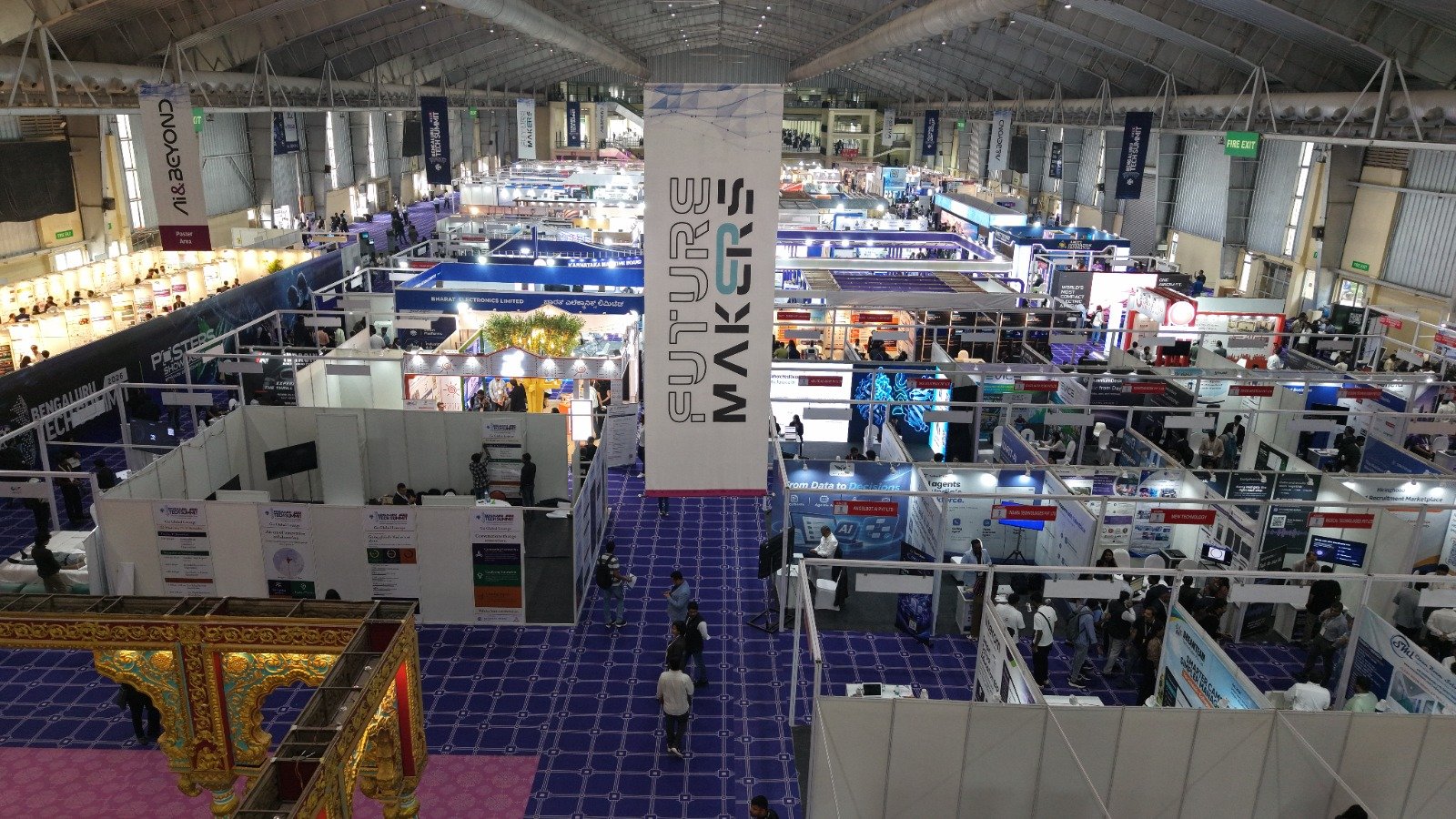
The Bengaluru Tech Summit offered a wider view of the ecosystem. Israeli Ambassador Reuven Azar said 27 Israeli companies were participating, across fields including AI, cybersecurity, defence and radar technologies. He said the countries were looking beyond product sales towards co-production, joint research and Indian partnerships, with the proposed “Landing Pad” programme intended to help Israeli firms find local partners, financing and legal support.
That presence is strategically significant, but it should sharpen, not soften, the question of technology ownership. Foreign partnerships can accelerate development, provide access to expertise and markets, and make production more competitive. They can also leave core designs, software rights or upgrade authority with the foreign partner unless agreements explicitly provide otherwise. The strategic test is not whether a technology has a foreign collaborator, but whether the Indian side gains durable engineering capability, meaningful IP rights and the ability to modify and sustain the system.
India-Israel defence cooperation already spans joint projects and equipment, while India continues to pursue domestic development. A recent contract with Israel Aerospace Industries for the Indian Navy’s Barak system, for example, covers hardware and software upgrades and obsolescence management. Such arrangements show why both approaches, foreign collaboration and indigenous R&D, will remain part of the landscape. The challenge is ensuring collaboration builds domestic capability rather than simply extending reliance on external suppliers.
As global collaborations like India-Israel engagements shift toward co-production, the real test is whether deals build lasting Indian IP and engineering autonomy rather than deepening reliance
General Subramani also argued that modern warfare is increasingly a contest of integrated systems, not isolated platforms, and that military advantage depends on decision superiority, data and connected networks. That view raises the bar for startups. A homegrown component may be technically impressive, but its strategic value will depend on whether it can connect securely, scale affordably and keep improving as threats and operational needs change.
The trend towards exclusive technologies and IP is therefore real, but its success will be measured in outcomes, not announcements. Can startups retain ownership while meeting military requirements? Can they move from pilots to recurring orders? Can India manufacture at the volume and quality a prolonged crisis would demand? And will partnerships transfer enough know-how to make Indian firms stronger after the deal ends?
ULOOK and Zenerative Minds illustrate the ambition to build those capabilities from research upwards. The military’s call for industry to own technology gives that ambition a strategic rationale. The next phase will require patient funding, honest testing, workable procurement pathways and clear rules on IP. India’s defence startups are moving from the question “Can we make it here?” to the more consequential one: “Can we invent, own, improve and scale it here?”

-The writer is a New Delhi-based senior commentator on international and strategic affairs, environmental issues, an interfaith practitioner, and a media consultant. The views expressed are personal and do not necessarily carry the views of Raksha Anirveda






