


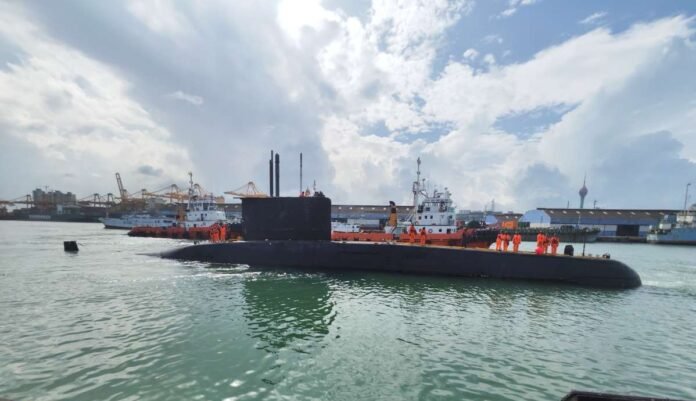
India is in the final stages of approving a deal worth more than ₹80,000 crore to build six advanced conventional submarines domestically in partnership with Germany, Defence Secretary Rajesh Kumar Singh said on Thursday, October 1, 2026.
The programme, known as Project-75(I), requires a final decision from the competent authority before contract formalities can begin. Under the proposed arrangement, Mazagon Dock Shipbuilders Limited (MDL) will construct the submarines in Mumbai with ThyssenKrupp Marine Systems (TKMS) as the German technology partner. Indian private-sector companies are also expected to play a significant role in the production effort.

Singh said the project would be pursued alongside efforts to modernise submarines already serving in the Indian Navy. He also confirmed that a separate proposal for three additional Scorpene-class submarines remains under consideration, although it is less advanced than Project-75(I).
The possible Scorpene order would extend India’s existing Kalvari-class fleet, six of which were built at MDL with French assistance. A follow-on order could offer a quicker route to expanding the submarine force because the shipyard, suppliers and workforce are already familiar with the design and construction process. Naval Group has previously described additional Scorpenes as a comparatively low-risk option that could begin production rapidly after approval.
The two programmes serve different purposes. The Scorpene proposal would provide additional boats based on an established platform, while Project-75(I) is intended to deliver a newer generation of submarines equipped with air-independent propulsion, or AIP. The technology enables conventionally powered submarines to remain underwater for substantially longer periods without surfacing or using their engines to recharge batteries, improving stealth and operational endurance.
TKMS has been conducting final negotiations with India for six submarines under Project-75(I), with an option for three additional boats reported in the German company’s project outlook. The programme is also designed to deepen Indian capabilities in submarine design, engineering, systems integration and maintenance rather than simply assemble imported platforms.

Singh said the government was preparing to install an indigenous AIP system developed by the Defence Research and Development Organisation on a Scorpene-class submarine during a refit expected around the middle of 2027. The retrofit would be an important test of India’s ability to integrate domestically developed propulsion technology into an operational submarine.
The Navy’s combat systems are also due for an upgrade. Singh said the Naval Physical & Oceanographic Laboratory has developed an indigenous integrated combat system that would gradually be installed on submarines undergoing refits. The system is expected to improve the fleet’s command, sensor and weapon-management capabilities.

The push comes as India faces pressure to expand its underwater presence in the Indian Ocean. Pakistan is inducting Chinese-designed Hangor-class submarines, while China continues to enlarge and modernise its own submarine fleet. India’s conventional submarine arm has also faced long delays in replacement programmes and the retirement of ageing vessels.
Project-75(I) has been delayed for years by procurement, technical and industrial hurdles. Its movement towards final approval therefore represents a significant step, but not an immediate increase in operational strength. Submarines built under the programme are likely to enter service only several years after the contract is signed.
For New Delhi, the combination of new German-backed submarines, possible additional Scorpenes, indigenous AIP and upgraded combat systems offers a layered response: faster fleet expansion in the short term, and greater technological self-reliance over the longer term. The immediate priority, however, remains converting the pending approval into a signed contract.






