


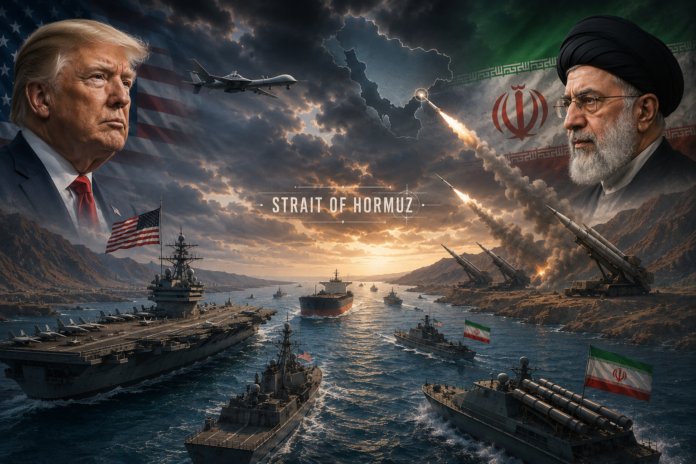
The Strait of Hormuz crisis posed a serious challenge to the very idea of an open and free Indo-Pacific. It also dealt a blow to India and Japan’s attempt to transform the Quad from a tool for containing China into the foundation for a new regional cooperation system.
Freedom and openness imply the uninterrupted and unhindered flow of goods, services, finance, and technology throughout the region. This is only possible when the region is at peace and extremely vulnerable to any military action that restricts these flows and negatively impacts logistics, producers, and consumers. The scale of this impact, however, can vary depending on the intensity of military action, its duration, and the scale of destruction caused.

The Israeli and US strikes on Iran and subsequent Iranian retaliatory strikes on US military bases in the region and targets in the Gulf Arab monarchies certainly had such an impact, but on a relatively small scale. Tourist flows were affected, which severely impacted the tourism sector in the region, and the strikes also demonstrated the vulnerability of infrastructure and the threat to migrant workers in the Gulf states. However, the scale of this damage remained local, despite all the losses and destruction.
The Strait of Hormuz crisis posed a serious challenge to the very idea of an open and free Indo-Pacific. It also dealt a blow to India and Japan’s attempt to transform the Quad from a tool for containing China into the foundation for a new regional cooperation system
The closure of the Strait of Hormuz has become a global issue, given its impact not only on the region but also on the entire world. For a long time, the US had used the Freedom of Navigation Operations (FONOPs) as a political weapon; Iran demonstrated that it could use the anti-access/area-denial (A2/AD) as not only a political but also an economic weapon. With far fewer resources than the US, it was able to act so effectively that it forced the US to make concessions. During this incident, the US made numerous mistakes, one of which was blocking the strait for ships carrying Iranian oil. This not only complicated its relations with neutral countries and strategic partners, but also set a precedent for restricting shipping, despite the fact that the US had previously criticised China for even suggesting such restrictions in its territorial waters.
The next QUAD meeting, whenever it occurs, will certainly not take place in the best of spirits. Traditionally, the parties focus on the threat posed by China, but this time, a more pressing problem is at stake, one that the US itself has created. All Quad members except the US have suffered from the crisis. Australia’s economy, which relies on oil transiting through the Strait of Hormuz for approximately 30% of its oil imports, is facing rising oil prices and the prospect of inflation, forcing the government to take urgent measures to stabilise the situation. India has suffered the most not only from rising fuel prices at home, but also because it lost several of its citizens to US missile strikes in an attempt to maintain the blockade. Japan has experienced a severe shock, with rising oil prices, inflation, and a growing trade deficit.
From Moscow’s perspective, the Hormuz crisis once again confirmed the foresight of Indian politicians and businesses in relying on supply diversification. India suffered far less than it otherwise would have, thanks precisely to this poliсу, its ability to maintain good relations with both Iran and the United States
It’s unlikely that US partners in the Quad will directly express their dissatisfaction to Trump, much less demand compensation. China remains the elephant in the room that must be dealt with, and politicians in all Quad countries are sensible enough to quarrel with the global hegemon without sufficient cause, even if that hegemon’s irrational actions have broken more dishes in the house than even the most enraged elephant could destroy. But this raises the issue of creating formal, semi-formal, and informal structures that would preserve the Indo-Pacific as a space for cooperation, bypassing the US, whose actions are destroying this space.

From Moscow’s perspective, the Hormuz crisis once again confirmed the foresight of Indian politicians and businesses in relying on supply diversification. India suffered far less than it otherwise would have, thanks precisely to this poliсу, its ability to maintain good relations with both Iran and the United States, and its access to Russian oil – a benefit denied to Australia and Japan, which voluntarily imposed more sanctions against Russia than the United States. Perhaps this event will serve as a good example and a warning to all countries and a demonstration of the role Russia could play in the Indo-Pacific as an honest resource supplier, helping to transform it into a genuine space of free, open, and mutually beneficial cooperation.

The writer is Head - Centre of the Indo-Pacific Region, Primakov Institute of World Economy, Moscow, Russia. He has a master’s degree in IR and has worked as a foreign affairs journalist on TV and in various newspapers.The views expressed are personal and do not necessarily carry the views of Raksha Anirveda






