


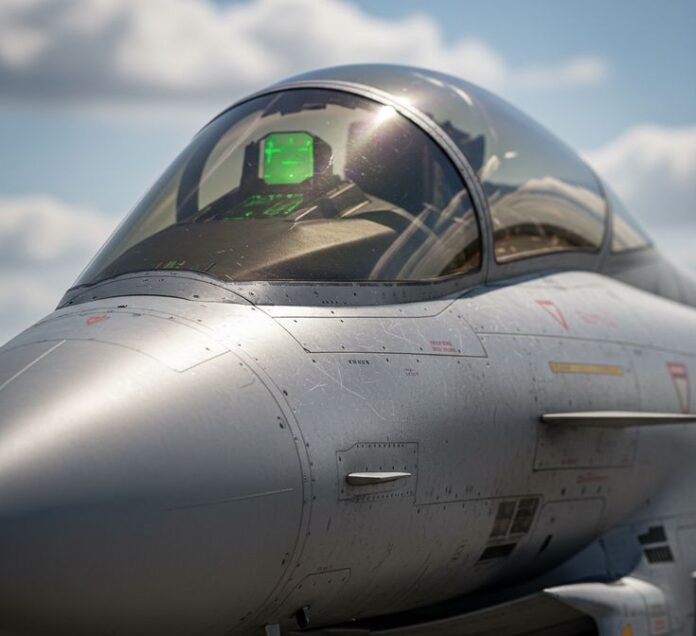
Why does the glass on a fighter jet cost more than a luxury car? It looks like a simple transparent bubble, but it is one of the most advanced parts of the entire aircraft.
Think about it like this. When you sit in a car, the windshield is just ordinary glass that keeps wind and rain out. But in a fighter jet, the canopy is something completely different. This is not normal glass you find in homes or vehicles. It is specially made to handle the toughest conditions a pilot faces every day. The canopy must survive extreme speeds, violent manoeuvres during dogfights, sudden bird strikes at high altitude, and huge changes in temperature from freezing cold at high heights to burning heat during supersonic flight.

Many modern fighter jet canopies are coated with a thin layer of real gold. The gold coating is so thin that you can barely notice it, yet it plays a big role. It helps reduce radar reflections from the aircraft. The gold layer makes these reflections weaker, so the jet becomes harder to detect on enemy screens. At the same time, the coating is designed carefully so it does not block or distort the pilot’s view even a little bit
Imagine flying at Mach 2, which is twice the speed of sound. At that pace, even a tiny crack in the canopy can turn into a deadly problem in seconds. The pressure and forces are so strong that ordinary material would shatter instantly. That is why engineers use special layered materials, often made from strong plastics mixed with chemicals, that are incredibly tough yet clear enough for the pilot to see everything around him clearly.
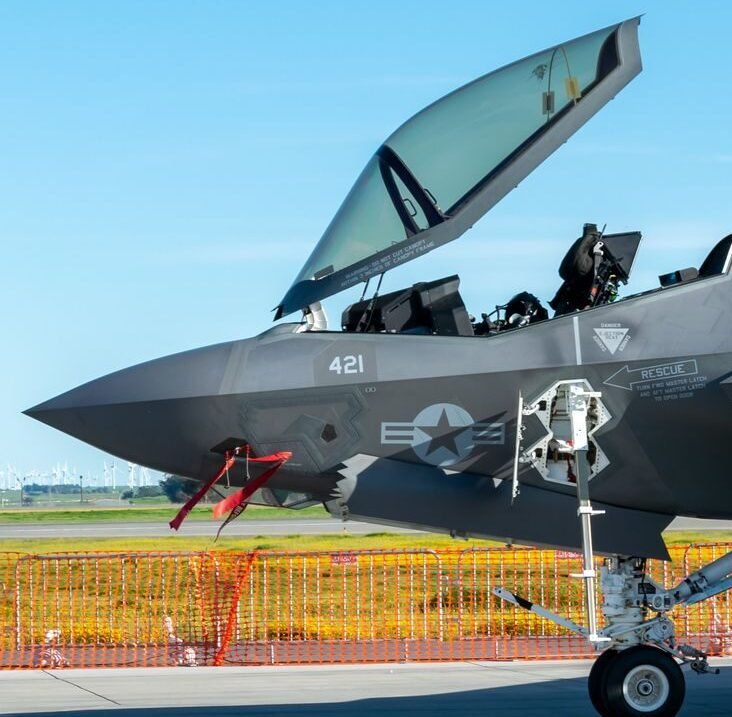
But here is the surprising part that amazes everyone. Many modern fighter jet canopies are coated with a thin layer of real gold. Yes, actual gold metal! This gold coating is so thin that you can barely notice it, yet it plays a big role. It helps reduce radar reflections from the aircraft. Radar waves bounce off planes and give away their position to enemies.
The gold layer makes these reflections weaker, so the jet becomes harder to detect on enemy screens. At the same time, the coating is designed carefully so it does not block or distort the pilot’s view even a little bit. Even small changes in clarity can be dangerous when flying at hundreds of kilometres per hour during sharp turns or combat.

Advanced engineering makes each canopy cost hundreds of thousands of dollars. The price comes from the rare materials, precise manufacturing, and years of research to make it perfect. Before any canopy is fixed on a fighter jet, it goes through brutal testing in special labs
This advanced engineering makes each canopy cost hundreds of thousands of dollars. The price comes from the rare materials, precise manufacturing, and years of research to make it perfect. Before any canopy is fixed on a fighter jet, it goes through brutal testing in special labs. Scientists hit it with fake bird strikes at high speed, test it under extreme heat and cold, check its strength during violent shakes, and even fire small objects at it to copy real dangers. Only the ones that pass every tough check make it to the aircraft.
So the next time you see a fighter jet zooming across the sky or parked at an air show, remember this. One of the most expensive parts is not the powerful engine or the smart weapons. It is actually the transparent bubble that protects the brave pilot inside. This simple-looking canopy shows how much smart science and hard work goes into keeping our skies safe. It is a wonderful example of human cleverness in building machines that push limits while caring for the person flying them. Every detail matters when lives and missions are on the line.


-The writer is an award-winning science communicator and a Defence, Aerospace & Geopolitical Analyst. He is the Managing Director of ADD Engineering Components India Pvt. Ltd., a subsidiary of ADD Engineering GmbH, Germany. You can reach him at: girishlinganna@gmail.com. The views expressed are personal and do not necessarily carry the views of Raksha Anirveda





