


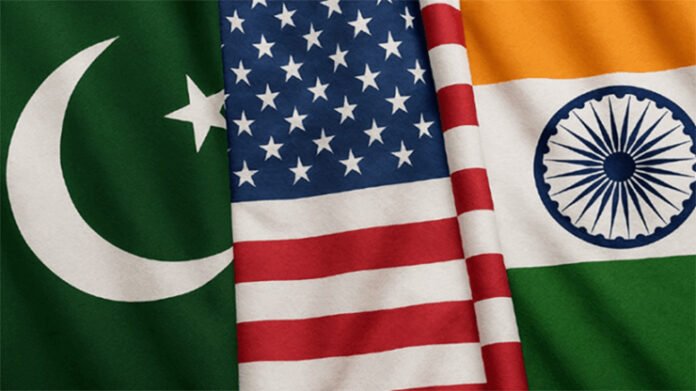
Since the early Cold War, the United States has maintained a complex, often transactional relationship with Pakistan. Pakistan joined US-led alliances like SEATO and CENTO in the 1950s, providing bases and intelligence against Soviet influence, while India pursued non-alignment. Post-1971 Bangladesh War and especially after the Soviet invasion of Afghanistan (1979), US aid to Pakistan surged, despite India’s closer ties to Moscow. This pattern persisted: even after 9/11, when Pakistan became a frontline state against al-Qaeda, accusations of Islamabad harbouring terrorists (including elements targeting India) coexisted with continued US military and economic support.
You could say, this reflects balance-of-power logic. A strong, unified India risks dominating the Indian Subcontinent, potentially challenging US interests in the Indian Ocean, technology and markets. Pakistan, despite its internal fragilities, offers leverage: nuclear weapons, geographic proximity to Afghanistan and China, and a willingness to align more pliably with US demands than a rising, democratic India with its own strategic autonomy (such as continued Russian oil imports and defence ties). Even as Washington designated India a “Major Defence Partner,” arms sales and diplomatic cover for Pakistan continued intermittently, often tied to counterterrorism or Afghan logistics.

The Trump Era: Explicit Guardrails on India’s Rise
Developments in 2025-2026 under President Donald Trump’s second term have amplified these concerns. During a visit to New Delhi for the Raisina Dialogue in March 2026, US Deputy Secretary of State Christopher Landau stated: “India should understand that we are not going to make the same mistakes with India that we made with China 20 years ago in terms of saying, we are going to let you develop all these markets and then… you are beating us in a lot of commercial things.”
Analysts interpret this as pragmatic deal-making—Pakistan offering rare earths, minerals, mediation channels, and alignment on select issues—rather than a grand anti-India strategy. However, it disrupts the post-Cold War US tilt toward India as a China counterweight, “hyphenating” the two rivals again in US rhetoric and diplomacy, contrary to India’s long-standing preference
This reflects a broader Trumpian “America First” transactionalism: scepticism of free-riding globalisation that empowered China, applied now to India. Tariffs on Indian goods (including over Russian oil imports), H-1B visa restrictions disproportionately affecting Indian talent, and public friction over trade reciprocity underscore a shift from strategic altruism to managed competition.
Simultaneously, Trump has cultivated ties with Pakistan’s military leadership, particularly Field Marshal Asim Munir. Trump has publicly praised Munir as his “favourite Field Marshal” and engaged him directly in mediation efforts, including on Iran and post-ceasefire India-Pakistan dynamics following the May 2025 escalation. Pakistan reciprocated with effusive flattery: Prime Minister Shehbaz Sharif hailed Trump as the “savior of South Asia” and nominated him for the Nobel Peace Prize, citing his role in brokering ceasefires.
Analysts interpret this as pragmatic deal-making—Pakistan offering rare earths, minerals, mediation channels, and alignment on select issues—rather than a grand anti-India strategy. However, it disrupts the post-Cold War US tilt toward India as a China counterweight, “hyphenating” the two rivals again in US rhetoric and diplomacy, contrary to India’s long-standing preference.

A Foreign Affairs piece advocating betting on Pakistan noted that over-emphasising India risks alienating Islamabad without delivering proportional strategic gains against China, suggesting dialogue on Kashmir and other disputes.
Internal Dimensions: Proxy Destabilisation?
The external balancing thesis extends to alleged US tolerance or indirect support for India’s internal vulnerabilities:

- Khalistanis: Diaspora activism in the US, Canada, and UK has historical roots, with some groups receiving alleged Pakistani ISI backing. US reluctance to fully act on Indian intelligence regarding separatist networks, combined with free speech protections for protests and funding, raises concerns. Reports highlight interlinked Khalistani-Kashmiri groups in America.
Overt “US support” for destabilisation lacks smoking-gun declassified evidence at scale, resembling classic great-power proxy dynamics rather than a centralised cabal. India’s own federal democracy, demographic diversity, and intelligence apparatus (e.g., responses to militancy) are primary mitigators
- Christian Missionaries: Evangelical growth in India’s Northeast and elsewhere, often funded by US-based organisations, sparks debates over conversions, cultural disruption, and links to separatism. While religious freedom is a core US value (and a point of diplomatic pressure), critics allege deeper geopolitical motives in fragmenting Hindu-majority cohesion.
- US-Based Indian Leftists and Islamic Groups: Diaspora intellectuals, NGOs, and advocacy networks sometimes critique Indian policies (e.g., on minorities, citizenship laws) in ways that align with Western human rights discourse. Funding trails and ideological overlaps with global left-Islamist critiques exist, though attributing direct US government orchestration stretches evidence. Pakistan and China have incentives to amplify these narratives.
These phenomena are multifaceted: genuine grievances, foreign interference (Pakistan, China), domestic politics, and liberal internationalist US values on democracy and minorities. Overt “US support” for destabilisation lacks smoking-gun declassified evidence at scale, resembling classic great-power proxy dynamics rather than a centralised cabal. India’s own federal democracy, demographic diversity, and intelligence apparatus (e.g., responses to militancy) are primary mitigators.
Counterarguments and Realist Assessment
US policy is not monolithic. Defense cooperation with India (e.g., Quad, technology transfers) continues, driven by shared China concerns. Trump’s approach prioritises deals—tariffs, minerals, mediation prestige—over ideological containment. Pakistan’s utility is limited by its economic woes, terrorism links, and China alignment (CPEC). Propping up a fragile state risks blowback, as seen post-Afghanistan withdrawal.
India’s rise is structural: demography, economy (despite challenges), military modernisation, and diplomacy (Global South leadership, BRICS). No external power can indefinitely “weaken” it without Indian missteps. Historical US “mistakes” with China involved WTO accession and investment under different assumptions; today’s scrutiny of India reflects learning and domestic politics, not zero-sum sabotage.
India’s rise is structural: demography, economy (despite challenges), military modernisation, and diplomacy (Global South leadership, BRICS). No external power can indefinitely “weaken” it without Indian missteps
Recommendations for Indian Strategic Posture
India must pursue multi-alignment with realism:
- Economic Resilience: Accelerate self-reliance (Aatmanirbhar), diversify markets, and negotiate reciprocally with the US on trade/tech.
- Military Deterrence: Sustain conventional and nuclear edge over Pakistan; deepen indigenous capabilities.
- Internal Cohesion: Address separatism through development, governance, and counter-narratives; manage missionary activities via law while upholding secularism; monitor foreign funding transparently.
- Diplomacy: Leverage personal ties (Modi-Trump history), Quad, Europe, and Middle East partners. Avoid over-reliance on any one power.
- Intelligence and Narrative: Expose foreign interference without xenophobia; strengthen diaspora engagement.
In sum, while US policy exhibits balancing impulses — evident in Landau’s remarks and Pakistan outreach — India’s trajectory depends more on domestic strength than external plots. Vigilance against hybrid threats (rearmed Pakistan plus internal proxies) is prudent, but paranoia risks self-fulfilling isolation. The Indian Subcontinent’s future hinges on Indian agency amid great-power competition.

The writer is a defence journalist specialising in military affairs, security policy and defence technology. He reports extensively on operation strategies, defence manufacturing initiatives and geopolitical developments across the Indo-Pacific region. The views expressed are personal and do not necessarily carry the views of Raksha Anirveda





