India’s defence manufacturing is undergoing a structural shift driven by strategic Technology Transfers (ToTs) and indigenous materials innovation. By expanding technical execution beyond single entities into distributed MSME manufacturing networks, the nation is establishing deep industrial resilience. Leading material science innovators like Carborundum Universal Limited (CUMI), demonstrate how collaborative partnerships, advanced armour ceramics and shared expertise accelerate self-reliance from raw powders to battle-ready defence systems.
Ajit Thakur, Editor, Raksha Anirveda spoke to Subbu Venkatachalam – Head of Defence and Aerospace at CUMI and discussed at length about CUMI’s product portfolio and its latest achievements to increase Aatmanirbharta in the defence ecosystem of India.

India’s defence manufacturing landscape is undergoing a significant structural transformation, propelled by strategic Technology Transfers (ToTs) and advanced indigenisation of material sciences.
Rather than isolating critical technologies within traditional monolithic institutions, the nation is actively decentralising production through capable industrial networks. Groundbreaking material science innovators like Carborundum Universal Limited (CUMI) – a key entity of the Murugappa Group with over seven decades of legacy -demonstrate how strategic collaborative partnerships, cutting-edge armour ceramics and shared technical expertise accelerate self-reliance across the entire lifecycle, from raw powder processing to battle-ready defence systems.
Strategic Expansion into Aerospace and Defence
Carborundum Universal Limited, which has built a strong reputation over the last 70 years in abrasives and 30 to 40 years in advanced ceramics, recognised the cross-industry potential of advanced ceramics roughly three years ago.
Subbu Venkatachalam, explained that ceramics possess two foundational properties that make them vital for modern defence: high impact resistance and high thermal conductivity. When hit by high-velocity ammunition, ceramic materials break and absorb kinetic energy, preventing total bullet penetration.

As a primary technical anchor, Carborundum Universal Limited (CUMI) bridges the gap between DRDO laboratory innovations – such as add-on composite armour for the Wheeled Armoured Platform (WhAP) – and industrial-scale execution
“We realised three years ago that we were getting inquiries regarding add-on ceramic armour and bullet-piercing protection,” said Subbu Venkatachalam. “As the Make in India campaign grew stronger, we identified defence and aerospace as key growth areas, using advanced ceramics as our primary stepping stone into the sector.”
Beyond completed ceramic assemblies, CUMI leverages its material science foundation to produce raw material grains at its Kerala facility. These specialised grains serve as electro-minerals for high-temperature thermal barrier applications, acting as heat-absorbing protective linings inside aero-engines and aerospace components. Furthermore, CUMI manufactures lightweight composite drone components at its Ranipet plant.

DRDO Technology Transfers and Distributed MSME Networks
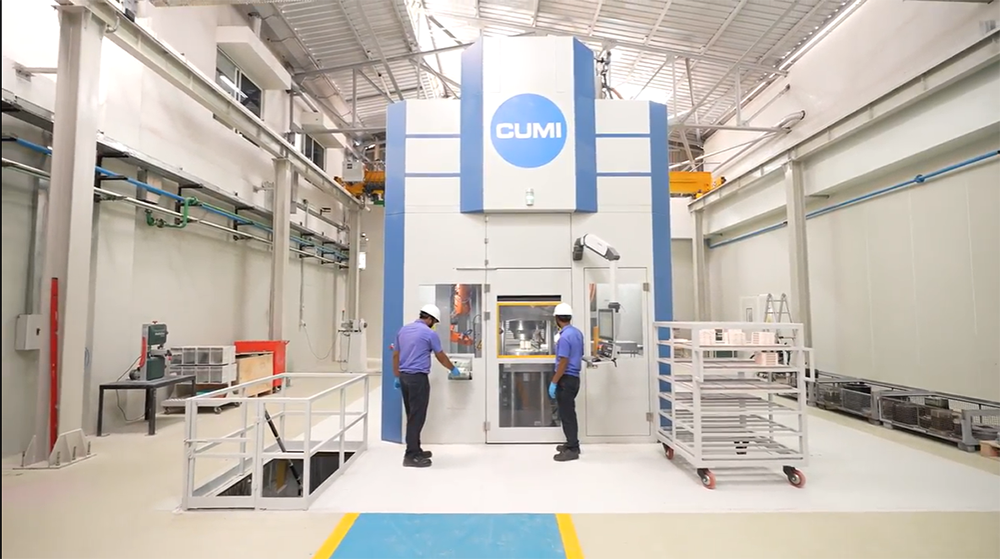
Central to this industrial transition are strategic Technology Transfers executed by government agencies such as the Defence Research and Development Organisation (DRDO). A prime example is CUMI’s partnership with DRDO’s Defence Metallurgical Research Laboratory (DMRL) to manufacture add-on composite armour for indigenous Wheeled Armoured Platform (WhAP) vehicles.
Core material formulation and high-temperature sintering remain with primary anchors, while specialised tasks like precision grinding, composite backing and rubberising are delegated to MSME partners
Venkatachalam noted that while initial development cycles for major military vehicles – such as WhAP or Future Infantry Combat Vehicles (FICV) – are lengthy due to rigorous DRDO and armed forces prototyping and testing phases, the long-term potential for domestic production is substantial. CUMI maintains these ToT technologies strictly for domestic capabilities to reinforce national security rather than pushing them into export markets.
The operational execution of these technologies relies on a seamlessly integrated multi-node supply chain:
- Core Processing and Formulation: The process initiates with DRDO-DMRL ToTs, directly feeding into CUMI’s core ceramic powder formulation facilities. Mastering the full value chain – from ultra-fine sub-micron raw powder synthesis to high-performance ceramic cores like Reaction Bonded Silicon Carbide (RbSiC) and Zirconia Toughened Alumina (ZTA) – bridges the gap between laboratory innovation and industrial production.
- MSME Collaboration in Regional Hubs: Benefiting from its strategic location in Hosur, Tamil Nadu – a prominent node in the Tamil Nadu Defence Industrial Corridor – CUMI collaborates closely with nearby specialised MSMEs.
- Composite Backing and Rubberisation: While CUMI manufactures the high-hardness ceramic tiles, local MSME partners handle specialised processes like rubberization – sandwiching ceramic tiles between rubber layers to create bolt-on composite panel assemblies for armoured vehicles.
Advanced materials expertise allows MSMEs to evolve into high-value partners across sectors like UAV structures, armour composite panels, precision machining and passive thermal protection
Together, this collaborative workflow produces fully qualified, multi-hit ballistic composite armour solutions meeting international standards, including STANAG 4569, Bureau of Indian Standards (BIS), and National Institute of Justice (NIJ) frameworks.
Lucrative Entry Points for Small and Medium Suppliers
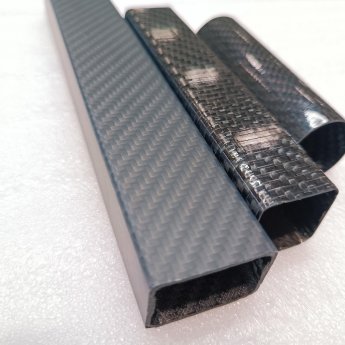 As contemporary military platforms place greater emphasis on manoeuvrability, troop safety and thermal efficiency, materials science expertise has emerged as a crucial competitive edge for MSMEs. Enterprises capable of processing engineered materials – ranging from sub-micron powders to Carbon Fibre Reinforced Polymers (CFRP) – can transition from basic build-to-print suppliers to high-value technical partners.
Venkatachalam highlighted several high-potential avenues for small and medium suppliers:
- Armour Composite Panels: Precise fabrication of multi-layered backing structures, aramid/UHMWPE fibre lamination and specialised spall liner assembly to reinforce vehicular and personnel protective gear.
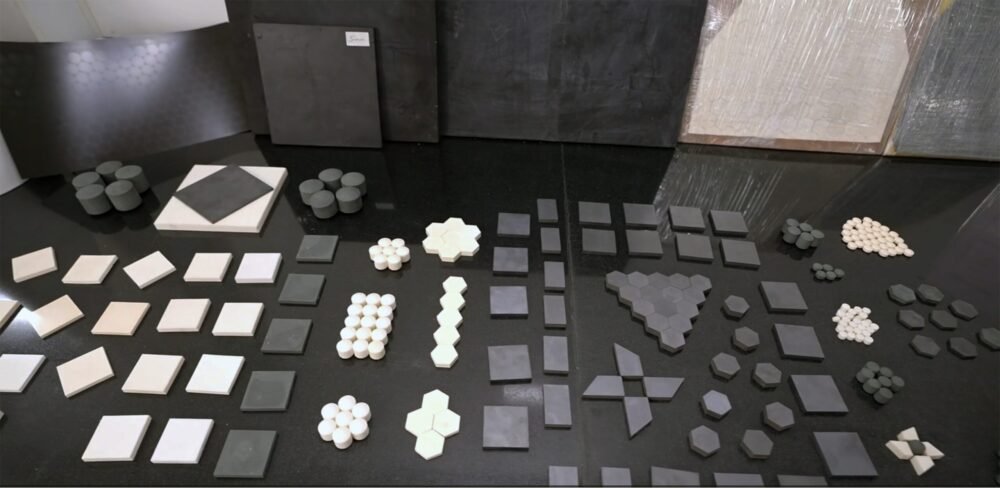
- Precision Sub-Component Machining: High-tolerance CNC grinding, honing and geometric shaping of extremely hard ceramic profiles (hexagonal tiles, square plates, cylindrical segments) used in modular armour.
- Unmanned Aerial Vehicle (UAV) Structures: Delivering lightweight, high-tensile structural components using processes like Light Resin Transfer Moulding (LRTM), vacuum infusion, pultrusion and filament winding of CFRP elements.
- Thermal and Passive Fire Protection: Integrating Phase Change Materials (PCMs) and specialised thermal barrier components designed to withstand extreme aero-engine heat and harsh environmental conditions.
Independent MSMEs often struggle with tight capital constraints and expensive ballistic testing requirements necessary to meet strict global standards like STANAG 4569 and NIJ
Bridging Structural Hurdles and Ecosystem Growth
Despite these operational avenues, small-scale manufacturers face capital constraints when attempting to upgrade equipment to meet strict international standards or access expensive ballistic testing ranges. Additionally, domestic suppliers must maintain strict cost competitiveness against cheaper imported raw materials to ensure viable, scalable adoption by OEMs.
To bridge these gaps, large industrial anchors play a decisive role in de-risking the operational landscape. Under the technical direction outlined by Subbu Venkatachalam, CUMI mitigates capital, quality and demand constraints by providing smaller enterprise partners with pre-qualified raw materials, shared access to specialised testing infrastructure and structured quality assurance mentorship.

Ultimately, this ecosystem-wide collaboration delivers three fundamental advantages:
- Enhanced Distributed Capability: Systemic collaboration transforms isolated ToTs into scalable, flexible, multi-node supply chains capable of meeting domestic demand.
- Material Science Advantage: Mastery over engineered ceramics such as RbSiC, ZTA and high-purity alumina offers smaller suppliers access to high-margin defence value chains.
- Structured OEM Mentorship: Long-term technology handholding and shared testing resources systematically bridge the quality gap between small-scale enterprises and global standards.
Structured OEM mentorship provided by CUMI, paired with forward-thinking policy frameworks is transforming isolated ToTs into a resilient, self-sustaining national defence manufacturing ecosystem
In this scenario, CUMI serves as the core technical anchor and ecosystem integrator within India’s evolving defence supply chain. By mastering the complete value chain – from ultra-fine sub-micron raw powder synthesis to advanced ceramic core processing like Reaction Bonded Silicon Carbide (RbSiC) and Zirconia Toughened Alumina (ZTA) – CUMI bridges the gap between high-level laboratory technology transfers (such as DRDO-DMRL’s WhAP project) and scalable industrial execution.
Rather than keeping these specialised capabilities centralised, CUMI elevates the broader manufacturing network by providing MSMEs with pre-qualified raw materials, shared access to specialised ballistic testing infrastructure and long-term technical mentorship. This comprehensive support mitigates capital, quality and demand bottlenecks for smaller enterprises. By de-risking the operational landscape for MSMEs, CUMI transforms isolated defence innovations into a resilient, self-sustaining and indigenised defence manufacturing ecosystem.
Coupled with forward-thinking policy enablers – such as streamlined ToT frameworks, public-private testing partnerships, and localised procurement mandates – India’s defence supply chain is rapidly evolving. Driven by material science leaders and integrated network partners like CUMI, the country is consolidating a resilient, self-sustaining industrial matrix capable of delivering world-class defence platforms.