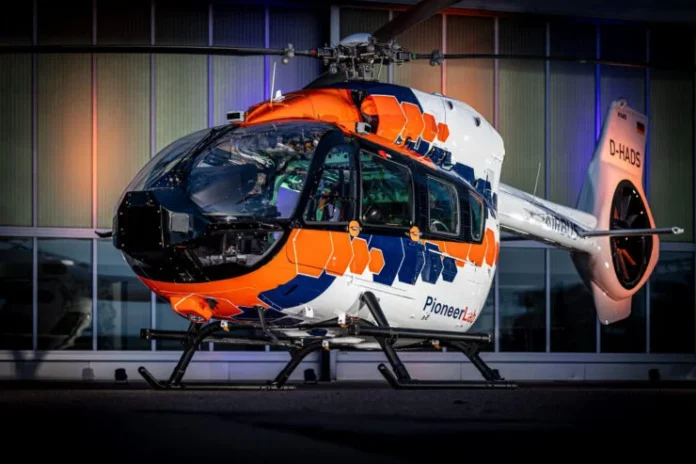
Hamburg. During the German National Aviation Conference in Hamburg, Airbus Helicopters unveiled the PioneerLab, its new twin-engine technology demonstrator based on the H145 platform. It complements Airbus‘ range of FlightLabs and focuses on testing technologies that reduce helicopter emissions, increase autonomy and integrate bio-based materials.

“With PioneerLab, we continue our ambitious strategy to test and mature new technologies on board our helicopter demonstrators,” said Tomasz Krysinski, Head of Research and Innovation Programmes at Airbus Helicopters. “PioneerLab, which is based in Germany at our Donauwörth site, will be our platform to test technologies specifically dedicated to twin-engine helicopters.”
The PioneerLab aims to demonstrate a fuel reduction of up to 30% compared to a conventional H145, thanks to a hybrid electric propulsion system and aerodynamic improvements. Aboard the demonstrator, Airbus Helicopters will also flight-test structural components made from bio-based and recycled materials, which aim to reduce the environmental footprint across the entire aircraft life cycle. The company intends to produce the new parts using processes that reduce material and energy consumption and improve recyclability. Further research activities will include the integration of the latest digital technologies into the aircraft’s flight control system and associated sensors to increase autonomy and safety during critical flight phases such as take-off and landing.
PioneerLab is partially co-funded by the BMWK, the Federal German Ministry for Economic Affairs and Climate Actions through its national research program LuFo. Airbus Helicopters’ FlightLabs provide agile and efficient test beds to quickly test technologies. They are part of the company’s strategy to bring incremental innovation to improve its current products and as well as to mature technology for future platforms.
The PioneerLab’s flight campaign has already begun at the manufacturer’s largest German site in Donauwörth, with a rotor strike alerting system being the first techno-brick tested on board the demonstrator. The next phase will be to test an automated take-off and landing system.