


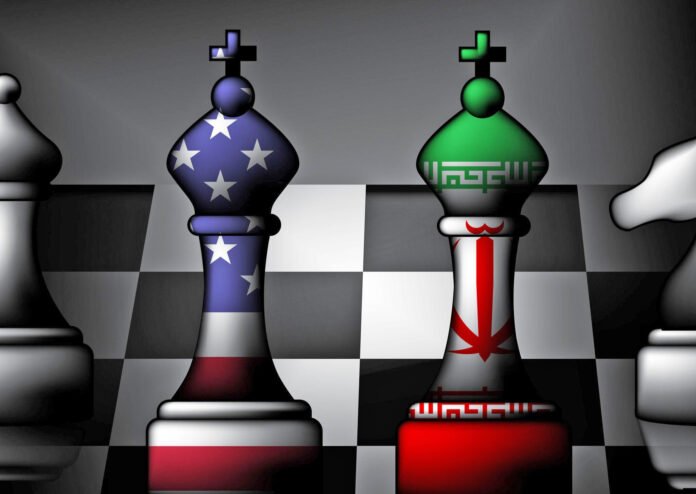
With a second round of high-stakes talks on the horizon, aimed at de-escalating a long-standing “shadow war” and establishing a sustainable ceasefire, the release of the frozen Iranian funds has become the primary “bone of contention.”
For Tehran, these assets represent more than just numbers on a balance sheet; they are the potential lifeblood for a battered economy. For Washington, they are the ultimate leverage.

The Scale of the Stalled Capital
While the opacity of international finance makes an exact audit difficult, Iranian officials and global economic experts generally agree that the total sum of frozen assets exceeds $100 billion. To put this in perspective, Frederic Schneider of the Middle East Council on Global Affairs notes that this amount is roughly triple Iran’s annual revenue from hydrocarbon sales.
For a nation that has endured decades of systemic isolation, $100 billion—nearly 25% of Iran’s total GDP—is a transformative sum. However, history suggests that “unfreezing” assets is rarely a simple transfer of funds.
During the Obama administration, former Treasury Secretary Jacob Lew cautioned that even if all sanctions were lifted, Iran might only see half of its nominal assets. Much of the money is often pre-committed to outstanding loans, international investment obligations, or legal settlements.
With a second round of high-stakes talks on the horizon, aimed at de-escalating a long-standing “shadow war” and establishing a sustainable ceasefire, the release of the frozen Iranian funds has become the primary “bone of contention.”
Currently, as a gesture of “confidence-building,” Tehran is demanding the immediate release of at least $6 billion to signal Washington’s sincerity in the ongoing ceasefire discussions.

Defining the “Freeze”: Mechanics and Critiques
At its core, the freezing of assets is a legal and regulatory mechanism where a government or international body prevents a person, entity, or central bank from accessing their property, securities, or cash. While the assets technically remain the property of the owner, they cannot be moved, sold, or liquidated.
The official justification for such measures usually involves national security and preventing the funding of hostile military actions, besides non-compliance and adherence to international law or nuclear non-proliferation treaties.

However, the practice is not without its critics. Many geopolitical analysts point to the selective application of asset freezes. While nations like Iran, Russia, North Korea, and Venezuela face sweeping restrictions, other nations accused of human rights violations or illegal warfare often remain untouched by Western financial regulators. This disparity leads to the perception that asset freezing is less about international law and more about maintaining the dominance of the US-led global order.
For a nation that has endured decades of systemic isolation, $100 billion—nearly 25% of Iran’s total GDP—is a transformative sum. However, history suggests that “unfreezing” assets is rarely a simple transfer of funds
A History of Financial Warfare (1979–Present)
The financial rift between Washington and Tehran began in November 1979, following the Islamic Revolution and the subsequent seizure of the US Embassy. President Jimmy Carter declared Iran an “extraordinary threat” to US national security, freezing approximately $6 billion in liquid assets—much of it held in the Federal Reserve Bank of New York.
The first major “thaw” occurred via the 1981 Algiers Accords, where the US released a significant portion of these funds in exchange for the release of 52 American hostages. However, the respite was brief. Over the following decades, the relationship deteriorated as the US grew increasingly concerned over Iran’s nuclear ambitions and ballistic missile programmes.
The JCPOA and the Trump Reversal
A turning point arrived in 2015 with the Joint Comprehensive Plan of Action (JCPOA). Under President Barack Obama, Iran agreed to strict limits on its nuclear enrichment in exchange for the lifting of secondary sanctions and access to its global funds. This era of engagement ended abruptly in 2018 when President Donald Trump unilaterally withdrew from the pact, labeling it “one-sided.” He reimposed “maximum pressure” sanctions, effectively re-locking Iran’s doors to the global financial system.
Even if all sanctions were lifted, Iran might only see half of its nominal assets. Much of the money is often pre-committed to outstanding loans, international investment obligations, or legal settlements
The volatility of these funds was highlighted recently in 2023 during a prisoner swap. The US agreed to allow the transfer of $6 billion in Iranian oil revenue from South Korean banks to accounts in Qatar, earmarked strictly for humanitarian use. Yet, following a major escalation involving missile and drone strikes against Israel, the Biden administration moved to restrict access to those funds in Doha once again.
The Global Map: Where is the Money?
The distribution of Iran’s wealth across the globe follows the map of its primary energy partnerships. Because the US threatens “secondary sanctions” against any foreign entity doing business with Tehran, many of Iran’s largest customers have been forced to hold onto the payments they owe for oil and gas, effectively acting as involuntary custodians of Iranian capital.
The most significant portion of these funds is held in China, where more than $20 billion is currently sitting in accounts. As Iran’s largest trading partner, China’s holdings are often entangled in complex credit arrangements or barter systems designed to bypass traditional banking routes.
The financial rift between Washington and Tehran began in November 1979, following the Islamic Revolution and the subsequent seizure of the US Embassy. President Jimmy Carter declared Iran an “extraordinary threat” to US national security, freezing approximately $6 billion in liquid assets—much of it held in the Federal Reserve Bank of New York
India owes approximately $7 billion as outstanding for historical crude oil deliveries, while Iraq holds roughly $6 billion — money primarily owed for the natural gas and electricity Iran provides to keep its neighbours power grid functioning. Luxembourg with $1.6 Billion, represents the largest share of assets held within the EU. While Japan with $1.5 Billion, residual funds from historical energy partnership with Iran is also there.
Why the Stakes are Higher in 2026
The urgency behind Tehran’s demand for these funds cannot be overstated. The Iranian economy is currently navigating a perfect storm of hyperinflation and currency devaluation. The Iranian Rial has hit historic lows, triggering widespread civil unrest. Recent protests, fuelled by economic desperation, resulted in a violent crackdown and thousands of casualties—a situation Tehran blames on foreign “terrorist” interference, while critics point to systemic mismanagement and the weight of sanctions.
The most significant portion of these funds is held in China, where more than $20 billion is currently sitting in accounts. As Iran’s largest trading partner, China’s holdings are often entangled in complex credit arrangements or barter systems designed to bypass traditional banking routes
For the Iranian leadership, regaining access to $100 billion is a matter of regime survival. These funds could stabilise the currency, fund essential infrastructure, and provide a cushion against future social volatility.
As the April 22 ceasefire deadline approaches, the $100 billion question remains: Will the US use these assets as a “carrot” to entice Iran into a broader security agreement, or will the “stick” of financial isolation remain firmly in place? Given the chaotic history of these negotiations and the lack of trust between the two capitals, the road to “unfreezing” looks to be as long and cold as the decades of sanctions that created the crisis in the first place.

Fayeza Asad is a post graduate in International Relations from SOAS, UK and is currently engaged as an analyst with various think tanks. The views reflected are those of the author and does not reflect Raksha Anirveda’s view.





