


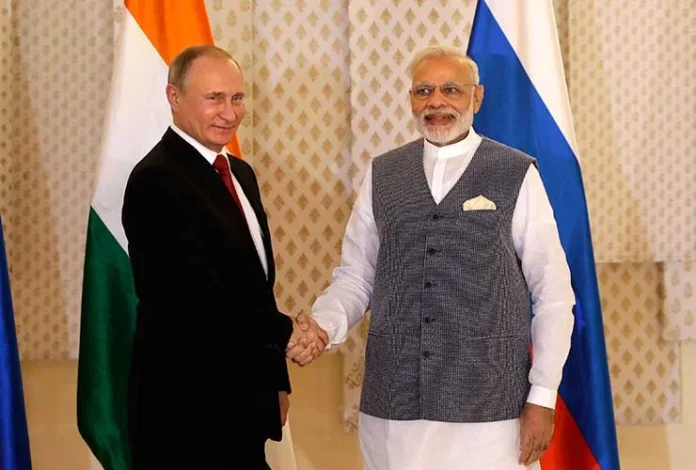
New Delhi: India plans to request five additional squadrons of the Russian S-400 Triumf air defence systems during the upcoming Modi-Putin summit on December 5, 2025. This move follows the proven effectiveness of the three already inducted S-400 squadrons, which performed significantly during Operation Sindoor, where the system successfully shot down high-tech Pakistani fighters at long range. India is also preparing a large procurement of S-400 missiles worth around ₹10,000 crore to replenish stocks used in operational engagements and build reserves.
Russia will establish a Maintenance, Repair, and Overhaul (MRO) facility in India for these systems under a comprehensive annual maintenance contract already approved by the Indian defence ministry.

On the advanced fighter acquisition front, India continues to evaluate the acquisition of two to three squadrons of Russia’s fifth-generation Sukhoi Su-57 stealth fighters. While Moscow is actively promoting the Su-57 as a competitor to the US F-35, India has not made a final decision yet.
The Indian Air Force (IAF) sees these jets as a potential stopgap to fill the capability gap until indigenous stealth fighter AMCA becomes operational around 2035. Discussions for local production of up to 120-140 Su-57 jets at HAL Nashik are progressing, signalling a substantial technology transfer and boost to “Make in India” goals, but the deal remains in negotiations.
Meanwhile, the Cabinet Committee on Security (CCS) is set to approve a ₹63,000 crore indigenous upgrade for the first 84 Sukhoi Su-30MKI jets, involving advanced radars, avionics, weapons, and sensor integration to extend their operational life by 30 years. This mix of procurement and modernisation reflects India’s strategy of balancing acquisitions from Russia while boosting its own defence manufacturing capabilities.
The S-400 system has been described as a “game changer” by Air Chief Marshal A P Singh, especially in its role during Operation Sindoor where it achieved the longest recorded kill distance of 314 km by neutralising enemy aircraft. The expansion of the S-400 fleet and missile inventory underscores India’s focus on maintaining a robust air defence shield amidst evolving regional threats.

This strategic approach represents India’s balancing act between maintaining traditional defence ties with Russia, especially for air defence and fighter jets, and pursuing complementary procurement from Western partners, ensuring diversified and advanced combat capabilities for the Indian armed forces.






