


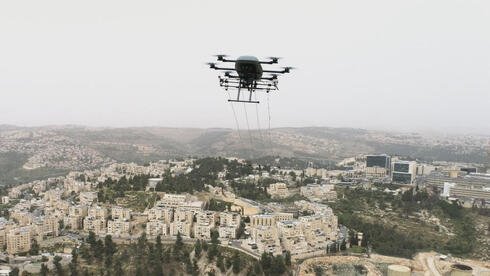
Tel Aviv: Since October 7, 2023, Israel has been a test ground for all types of unmanned aerial systems, drones and UAVs. The bottom line so far- the protection against this fast-growing threat is currently not sufficient.
Small, low-flying, slow-moving drones have minimal radar cross-sections, low heat signatures, and can mimic birds, leading to high rate of false alarms.

Swarm attacks overwhelm sensors, as basic radars and cameras struggle with multiple agile targets at speeds up to 100 mph, especially in urban areas or poor weather. Autonomous or hovering drones evade RF jammers that rely on control signals.
Iran and Hezbollah in Lebanon use cheap ($20,000-$50,000 per unit), disposable suicide drones in salvos, exploiting low altitudes and electronic countermeasures.
Conflicts in Ukraine-Russia and the Israel-Iran war highlight how drones evolve faster than defences, with saturation attacks tactics straining systems like Iron Dome and David’s Sling.
Intercepting low-cost drones with expensive missiles or jets is not cost effective. The problem gets even more complicated as strict rules limit jamming, cyber takeover, or kinetic kills near civilians. This, due to collateral risks like debris or interference with aircraft hinder adoption.

The Israeli experience shows clearly that no single system works. Layered approaches like the Israeli one, require interconnecting radars, AI, and acoustics—but gaps persist in real-time integration and force allocation amid multi-front wars.
In the case of Israel, the drones launched by Hezbollah take advantage of the topography on Northern Israel to fly most of the time hidden by mountains and hills.

Israel has improved its drone intercepts but in many cases, a drone that manages to enter Israeli airspace, is chased by an Apache helicopter trying to shoot it down with its canon.
An Israeli source related to the effort to create a more efficient protection against drones said that the problem is very serious as drones have become a major weapon.
“The currently available systems work only partially. This level of protection is not enough. Big efforts are being made, but much more time is needed,” emphasised the source.

-The writer is an Israel-based freelance journalist. The views expressed are of the writer and do not necessarily reflect the views of Raksha Anirveda





