

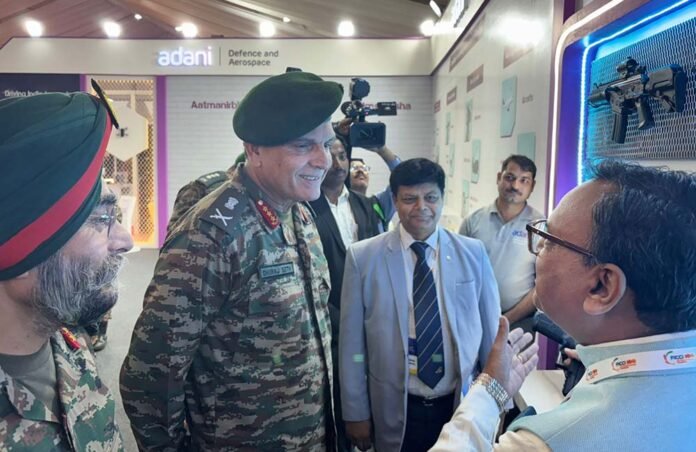
Shillong: Heavy machinery, mass formations and brute force once defined military power. Today, technology is increasingly defining success on the battlefield. Across conflict zones worldwide, electronic warfare systems, autonomous drones and precision-strike capabilities are reshaping military doctrine and operational strategy.
That shift was on full display at PRAGATI 2026 (Promoting Regional Cooperation and Training for ASEAN and Friendly Nations), the maiden multilateral military exercise held at the Field Training Node, Umroi, near Shillong in Meghalaya, from May 18 to 31.

Organised jointly by the Federation of Indian Chambers of Commerce and Industry (FICCI), the Indian Army’s Headquarters Eastern Command and the Army Design Bureau, the exercise brought together military contingents and representatives from 12 friendly nations, including six members of the Association of Southeast Asian Nations (ASEAN): Cambodia, Indonesia, Laos, Malaysia, the Philippines and Vietnam. The participating countries also included Bhutan, Maldives, Myanmar, Nepal, Seychelles and Sri Lanka.
The accompanying Industry Exposition provided Indian defence manufacturers with a platform to showcase indigenous capabilities before military leaders, procurement officials and defence representatives from across the region.
Aatmanirbhar Bharat Takes the Field
The exposition highlighted the growing momentum behind Aatmanirbhar Bharat in defence manufacturing. Among the key participants was Adani Defence & Aerospace, which showcased a broad portfolio of indigenous battlefield technologies spanning counter-drone systems, loitering munitions, missile systems, small arms and ammunition. Together, the exhibits reflected India’s growing ability to design and manufacture advanced defence technologies across multiple domains.

The New Frontline
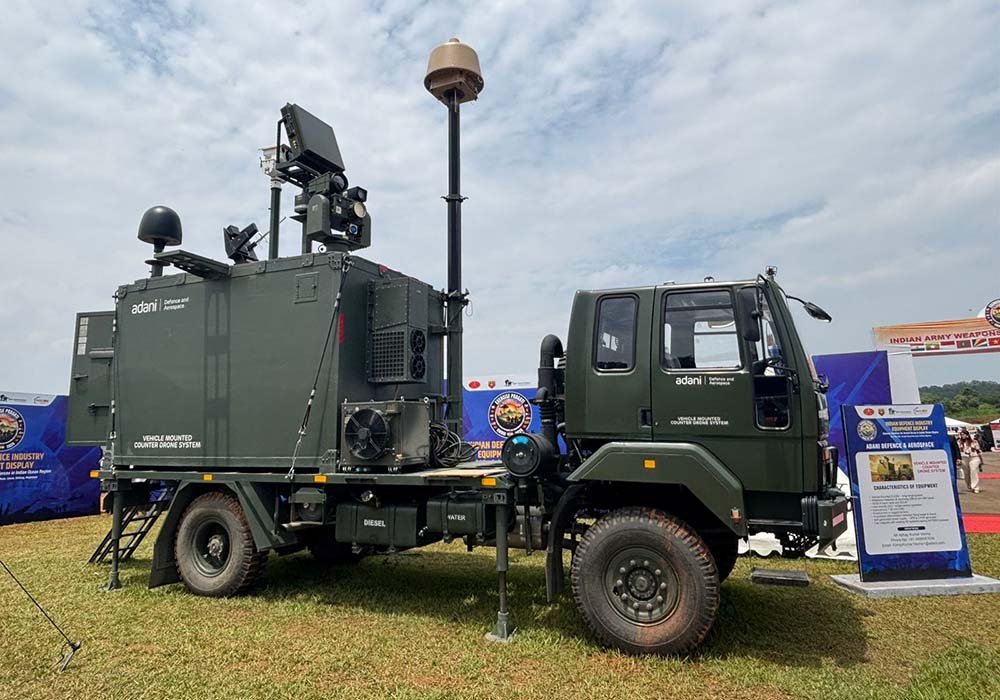
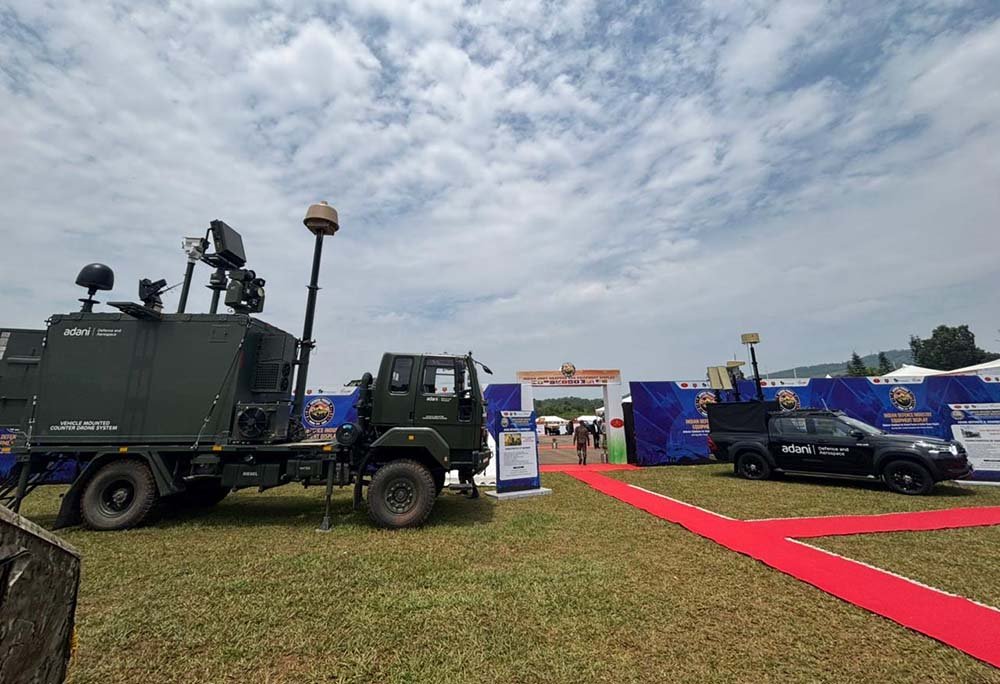
Particular attention was drawn to the company’s counter-drone and electronic warfare capabilities, which have become central to modern military operations. Adani Defence & Aerospace presented a layered counter-unmanned aerial system architecture featuring vehicle-mounted and sports utility vehicle (SUV)-mounted platforms designed to detect, track and neutralise hostile drones in diverse operational environments.
Among the standout technologies on display was the company’s “Cyber Takeover” capability, designed to seize control of adversarial unmanned platforms rather than simply jam or destroy them. The showcase highlighted the growing importance of spectrum dominance and electronic warfare on future battlefields.

The company also presented its portfolio of loitering munitions, increasingly recognised as force multipliers in precision warfare. Complementing these systems were indigenously manufactured small arms, ammunition and missile platforms, including the recently delivered 7.62 mm Prahar Light Machine Gun (LMG), produced at the company’s Gwalior facility for the Indian Army. Together, these capabilities reflected the expanding role of private industry in strengthening India’s defence preparedness and technological self-reliance.
Beyond the Exhibition Grounds
The significance of PRAGATI 2026 extended well beyond equipment displays. By bringing together military leaders, policymakers and industry representatives from across the region, the exercise created opportunities for defence cooperation, operational engagement and future export partnerships.
As warfare becomes increasingly technology-driven, platforms such as PRAGATI are doing more than showcasing equipment. They are fostering collaboration among armed forces, policymakers and industry while strengthening regional security partnerships. By bringing together military leadership and defence innovators, the Indian Army, the Army Design Bureau and FICCI have created a platform that reflects India’s growing role in shaping the future of regional security.
PRAGATI 2026 demonstrated not only the technological capabilities of India’s defence industry, but also how the Aatmanirbhar Bharat vision is translating into battlefield-ready systems, stronger regional partnerships and a larger role for India in shaping the security architecture of the Indo-Pacific.






