


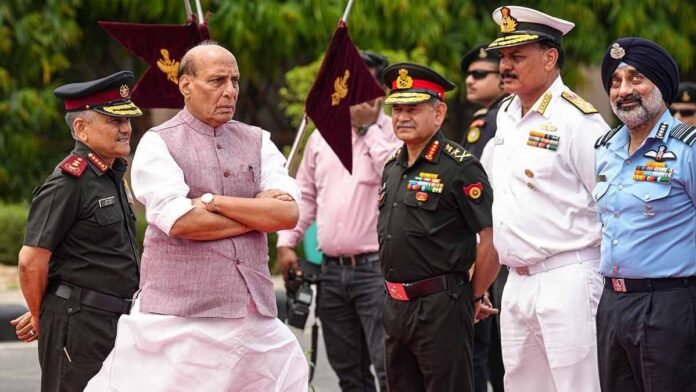
India’s journey towards theatre commands, long overdue and strategically essential, has been marked by hesitation, fragmentation and incrementalism. While inter-service turf protection is often cited as the principal obstacle, the deeper challenge lies in the absence of genuine jointness embedded within India’s higher defence architecture.
The creation of the post of the CDS was intended to be the catalyst for this transformation. Yet, the progress towards integrated theatre commands has remained uneven, reflecting a fundamental tension: the desire to modernise warfighting structures without fully reforming the institutions that underpin them.

The Fallacy of Service-Specific Theatre Allocation
The reported approach of assigning separate theatres to individual services risks undermining the very concept of theatreisation. Modern warfare is inherently joint: land, air, maritime, cyber and space domains are interwoven in ways that make service-centric command structures obsolete.
Allocating a theatre to a particular service in order to maintain inter-service balance may appear politically expedient, but operationally it is counterproductive. It reinforces silos rather than dismantling them. Theatre commands are meant to unify capabilities under a single commander, not repackage existing hierarchies under a different name.
Merit Over Uniform: Leadership of Theatre Commands
The commander of a theatre must be chosen not because he belongs to the Army, Navy, or Air Force but because he possesses:
- A deep understanding of joint operations,
- Experience in integrated planning and execution, and
- The intellectual flexibility to operate across domains.
In this context, the idea of rotating the CDS appointment among services risks diluting meritocracy at the highest level of military leadership. The CDS is not a representative of a service; he is the architect of joint warfighting.

The creation of the post of the CDS was intended to be the catalyst for this transformation. Yet, the progress towards integrated theatre commands has remained uneven, reflecting a fundamental tension: the desire to modernise warfighting structures without fully reforming the institutions that underpin them
If theatreisation is to succeed, India must move towards a system where the “best joint war fighter” rises to command: irrespective of uniform.
A useful reference point is the United States system where theatre commanders (Combatant Commanders) are selected through a rigorous process involving nomination, vetting at the highest levels and legislative confirmation. Crucially, the emphasis is on joint experience, strategic acumen and the ability to operate across domains; not service affiliation. This ensures that theatre command is treated as a pinnacle of joint warfighting competence, not a rotational entitlement.

The Missing Link: Integration of the Ministry of Defence
Perhaps the most critical flaw in India’s approach is the incomplete integration of the civilian and military components of the Ministry of Defence (MoD). At present, service headquarters remain “attached offices” rather than integral parts of the decision-making structure. This separation leads to:
- Delayed decision-making,
- Diffused accountability, and
- Gaps between policy formulation and operational execution.
Equally important is the need to develop a permanent, specialised civilian cadre within the MoD. National security today is too complex and too domain-intensive to be managed through generalist tenure-based bureaucrats. A dedicated cadre, trained in military affairs, strategy, technology and procurement would provide continuity, institutional memory, and informed civilian oversight. Without such expertise, even well-intentioned reforms risk being diluted in translation.
Alongside this, there is a pressing need for greater political understanding of national security. Strategic decision-making cannot be episodic or reactive. It requires:
- Structured briefings and continuous education of political leadership,
- Institutionalised interaction between military leaders and policymakers, and
- Exposure of politicians to joint planning processes and war-gaming at the highest levels.
Nations that manage defence effectively invest heavily in building this political-military interface. India must do the same if it seeks to align strategic intent with operational capability.
Allocating a theatre to a particular service in order to maintain inter-service balance may appear politically expedient, but operationally it is counterproductive. It reinforces silos rather than dismantling them. Theatre commands are meant to unify capabilities under a single commander, not repackage existing hierarchies under a different name
Without full integration, where military officers and civilian officials work within a unified structure, any attempt at theatreisation will remain superficial.
True reform requires:
- Integrated staffing across MoD and service headquarters,
- Joint planning mechanisms embedded at every level, and
- A seamless flow from political direction to operational execution.
From Coordination to Integration
India has historically emphasised “coordination” among services. But coordination is not integration.
Coordination allows services to retain autonomy while working together when required. Integration, by contrast, demands:
- Shared doctrine,
- Unified command structures, and
- Pooled resources.
The transition from coordination to integration is not merely organisational, it is cultural. It requires a shift from service identity to mission identity.
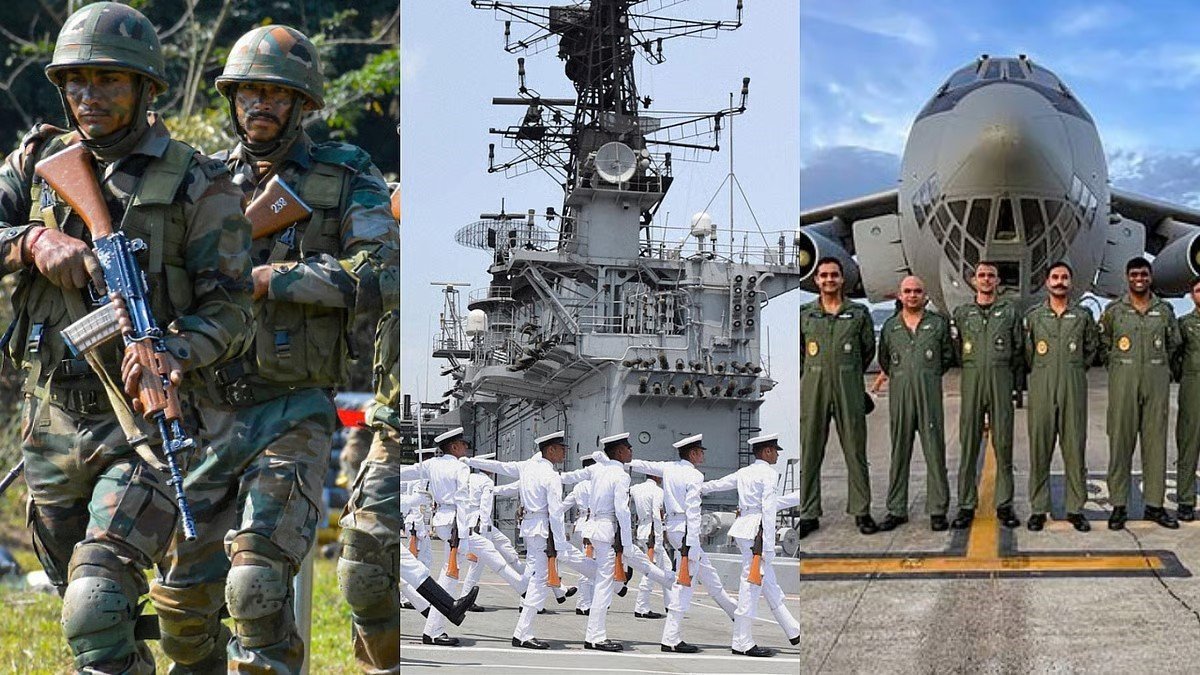
The Strategic Imperative
India’s security environment, marked by a two-front challenge, rapid technological changes and evolving domains of conflict demands a military structure that is agile, unified and decisive.
Theatreisation is not an end in itself; it is a means to achieve:
- Faster decision cycles,
- Greater operational synergy, and
- Optimal utilisation of resources.
But these outcomes cannot be achieved through half-measures.
The idea of rotating the CDS appointment among services risks diluting meritocracy at the highest level of military leadership. The CDS is not a representative of a service; he is the architect of joint warfighting. If theatreisation is to succeed, India must move towards a system where the “best joint war fighter” rises to command: irrespective of uniform
Reform Must Be Holistic, Not Cosmetic
Theatreisation will succeed only if it is pursued as part of a broader transformation of higher defence management. This requires:
- Rejecting service-specific allocation of theatres,
- Appointing leaders based on joint competence, not service affiliation,
- Fully integrating the MoD with service headquarters,
- Building a permanent civilian defence cadre with domain expertise, and
- Enhancing political understanding and ownership of national security through institutionalised processes.
Anything less risks creating the illusion of reform without its substance. India does not need three services working together, it needs one military fighting as a cohesive whole.

The writer, AVSM, VSM and Bar is an Army veteran. During his distinguished military career, spanning over four decades, he has tenanted a number of command and staff appointments in counter insurgency and proxy war environment in the North East and Jammu & Kashmir. He commanded his Regiment on Siachen Glacier and Kargil and a Mountain Brigade in counter insurgency operations in Manipur and was nominated to raise an Infantry Division in Arunachal Pradesh specially tasked to counter the Chinese threat. He has also been an instructor at the School of Artillery and Indian Military Academy and served with the United Nations. He is currently President of the National Adventure Foundation, an NGO which works closely with the Ministry of Youth Affair & Sports.





