


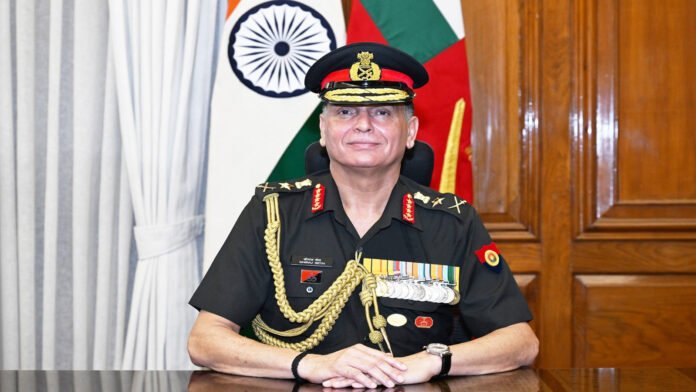
New Delhi. General Dhiraj Seth has taken charge as India’s 31st Army Chief, outlining a “VIJAY” vision that puts vigilance, innovation, jointness, self-reliance and the soldier first at the center of the force’s future. The move signals a sharper push toward modernisation as the Army prepares for more technology-driven conflicts.
General Seth assumed command of the Indian Army, as its 31st Chief on June 30, succeeding General Upendra Dwivedi after the latter’s retirement. The handover marks a major transition for the Indian Army at a time when its modernisation agenda is being closely watched.

In his first broad outline as chief, Gen Seth said the Army must stay constantly vigilant along the borders and remain ready for emerging threats. He also stressed that future warfare will demand a more technologically enabled force.
The VIJAY framework
The “VIJAY” framework, as expounded by Gen Seth expands into Vigilance, Innovation, Jointness, Aatmanirbharta and Yodha First. Gen Seth presented these as the guiding principles for his tenure, with a strong focus on adapting doctrine and capability-building to changing battlefield realities.
Innovation and transformation are meant to shape both how the Army thinks and how it operates. Seth also highlighted jointness, saying closer coordination with the Indian Air Force and Indian Navy is essential for modern military operations.
Push for self-reliance
A central part of the new chief’s message is Aatmanirbharta, in defence technologies and industry. According to reports, the Army will increasingly use indigenous systems as part of its drive to reduce dependence on external sources.

This emphasis fits into a wider effort to prepare the force for future conflicts involving drones, cyber tools and other emerging technologies. Gen Seth’s appointment comes amid a rapidly changing security environment and a growing need for transformation of the IA.
Gen Seth’s priorities suggest continuity on border vigilance, but with a stronger operational push toward modernisation and integration. The message is clear: the Army wants to be faster, smarter and more self-reliant without losing focus on readiness.

His tenure begins with high expectations, especially because he has been brought-in to lead the force through a period of strategic and technological change. The coming months will show how quickly the VIJAY vision translates into procurement, training and battlefield adaptation.






