


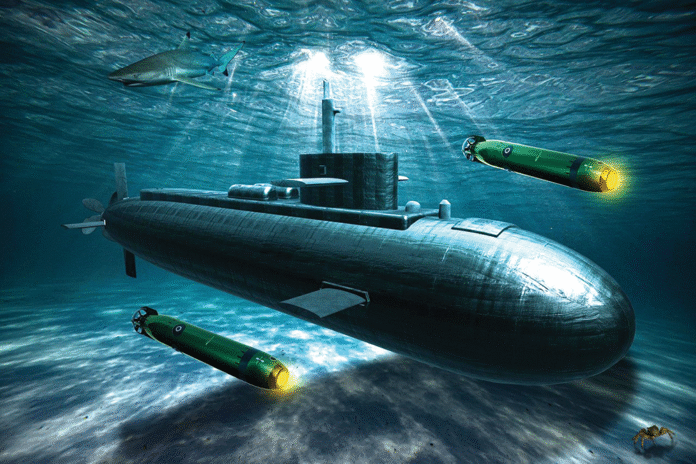
Technology is fast rendering the surface fleets highly vulnerable to elimination by hyper-smart weapon systems and detection platforms. Anything that is visible is under risk of attack. However, modern tools are evolving both the manned and unmanned undersea platforms into essential, complementary, and irreplaceable assets in most strategic, operational, and technological aspects. Emerging threats, accelerating technology, and changing strategic environments are forcing naval planners to reassess what constitutes decisive power. Among the many candidates for transformational change such as hypersonic weapons, space-based sensors, unmanned aerial systems, cyber warfare etc., one conclusion has become increasingly clear: that submarines and unmanned submersibles (underwater drones / UUVs / AUVs) will dominate all future maritime roles for which no substitute currently appears adequate. Hence, these are becoming central to the maritime warfare of tomorrow. The combined force of manned submarines and unmanned submersibles is far greater than any one alternative, for reasons of stealth, persistence, reach, deterrence, second-strike capability and operational flexibility.
Strengths of Manned Submarines
Nuclear submarines are stealthy, possess endurance and speed, can approach an adversary unseen, attack effectively and withdraw at will, and operate with impunity in denied environments, making them uniquely suited for intelligence gathering, surveillance, reconnaissance, special operations, and hunt-and-strike missions. In intense electronic environments, wherein surface vessels and aircraft are vulnerable to detection, localisation and attack, submarines can stay hidden and safe. Even a modern conventional submarine with good acoustic signature suppression methods, remains hard to detect, track and prosecute in complex littoral or deep ocean environments.

Despite advances in underwater detection technologies, the sub-surface remains more opaque than all other domains. Nuclear-powered ballistic missile submarines (SSBNs) with their mobility and concealment form the most survivable leg of nuclear deterrence and a second strike. That credibility underpins deterrence stability and potential adversaries must assume that any first strike must account for a lethal counterattack. Manned submarines carry significant payloads (torpedoes, mines, cruise or ballistic missiles) and perform varied missions (anti ship warfare, anti submarine warfare, land attack, special operations). They can serve as command, control, and logistics hubs underwater, deploying and recovering special forces, multi-purpose AUVs/UUVs, and other unmanned devices & systems.
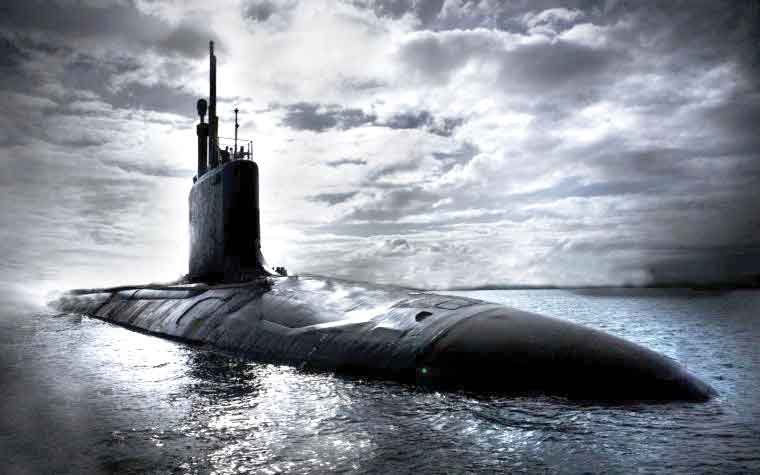
Growth of Unmanned Submersibles: Complementary Capabilities
The Unmanned Underwater Vehicles (UUVs), Autonomous or Remotely Operated Vehicles (AUVs/ROVs) bring new capabilities. Rather than replacing submarines, they augment and extend what manned submarines can do.
ISR and Mining
Unmanned platforms can patrol persistently in contested or dangerous environments without risking a human crew. These systems can cover wide areas, loiter for extended periods, monitor seabeds, perform acoustic or magnetic sensing, detect mines, and monitor submarine traffic.

(For example: Australia’s Ghost Shark XLAUV is being developed for long-range autonomous undersea warfare, ISR and strike. The Israeli “BlueWhale” UUV is another example: capable of acoustic reconnaissance, anti submarine monitoring, mine detection, etc. The US, Russia, and China are also actively using unmanned underwater systems as force multipliers and for risk reduction to human lives). Tasks that are dangerous, such as mine clearance; operations in contaminated waters; entering highly defended zones; and close in reconnaissance etc. are best handled by unmanned systems. Their lower cost, smaller size, and flexibility allow for their utilisation in far greater numbers and with greater dispersion. This means that a navy can maintain a presence in many theatres simultaneously, distribute risk, and saturate or complicate adversary detection, decision-making and targeting.
The combined force of manned submarines and unmanned submersibles is far greater than any one alternative, for reasons of stealth, persistence, reach, deterrence, second-strike capability and operational flexibility
Autonomous Operation and Teams
Modern unmanned systems increasingly incorporate AI and autonomy, which allows semi- or fully autonomous operations such as navigation, obstacle avoidance, and threat detection etc. They can work in swarms or flotillas and can be deployed from mother submarines, surface ships, or shore bases. Such teaming extends sensor reach, increases situational awareness, and creates new tactical options.

Why Neither Alone Is Enough: Synergy, Constraints, and Countermeasures
Though each class, manned submarine or unmanned submersible, has unique strengths, neither alone is expected to meet all future challenges. Yet together, they are now able to cover one another’s blind spots.
Broad limitations of Manned Submarines include:
- Exorbitant cost of construction, operation, maintenance and training
- Risk to personnel
- Logistic constraints
- Increasing detection threats from emerging technologies Limitations of Unmanned Submersibles
- Endurance and Power constraints
- Vulnerability to being disabled, jammed, hijacked, or destroyed
- Absence of damage control and in-situ decision support
- Limitations in autonomy and control systems
- Payload / firepower limitations
Strategic Imperatives: Why Both Are Essential
Future maritime warfare requires a combined force structure: submarines for high-stake strategic missions and unmanned submersibles as enablers, scouts, risk absorbers, and force multipliers.
a) Deterrence, Escalation Control, and Forward Presence
In strategic deterrence, credible second strike capability, sea control, and access denial are crucial. Manned submarines remain unmatched here. But for forward presence, sea denial in contested zones, early warning, and persistent surveillance, unmanned platforms can be deployed more cheaply and with greater persistence.
b) Anti Access/Area Denial (A2/AD) Environments
In likely future naval conflicts in littoral zones, and in contested seas, sea lanes, and choke points, the adversary will try to deny access using sensors, mines, missile batteries and drones. Establishing A2/AD defences would require stealthy platforms including unmanned systems to map the seabed, detect threats, lay or clear mines, analyse the acoustic environment, deploy sensors etc. to provide an edge.

c) Information, Intelligence and Surprise
Unmanned submersibles can provide valuable ISR: persistent data, seabed topology, acoustic signatures, filling in gaps where humans cannot safely go. Submarines, augmented by feeder intelligence from other sensors and UUVs, can achieve surprise strikes, ambushes, or disruption.
Submarines carrying UUVs will possess a higher tactical advantage.
d) Cost, Force Structure, and Risk Management
Even great powers cannot build unlimited submarines, but smaller countries can afford many cost-effective UUVs. Submarines allow for high value, high risk missions; unmanned assets provide for scaling up presence, decreasing risk, and conducting dull and dangerous tasks.
The Need for Submarines and UUVs
Several technological trajectories suggest that these two platforms are not only relevant but also reinforce each other and they are integrating the following:
- a) Advanced sensor suites
- b) Smart detection technologies and techniques
- c) Artificial Intelligence integration
- d) Decision-support mechanisms
- e) Autonomy in operations
- f) Teaming of platforms
- g) Novel strategies – the “mother ship + swarm / loyal wingman” model is evolving, (with submarines carrying/deploying UUVs to extend their reach).
- h) Silent and efficient propulsion systems
- i) High endurance and speed
- j) Hull design and materials for deep submergence and seabed warfare
- k) Weapon varieties
Policy Implications and Recommendations
The fact that submarines and unmanned submersibles are irreplaceable together must be accepted by senior naval commanders of today, and therefore future naval strategy must focus on the aspects highlighted below:
- Optimum funding and robust programmes: For next gen manned submarines (conventional and nuclear) and UUVs/AUVs.
- Doctrinal Evolution: For crewed and un-crewed teaming: how submarines deploy, control, and recover UUVs; how sensor networks feed into submarine operations; how to coordinate in a layered undersea warfare environment etc.
- Research and Development: Thrust in areas of undersea warfare, seabed warfare and systems. Indigenous solutions must be promoted and supported with a long-term vision.
- Technology Focus Areas: Acoustic signature suppression, hull materials, coatings, battery or fuel cell technology, nuclear or hybrid power for unmanned subs; improved logistics, sensor payload etc. Autonomy and AI, resilient communications; cyber security, and sensors and detection must also be critical focus areas.
- Training: In operating and integrating unmanned platforms, data analysis, mission planning, remote control and autonomous oversight, cyber and AI governance etc.
- Allies, Coalitions, International Law: Develop an understanding of subsea warfare implications pertaining to international norms (e.g. rights in international waters, undersea cables, seabed infrastructure). Cooperation among allies on rules of engagement for unmanned systems must be catered for.
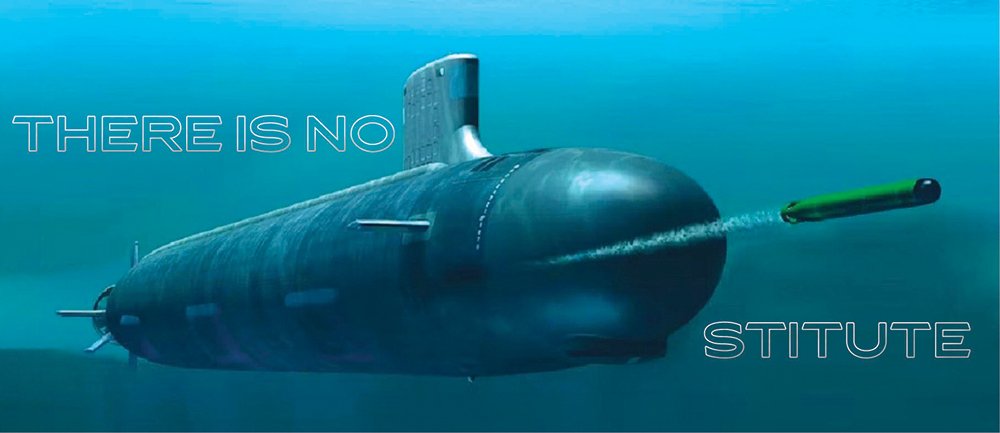
For nations preparing for future wars, investing in both is not merely prudent; but is indispensable. For navies, there appears no substitute for manned submarines and unmanned submersibles
Takeaways
In the maritime battlefields of the future, whether in the deep oceans or contested littorals, two elements of undersea power will be essential – the crewed submarine with its stealth, endurance, firepower, and strategic deterrence; and the unmanned submersible, with its ability to persist, to act as a scout or sensor, to absorb risk, and to provide breadth and depth to undersea awareness. The challenges and risks all indicate that neither submarines nor unmanned submersibles are optional extras; instead they are foundational to maritime warfare’s next-gen gameplay.
For nations preparing for future wars, investing in both is not merely prudent; but is indispensable. For navies, there appears no substitute for manned submarines and unmanned submersibles.

–The writer is a former Indian Navy Submarine Officer. He is an underwater weapons and missile specialist and a deep sea diver. An alumni of DSCSC Mirpur, Dhaka, he has been Directing Staff of the prestigious DSSC, Wellington, Tamil Nadu and instructor at the Submarine Training Centre, INS Satavahana, Visakhapatnam. He regularly writes on military strategy, warfare and technologies. He is an active member of the Strategic Think Tank USI, STRIVE and the Chakra dialogues foundation. The views expressed in the paper are personal. He can be reached at sumit12in@gmail.com





